
Neuropsych and Complex sleep pattern
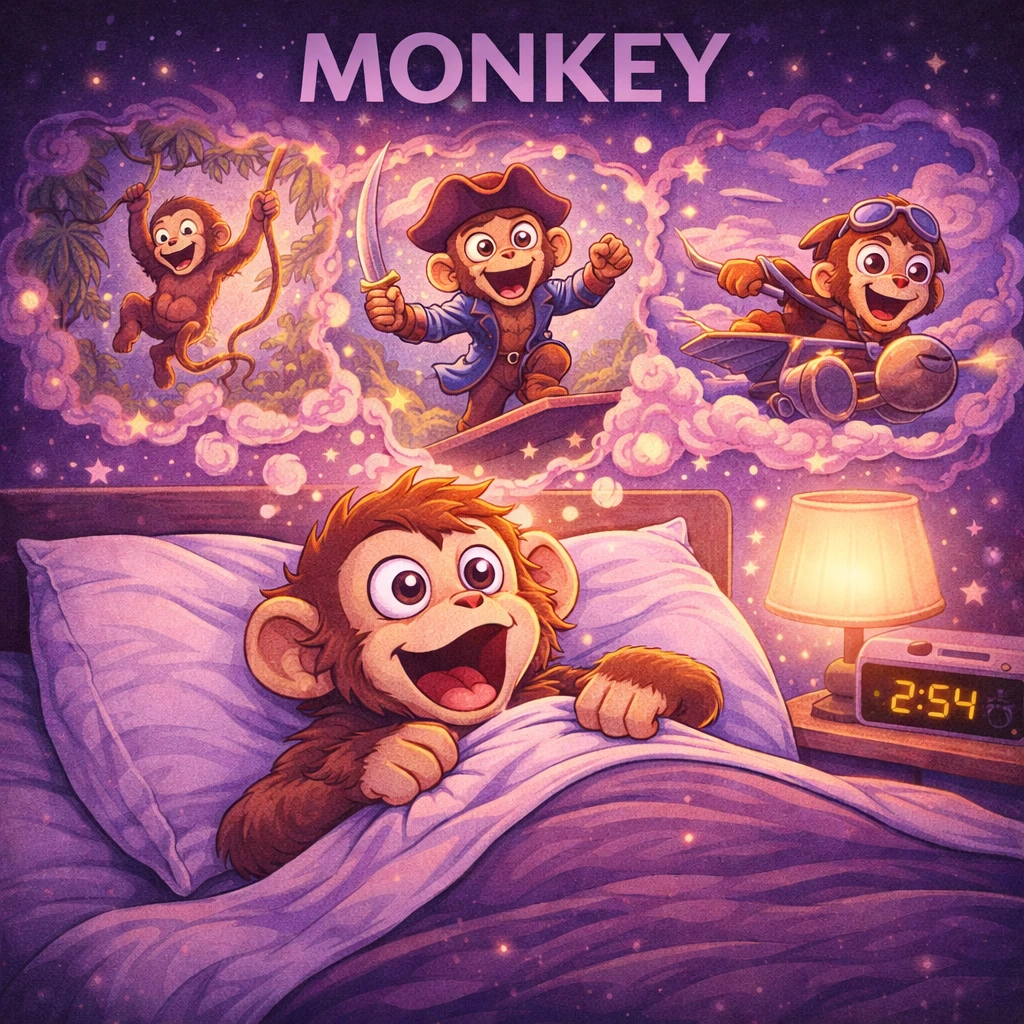
Monkey: Intense Dream Sleeper
Your nights may feel crowded with vivid, memorable, or emotionally loaded dreaming.
These animals often live at the edges of sleep: unstable transitions, dream enactment, vivid dream load, sleep paralysis, heavy sleep inertia, or unusual stress sensitivity.
Start here
Turn this into a practical next step
Pick one small action, then check the pattern over several nights. You do not need to solve everything at once.
Interpretation
What this pattern means
Your nights may feel crowded with vivid, memorable, or emotionally loaded dreaming. [1] [2]
This pattern occurs at the edges of sleep. The night may include vivid dreams, unstable transitions, heavy inertia, paralysis, or unusual sensitivity to stress and sleep loss. The useful move is not to dramatize the experience. It is to make the pattern safer, more trackable, and easier to separate into vividness, instability, and actual risk. Strategic naps can restore more than people expect when the alternative is trying to grind through a biologically low period. [3] [4] [5]
The strange, cinematic nights in this lane usually still map onto repeatable state-transition problems rather than random bad luck. Deep sleep is not just about logging enough hours; it is where the night often becomes truly restorative. That is where SleepSpace becomes more useful than a static score alone: it can help you see the pattern more clearly and, when appropriate, respond in real time with sound and light changes while the night is still unfolding. [6]
In real life: Dream intensity often rises after stress, irregular timing, sleep deprivation, or medication changes. A simple diary can separate a vivid but harmless period from a pattern that is truly disrupting rest.
What this often looks like
Common signals in real life
- The unusual part of the night often happens at the transition between sleep, dreaming, and waking.
- Stress, sleep loss, and schedule instability can amplify the pattern even if they do not fully explain it.
- You may describe the night as unsettling, vivid, sticky, or neurologically strange.
- This cluster benefits from both symptom description and careful normalization where appropriate.
Why this page exists
What makes Monkey distinct
The pages need to be careful, descriptive, and explicit that these are pattern sketches rather than formal diagnoses.
Reduce instability that may be amplifying dream intensity. SleepSpace can help with timing, wind-down, and overnight continuity.
Scientific read
These profiles sit where sleep, perception, stress reactivity, and state transitions start to blur. The night can feel unusual, but unusual does not mean meaningless. Dream enactment, paralysis, vivid REM content, and heavy sleep inertia all have plausible mechanisms, and they often get louder with stress, sleep loss, or irregular schedules. That is why careful observation matters more than dramatic interpretation. Repeated patterns make the night easier to read than a single strange episode does. The literature here is useful because it separates vividness from risk and instability from chaos. That distinction makes next steps much clearer. [7] [10] [13]
The practical goal is to make the night safer, steadier, and more understandable, not to romanticize symptoms that may still deserve attention. The more unusual sleep papers help here because they keep proving that vivid, sticky, or unsettling nights are not random just because they feel strange from the inside. The practical move is to separate dramatic feeling from actual pattern, then track what state transition, stressor, or recovery pressure keeps bringing the same night back. The strange, cinematic nights in this lane usually still map onto repeatable state-transition problems rather than random bad luck. [8] [11] [14]
Evening light exposure can stretch sleep latency, delay circadian timing, and leave the next morning feeling flatter than the total sleep time alone would predict. Feeling used to a short sleep schedule does not always mean attention, mood, and reaction time have recovered. Actigraphy papers keep showing how much you learn when timing, duration, and fragmentation are tracked over enough nights to reveal the real pattern. Strategic naps can restore more than people expect when the alternative is trying to grind through a biologically low period. [9] [12] [15]
Tracking and wearables
What data often helps separate this pattern from nearby ones
For this cluster, event notes matter: episodes of paralysis, dream enactment, vivid dream intensity, unusually sticky grogginess, or nights that feel neurologically different from baseline. Structured notes make the pattern easier to detect than a generic morning rating alone. [3] [14]
Keep brief event notes alongside sleep timing and morning symptoms. Specific details make an unusual pattern easier to discuss than a generic score. [12] [14] [13]
SleepSpace app features
Use these tools if you want to improve this pattern instead of just reading about it
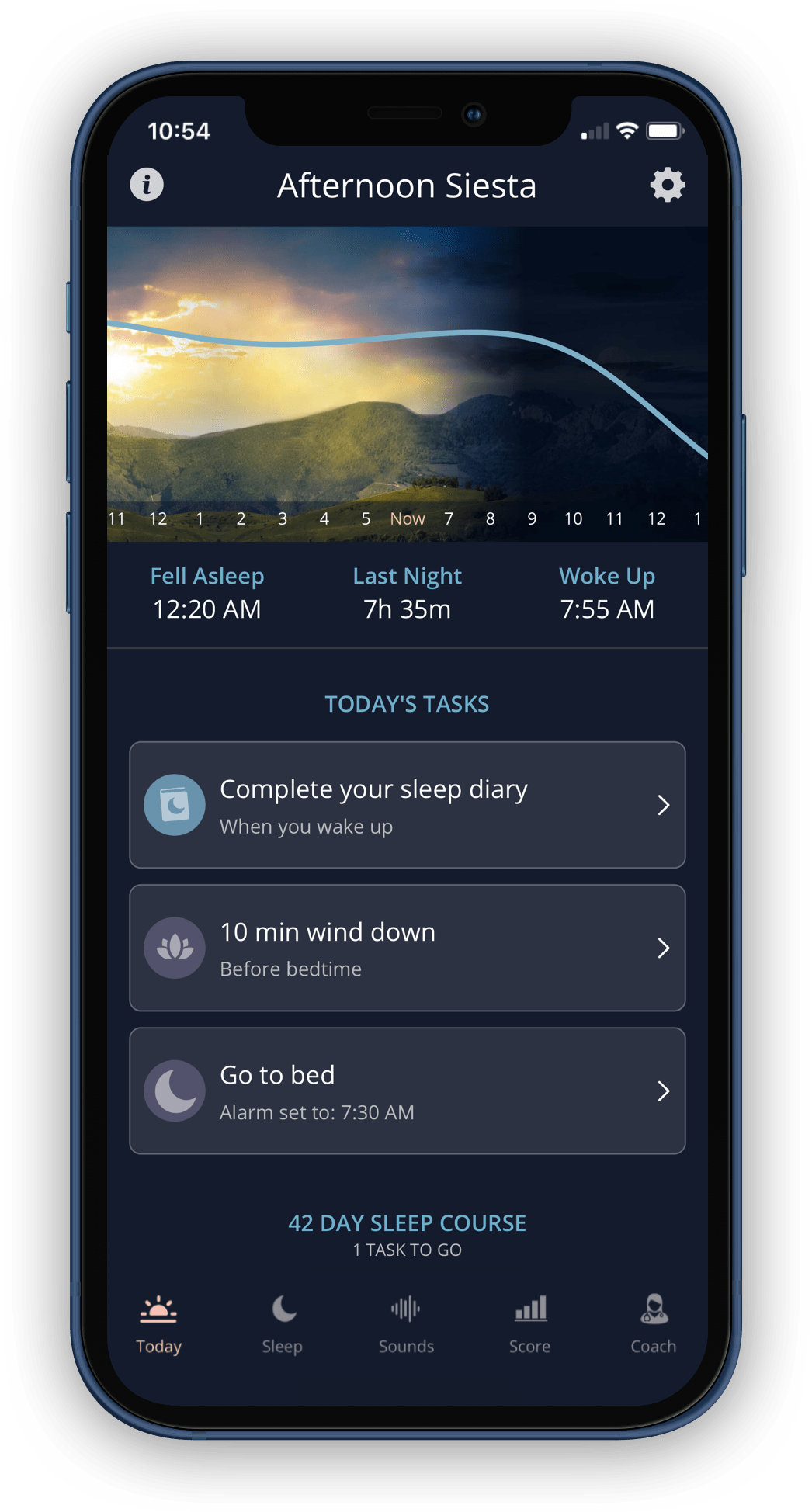
Start with the assessment, download the app, and use the features below to turn this sleep animal into a practical plan.
SleepSpace feature
Sleep assessment
Start here if you want a clearer read on your sleep animal, your main bottlenecks, and what to work on first.
Learn how to use it

SleepSpace feature
Sleep diary
Use the diary to catch patterns in timing, awakenings, stress, recovery, and what actually changed from one night to the next.
Learn how to use it
SleepSpace feature
Weekly sleep stats
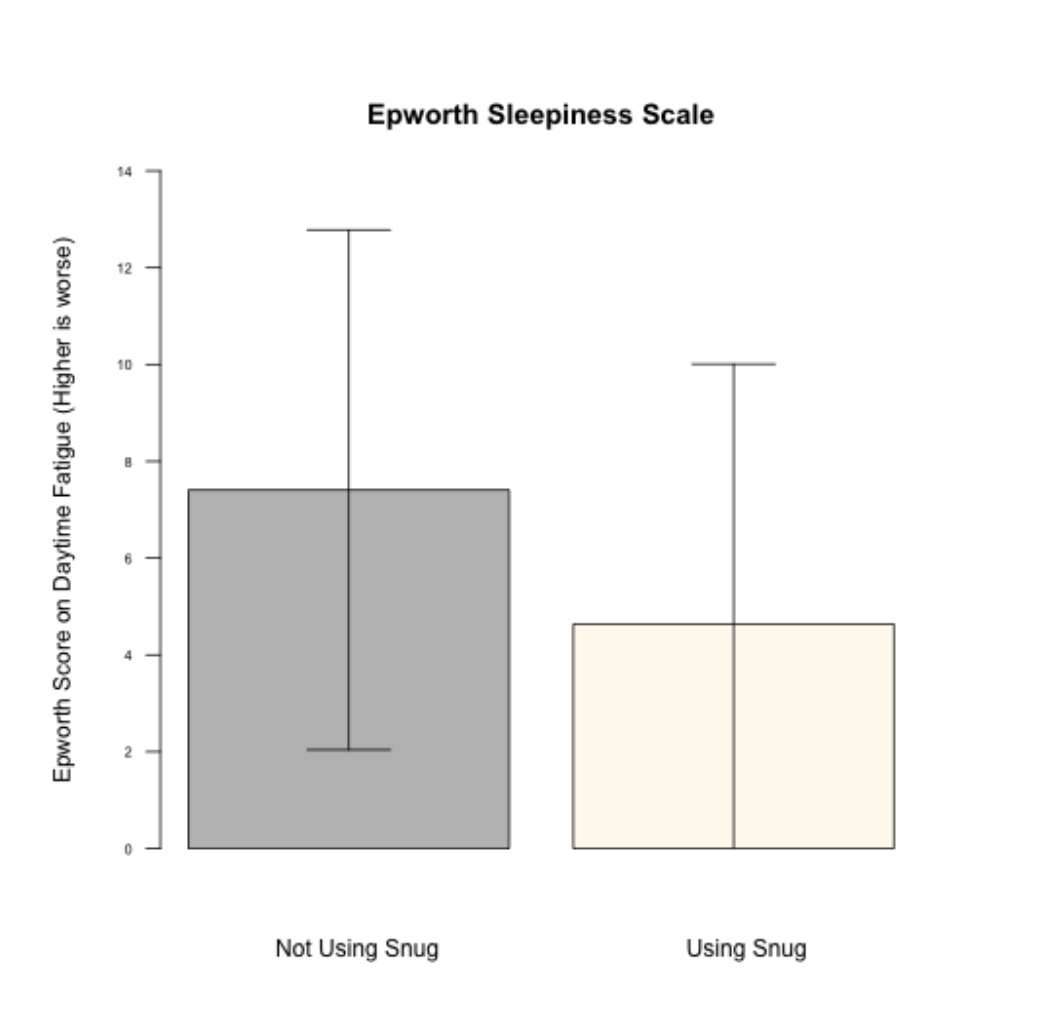
Use weekly trends to see whether you are actually improving instead of judging everything from one rough night.
Learn how to use it
SleepSpace resources
SleepSpace resources that fit this pattern
Use these practical guides and tools to understand this sleep pattern and choose a useful next step.
SleepSpace article
SleepSpace learning hub
A broad SleepSpace article library that can serve as the hub resource on every page.
SleepSpace article
SleepSpace science page
Useful when the page needs a product-adjacent evidence destination.
SleepSpace article
Tracking and wearables guide
Useful for pages that emphasize data quality, sleep diaries, and wearables.
SleepSpace article
SleepSpace program based on CBT-I
Useful for insomnia-heavy pages where the next step logic is behavioral.
FAQ
Questions Dr. Dan would expect about this animal
Quick answers to the questions people usually ask when this sleep pattern feels familiar.
What does the Monkey sleep animal mean?
This profile fits people whose dreams are especially vivid, frequent, or impactful on how sleep feels. Even without movement, intense dreaming can make sleep feel busy rather than deeply restorative. Stress, timing changes, and rebound sleep can all intensify the effect. The right next step is to make overall sleep more stable and less reactive. The goal is not to suppress dreaming completely, but to keep it from dominating the emotional tone of the night. Sleep can be shaped by schedule, stress load, sleep environment, body signals, and what happens the following day. Looking for repeatable changes across several nights makes it easier to identify a useful next step.
What should you track if this monkey pattern sounds like you?
For this cluster, event notes matter: episodes of paralysis, dream enactment, vivid dream intensity, unusually sticky grogginess, or nights that feel neurologically different from baseline. Structured notes make the pattern easier to detect than a generic morning rating alone. [3] [14] Start with the SleepSpace sleep assessment and then use the app to watch what happens to timing, continuity, symptoms, and next-day recovery over time.
When should you get extra help for monkey-style sleep problems?
If this pattern is getting more intense, affecting safety, or leaving you persistently exhausted, treat this page as educational and talk with a doctor or sleep specialist. SleepSpace can help you organize the pattern, but medical concerns still deserve medical care.
Important note
Turn busy dream nights into calmer sleep
If events involve injury risk, violent dream enactment, very frequent paralysis, profound daytime impairment, or other neurologic red flags, the educational pattern should not substitute for clinical evaluation. [11] [9]
Use SleepSpace to support deeper, steadier sleep when dreams are taking up too much of the night.
Research references
Research behind these sleep insights
Show citations (15)
- Wamsley et al. (2010). Dreaming of a learning task is associated with enhanced sleep-dependent memory consolidation.
Strategic naps can restore more than people expect when the alternative is trying to grind through a biologically low period.
Full article - Bliwise et al. (2010). Phasic muscle activity in sleep and clinical features of Parkinson disease.
The strange, cinematic nights in this lane usually still map onto repeatable state-transition problems rather than random bad luck.
Full article - Blank et al. (1998). Dreams of the blind.
This review is useful because deep sleep is not just about logging enough hours; it is where the night often becomes truly restorative.
Full article - Snyder et al. (1963). The new biology of dreaming.
Deep sleep is not just about logging enough hours; it is where the night often becomes truly restorative.
Full article - Lancel et al. (2021). Disturbed Sleep in PTSD: Thinking Beyond Nightmares.
The strange, cinematic nights in this lane usually still map onto repeatable state-transition problems rather than random bad luck.
Full article - Klerman et al. (2013). Survival analysis indicates that age-related decline in staying asleep occurs exclusively during NREM sleep.
The night can become self-reinforcing when the bed turns into a place for monitoring, rehearsing, and trying too hard.
Full article - Plante et al. (2006). Parasomnias.
The strange, cinematic nights in this lane usually still map onto repeatable state-transition problems rather than random bad luck.
Full article - Van Cauter et al. (1982). The relationship between episodic variations of plasma prolactin and REM-non-REM cyclicity is an artifact.
Evening light exposure can stretch sleep latency, delay circadian timing, and leave the next morning feeling flatter than the total sleep time alone would predict.
Full article - Darchia et al. (2004). Rapid eye movement density shows trends across REM periods but is uncorrelated with NREM delta in young and elderly human subjects.
Feeling used to a short sleep schedule does not always mean attention, mood, and reaction time have recovered.
Full article - Berkman et al. (2015). Work-Family Conflict, Cardiometabolic Risk, and Sleep Duration in Nursing Employees.
Actigraphy papers keep showing how much you learn when timing, duration, and fragmentation are tracked over enough nights to reveal the real pattern.
Full article - Cardinali et al. (2009). Let there be sleep--on time.
This trial is especially relevant because strategic naps can restore more than people expect when the alternative is trying to grind through a biologically low period.
Full article - Andersen et al. (2012). A framework for predicting the non-visual effects of daylight - Part I: photobiology- based model.
This trial is especially relevant because the room itself can become the bottleneck when sound or unpredictability keeps the nervous system slightly on guard.
Full article - Aserinsky et al. (1953). Eye movements during sleep.
This trial is especially relevant because strategic naps can restore more than people expect when the alternative is trying to grind through a biologically low period.
Full article - ZZZ et al. (1997). changed to 7987.
The odd-feeling nights in this lane usually still follow a pattern once the right trigger or state transition gets named.
Full article - Dementienko et al. (2008). [A biomathematical model of human operator's falling asleep].
This trial is especially relevant because the room itself can become the bottleneck when sound or unpredictability keeps the nervous system slightly on guard.
Full article
Nearby profiles
Other animals in the same neighborhood
Related animal
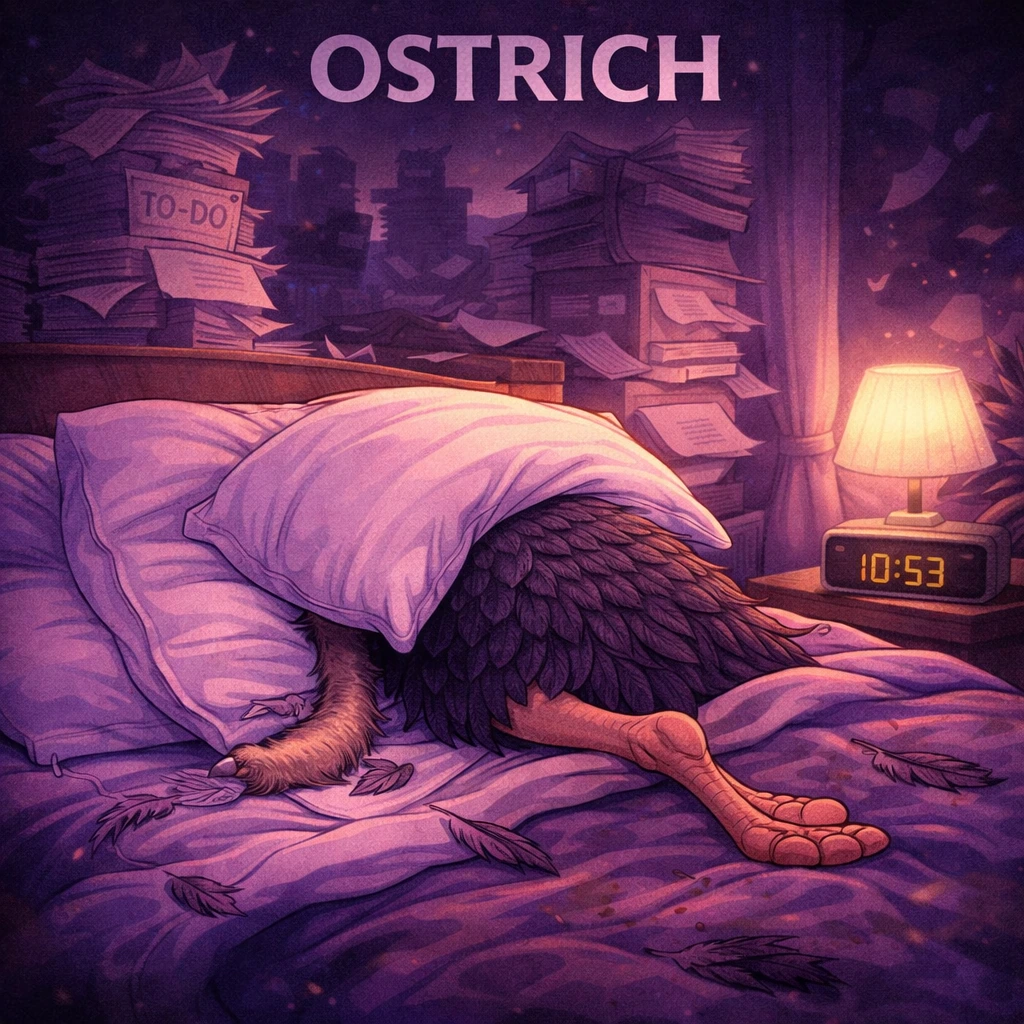
Ostrich
Escape Sleeper
Bedtime may carry enough stress that part of you wants to avoid it.

Related animal
Phoenix
Rebound Sleeper
Your body is trying to recover in bursts after too much accumulated loss.
Related animal
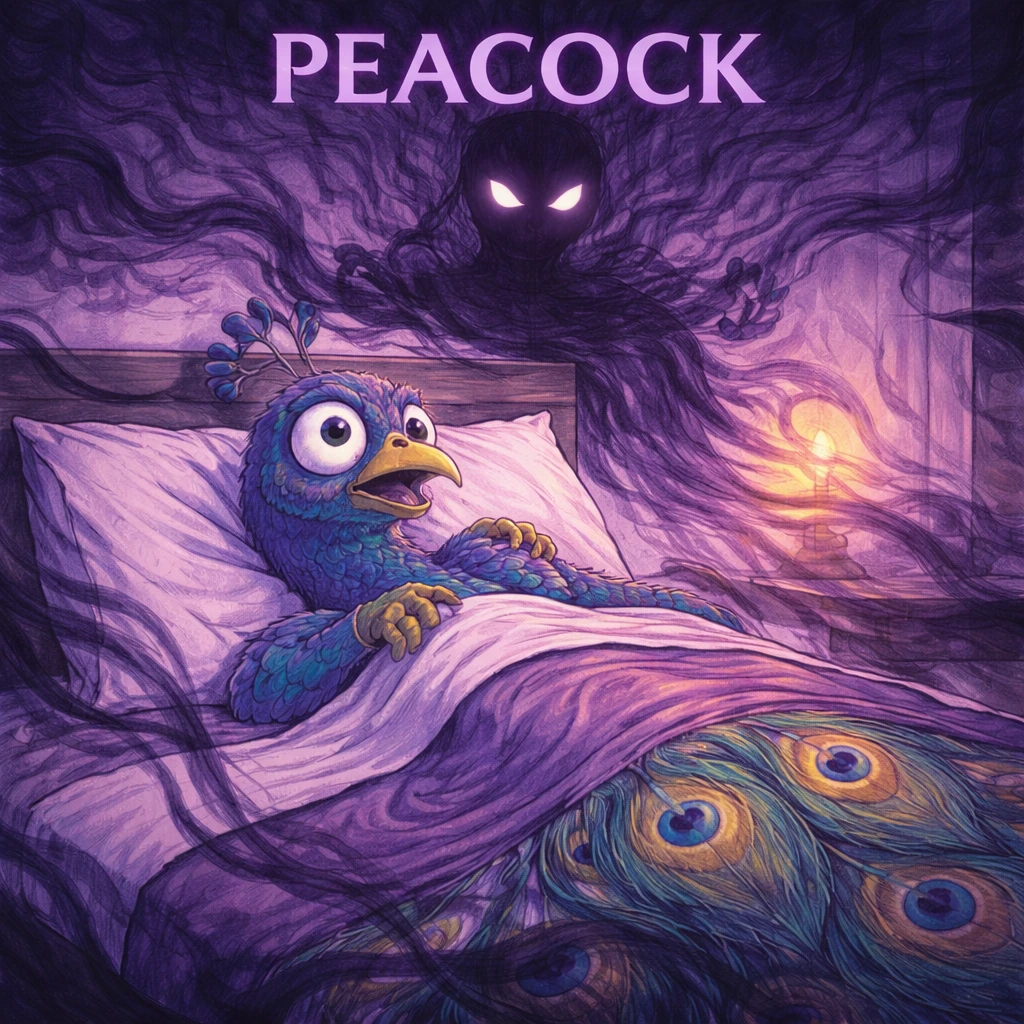
Peacock
Sleep-Paralysis Sleeper
Some of your most unsettling sleep experiences may be happening at the edges of sleep itself.