
Employee sleep wellness
Better nights.
Stronger days at work.
Give your team practical support for winding down, understanding their sleep, and building habits that last. SleepSpace brings personalized sleep tools and CBT-I-based education into one app.
Request a business demoFor HR, benefits leaders, and organizations ready to make sleep part of employee wellbeing.
A benefit for the hours that shape the rest of the day.
Employees bring more than their calendars to work. They also bring the night before: a busy mind, interrupted sleep, an early alarm, or a routine that never quite fits.
SleepSpace gives people a way to start with the challenge they actually have, rather than another generic wellness checklist. Pair accessible sleep education with tools they can practice at home, then evaluate what changes in your own workforce.
Research links insomnia with reduced work performance, particularly presenteeism: being at work but not functioning at your best. That association is a reason to take sleep seriously, not a promise of a fixed dollar saving from any app. [1]

Tools people can put into practice
Different nights. A more personal starting point.
Let employees choose a useful first step, then build a routine around it. The app brings together sound, relaxation, sleep observations, and education instead of asking people to manage disconnected tools.
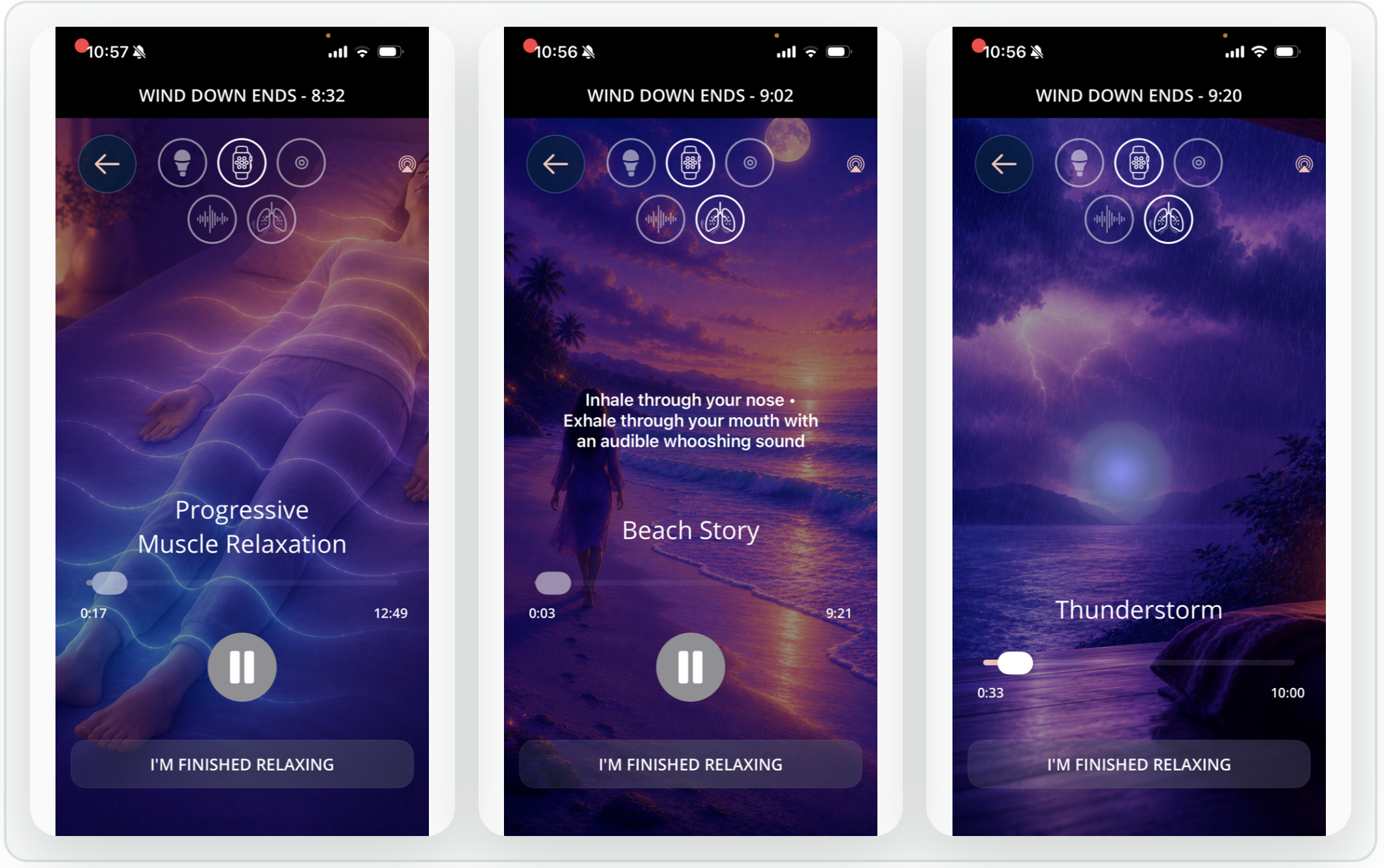
Help a busy mind wind down.
Guided breathing, meditation, sleep stories, and soundscapes give employees different ways to practice relaxing. A person who prefers listening to a story does not need to force a breathing exercise.
Explore relaxation and meditationTurn sleep data into a next step.
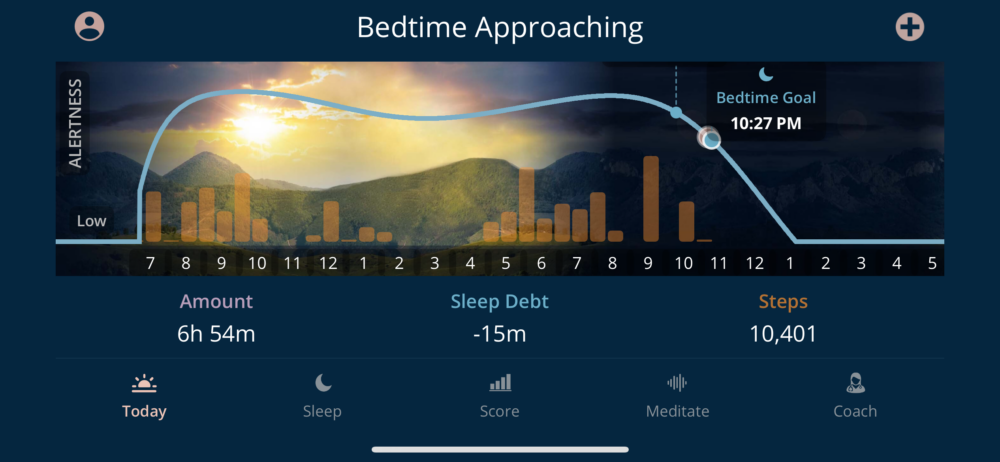
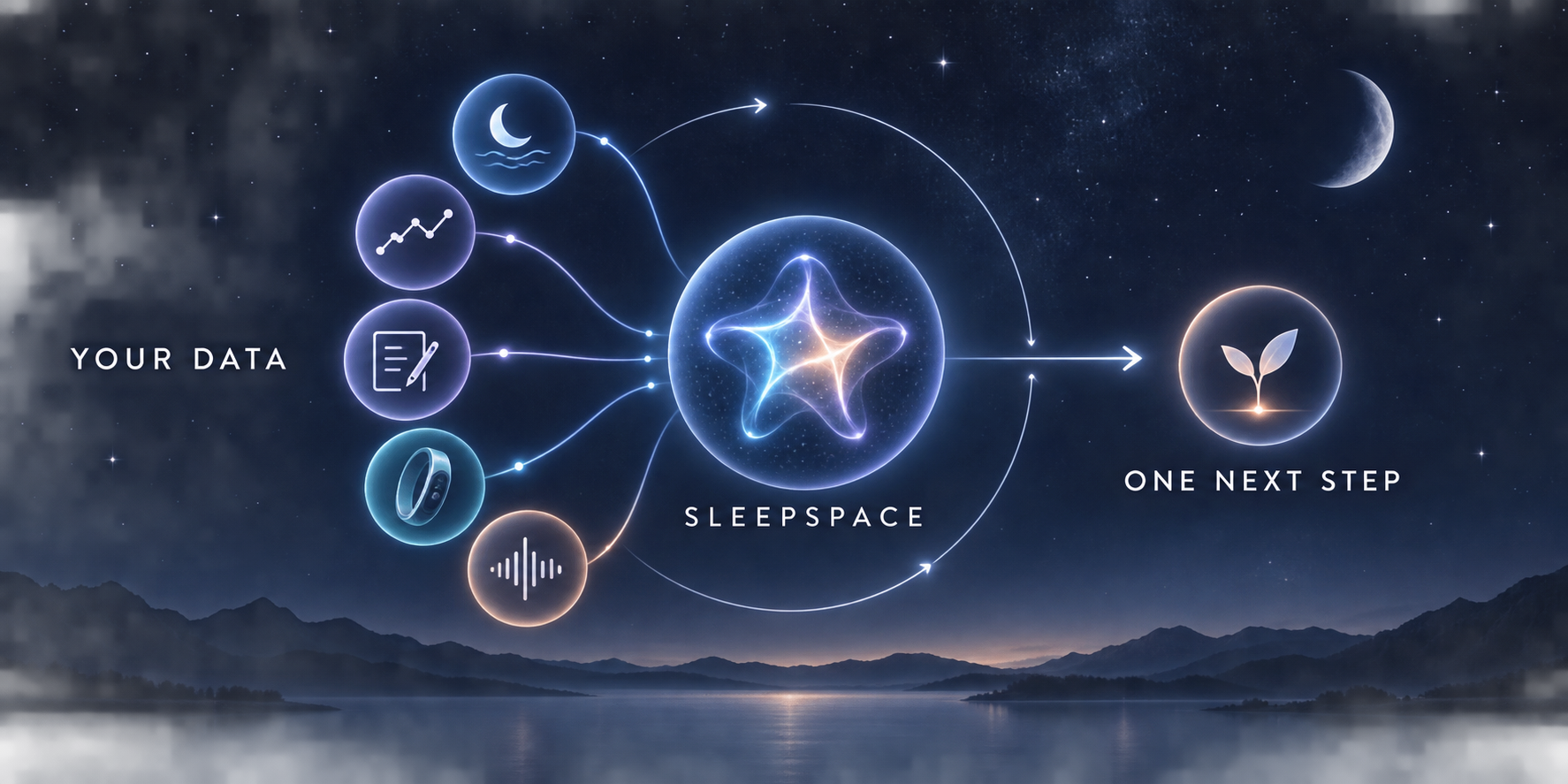
Use a sleep diary, estimated sleep patterns, and the circadian view to notice timing and consistency. Dr. Snooze AI can help explain terms and organize questions, not diagnose a sleep disorder.
Meet Dr. Snooze AIBuild a repeatable night.
Combine a wind-down routine with sleep sounds and a planned wake-up time. Explore adaptive audio and deep sleep stimulation alongside familiar soundscapes, with settings that let employees shape their own nightly experience.
Explore deep sleep audio stimulation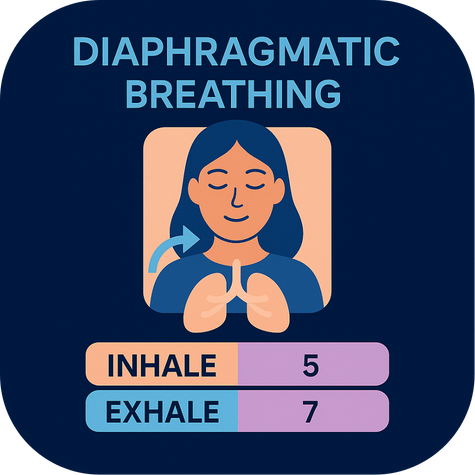
Go beyond a meditation library.
A six-week course based on CBT-I
For employees working on falling asleep and staying asleep, SleepSpace offers a structured learning path alongside its nightly tools. The course gives the benefit a longer-term purpose: learning about sleep and practicing habits, not simply collecting a better score.
Multicomponent cognitive behavioral therapy for insomnia is strongly recommended by the American Academy of Sleep Medicine for adults with chronic insomnia. That supports the treatment approach; it does not mean a self-guided SleepSpace course has demonstrated the same outcomes as every clinical CBT-I program. [5]
Discuss how course access, education, and any live coaching should fit your employee offer. Persistent insomnia or signs of sleep apnea need a route to qualified care.
Learn about CBT-I-based sleep support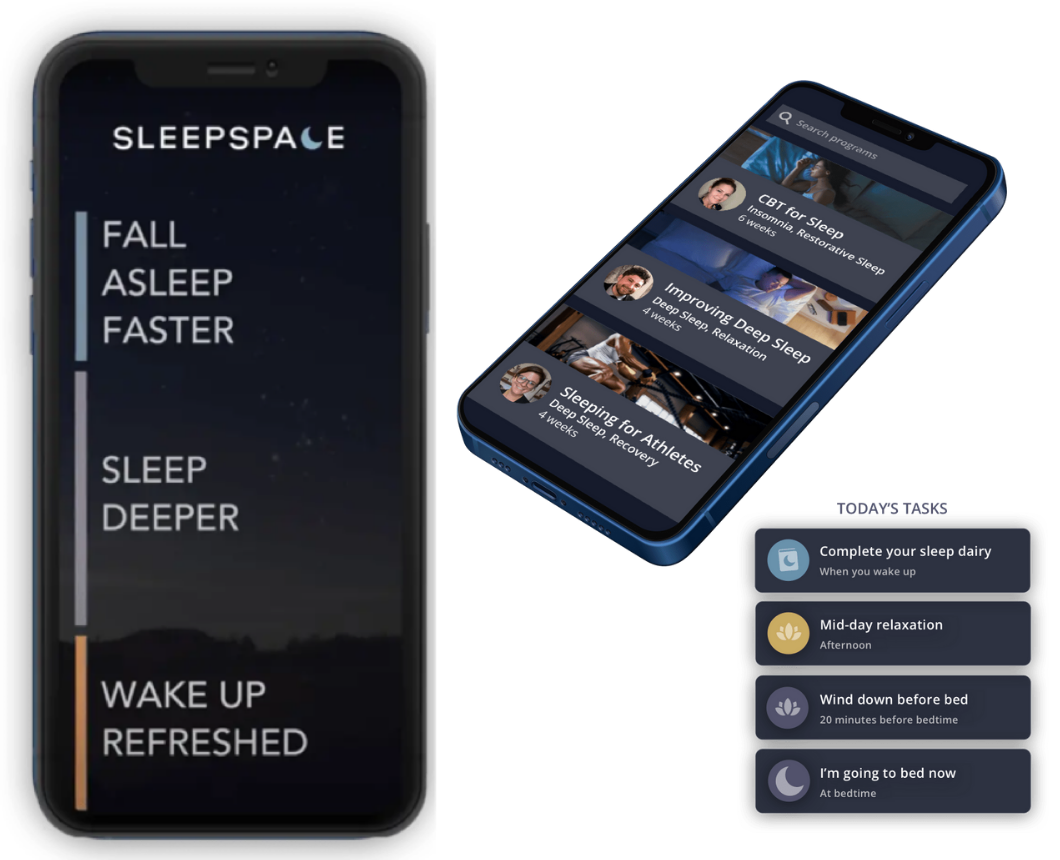
The business case deserves real evidence.
The most useful question is not whether sleep matters. It is which support helps, for whom, and how you will measure it. These workplace studies inform that conversation.
270 PARTICIPANTS / RANDOMIZED TRIAL
Structured digital support
A workplace trial found improvements in sleep and self-reported presenteeism after six online CBT sessions compared with a waiting list. The absenteeism difference was not statistically significant. [2]
1,355 DAYTIME WORKERS / RANDOMIZED TRIAL
Education plus an app
A trial of sleep education and the dayzz app reported benefits in sleep measures and work-performance-related outcomes. Effects were not uniform: stress, mood, alertness, and adverse safety outcomes did not differ significantly. [3]
CLUSTER-RANDOMIZED WORKPLACE STUDY
Work design matters too
An intervention addressing schedule control and supportive supervision increased measured sleep duration and perceived sleep sufficiency. Insomnia symptoms and wake time after sleep onset did not differ between groups. [4]
These are studies of other interventions, not trials of SleepSpace's employer program. They support evaluating sleep-focused benefits without guaranteeing productivity gains, fewer accidents, or healthcare savings.
Start focused. Learn what your team will use.
Use the first conversation to shape a pilot around your workforce, not a one-size-fits-all rollout. Bring your team size, work patterns, and the problem you want to address.
01 / DEFINE
Choose the audience.
Agree on eligibility, participation, the employee invitation, and a pilot period. Consider whether office, remote, frontline, or shift-based teams need different education and access arrangements.
02 / PRACTICE
Make the benefit usable.
Discuss an introductory sleep challenge, app access, the six-week learning path, and optional coaching. Encourage achievable habits and participation rather than competition over sleep scores.
03 / REVIEW
Decide what comes next.
Set the review date and success measures before launch. Look at engagement, participant feedback, sleep-related measures, and implementation cost before deciding whether to expand.
Measure the program. Respect the person.
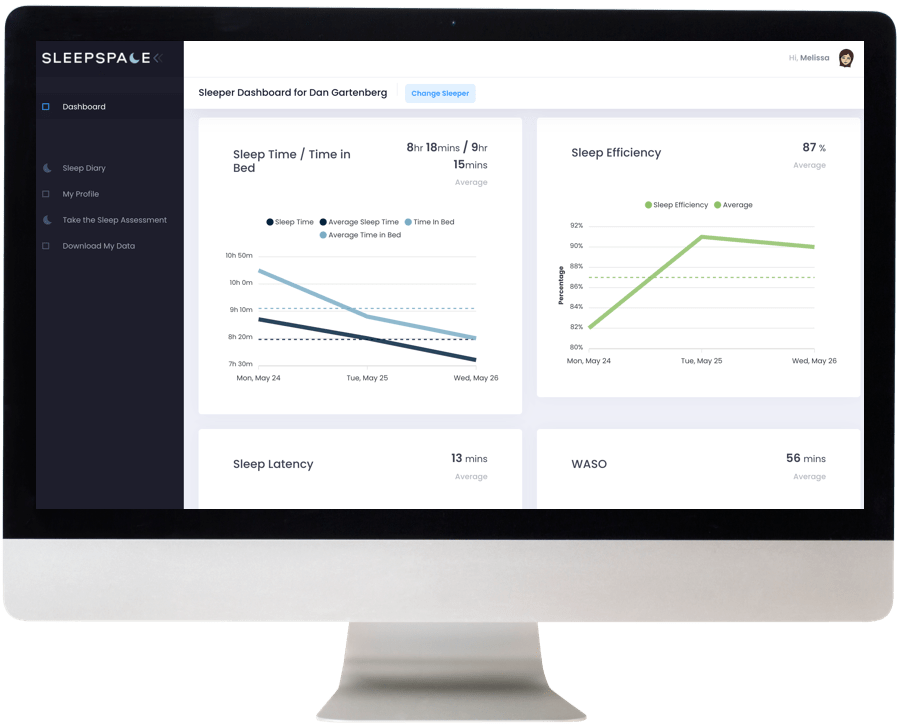
A diary can document timing and the experience of sleep in a consistent way. The Consensus Sleep Diary provides an established framework for prospective self-report; it is not a diagnostic test. [6]
Agree on the reporting before launch.
Discuss which aggregate measures are available, who can access them, consent, minimum group sizes, retention, and how participants can leave the program. Do not make individual sleep scores an employee performance target.
For a pilot, distinguish enrollment from sustained use, and changes in self-reported sleep from measured business outcomes. Record missing responses and concurrent changes in work demands. A before-and-after improvement alone does not establish that the program caused it.
Ask for a demonstration of the proposed reporting workflow. Confirm data handling and integration requirements with your HR, privacy, and security teams before enrolling employees.
Start with the app. Explore connected sleep.
Employees do not need to buy a wearable to start with SleepSpace's education, relaxation, and diary tools. For people who already track their sleep, discuss supported connections with Apple Watch, Oura, WHOOP, and other devices. Availability varies by platform and integration.
For an optional hardware offer, explore the SleepSpace Nearable Charger and Smart Light or the SleepSpace Band. Keep hardware separate from the core benefit so your organization can choose the right access model.
In the demo, review current compatibility, setup, availability, and what is included in the business proposal. Consumer retail offers and subscription prices are not corporate pricing.
Sleep science, translated into something people can do.
My starting point is simple: give people a useful next step, not another number to worry about. A bedtime routine must fit a real life, and a workplace benefit must recognize the schedules and expectations that shape that life.
That is why I would pair individual tools with a conversation about work itself: time to recover, realistic after-hours expectations, and support for people whose sleep problems need professional attention. An app can support the person; it cannot undo a schedule that leaves too little opportunity for rest.
Questions from HR and benefits teams.
What can an employee sleep wellness program include?
Discuss app access, a sleep assessment, educational onboarding, a sleep challenge, the six-week CBT-I-based learning path, and optional live coaching. The business proposal should specify the services, support, and reporting included rather than assuming every option is bundled.
Can employees use it without a wearable?
Yes. Education, relaxation content, and diary-based observations can be a starting point without purchasing a ring, watch, or band. Review phone-based tracking setup and supported device connections in the demo.
Does SleepSpace guarantee a return on investment?
No fixed savings or productivity result is promised here. Define what you want to measure, establish a baseline, and review results alongside participation and total program cost. Research on other sleep interventions is not a forecast of your organization's results.
Will managers see individual sleep data?
Individual sleep data should not be used to grade employees. Before rollout, agree on participant consent, data access, aggregate reporting, group-size safeguards, and retention. Ask to see the exact reporting configuration included in your proposal.
Is this suitable for shift-based teams?
Bring your shift patterns to the discussion so education and implementation can address daytime sleep and changing work hours. No relaxation tool compensates for unsafe scheduling or insufficient recovery time. Safety-critical fatigue concerns require your occupational health and safety processes.
How much does it cost, and how do we get started?
Request a business demo with your team size, location, workforce pattern, and preferred launch window. Ask for a scoped proposal covering access, implementation, optional coaching or hardware, reporting, and renewal terms. This page does not quote enterprise pricing or a fixed trial offer.
Give better sleep a place in your benefits strategy.
See the employee experience, discuss a focused pilot, and decide what meaningful success would look like for your team.
Request a business demoBring your team size, work patterns, and target launch window. We will use the conversation to explore fit and scope.
Research behind the conversation.
Evidence for sleep health and related interventions is not the same as validation of a particular employer program. References are linked beside the claims they support.
Academic references (6)
- Kessler RC, Berglund PA, Coulouvrat C, et al. Insomnia and the performance of US workers: results from the America insomnia survey. Sleep. 2011;34(9):1161-1171. doi:10.5665/SLEEP.1230
- Bostock S, Luik AI, Espie CA. Sleep and Productivity Benefits of Digital Cognitive Behavioral Therapy for Insomnia: A Randomized Controlled Trial Conducted in the Workplace Environment. Journal of Occupational and Environmental Medicine. 2016;58(7):683-689. doi:10.1097/JOM.0000000000000778
- Robbins R, Weaver MD, Quan SF, et al. Evaluating the impact of a sleep health education and a personalised smartphone application on sleep, productivity and healthcare utilisation among employees: results of a randomised clinical trial. BMJ Open. 2022;12(9):e062121. doi:10.1136/bmjopen-2022-062121
- Olson R, Crain TL, Bodner TE, et al. A workplace intervention improves sleep: results from the randomized controlled Work, Family, and Health Study. Sleep Health. 2015;1(1):55-65. doi:10.1016/j.sleh.2014.11.003
- Edinger JD, Arnedt JT, Bertisch SM, et al. Behavioral and psychological treatments for chronic insomnia disorder in adults: an American Academy of Sleep Medicine clinical practice guideline. Journal of Clinical Sleep Medicine. 2021;17(2):255-262. doi:10.5664/jcsm.8986
- Carney CE, Buysse DJ, Ancoli-Israel S, et al. The consensus sleep diary: standardizing prospective sleep self-monitoring. Sleep. 2012;35(2):287-302. doi:10.5665/sleep.1642
SleepSpace supports sleep wellness and education. It is not a substitute for diagnosis or individualized medical care.