
Evidence-based sleep assessment by SleepSpace
Find Your Sleep Animal Through the Sleep Pyramid™
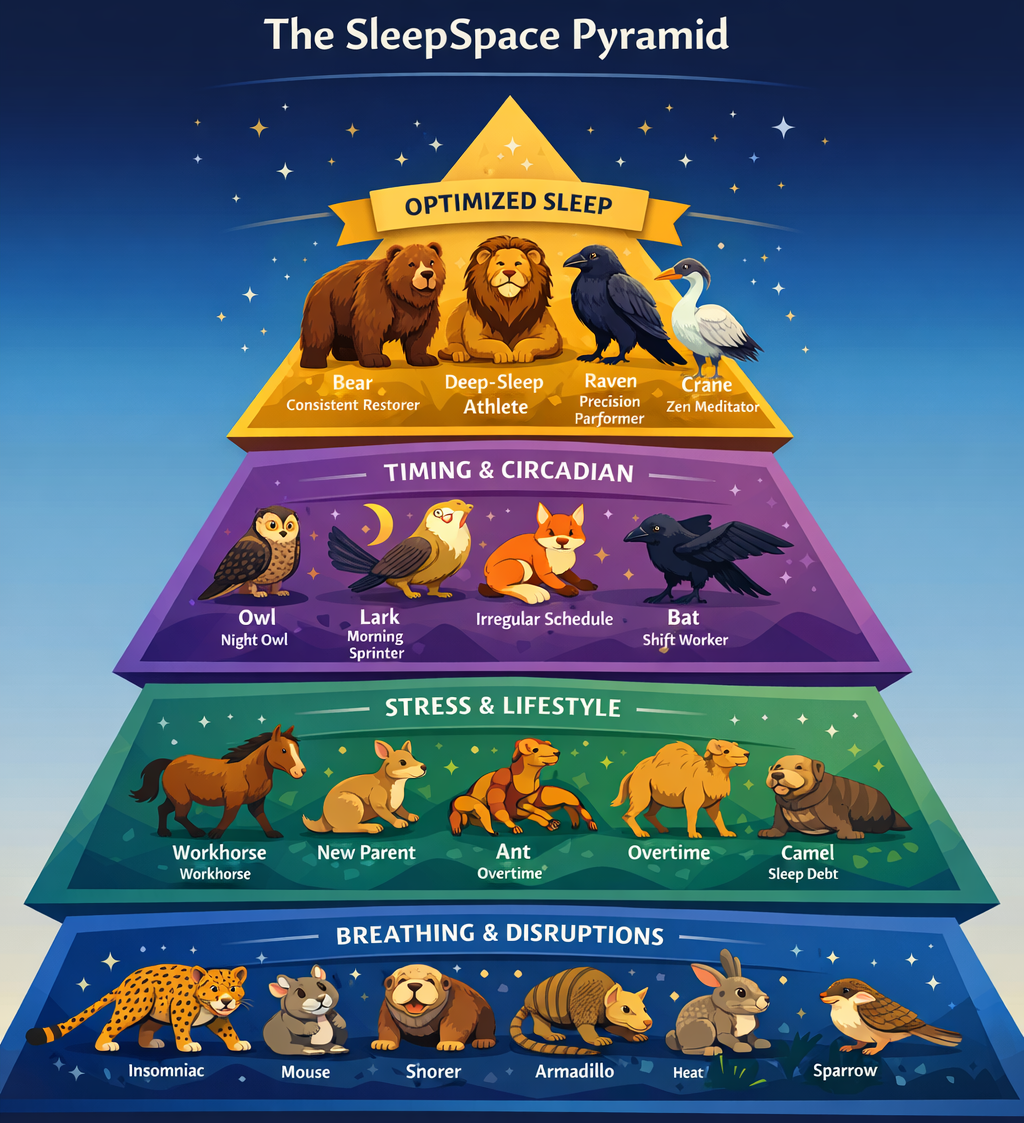
Most people are not bad sleepers. They are misunderstood sleepers. The Sleep Pyramid helps reveal whether the real issue is sleep debt, circadian timing, falling asleep challenges, stress reactivity, airflow and breathing strain, or a more specific overlap profile. That is how SleepSpace maps you into one of 70 Sleep Animals with a plan that actually fits. Your onboarding quiz gives you the first result, and the SleepSpace app can make that result more accurate over time with advanced sleep tracking and wearable integrations.
The core framework
What the Sleep Pyramid actually measures
Good sleep is not one thing. It is a stack of biological and behavioral layers. If we only ask whether you are tired, we miss the cause. The Sleep Pyramid gives us a sharper lens into how much sleep you get, how stable it is, when it happens, what is disrupting it, how activated your nervous system is, and how restored you feel the next day.
1. Sleep Quantity and Sleep Debt
First we ask whether you are simply getting enough sleep. Some people have a sleep challenge. Others have a time problem.
2. Sleep Continuity
Falling asleep is only part of the story. Waking at 2 AM, waking too early, noise sensitivity, pain, and partner disturbance all belong here.
3. Circadian Timing
This is the rhythm layer. Are you a true night owl, a morning lark, a shift worker, a frequent traveler, or somebody whose schedule never fully stabilizes?
4. Physiologic Load
Airway issues, snoring, heat, pain, body discomfort, and restless movement can degrade sleep quality even when time in bed looks decent.
5. Hyperarousal and Stress
When the brain stays in go-mode, bedtime becomes effortful. Racing thoughts, grief, stress-triggered sleep, and staying awake at night patterns all live on this layer.
6. Daytime Restoration
The final question is simple: are you actually waking up restored? If not, your sleep may be long enough on paper but not delivering real recovery.
Why this matters
Why a 70-category model works better than generic sleep advice
The internet is full of one-size-fits-all sleep tips. But generic advice fails when your real issue is not “sleep” in the abstract. It may be chronic sleep debt, a circadian rhythm mismatch, breathing strain, caregiving overload, temperature sensitivity, or a high-performing brain that refuses to switch off. The 70 Sleep Animals framework gives language to those differences.
Get a More Precise Result
After your quiz, download the app to sharpen your sleep animal with tracking and wearable data
Your onboarding quiz gives you a strong starting profile, but the SleepSpace app can make that profile more precise over time. With advanced sleep tracking, nightly trends, and wearable integrations, SleepSpace can separate temporary sleep disruption from a true long-term pattern, detect changes earlier, and refine the recommendations that fit you best.
How SleepSpace turns data into insight
From sleep diary to sleep animal to next step
SleepSpace combines what you report, what your schedule reveals, and how your nights actually look. We are not trying to label people for fun. We are trying to make the right next step obvious. When you connect tracking data and wearable inputs inside the app, the analysis becomes more precise and more useful over time.
We map your Sleep Pyramid dimensions
Sleep debt, continuity, timing, airway or body load, stress arousal, and next-day restoration each get their own signal.
We apply nightly modifiers
Racing thoughts, middle-of-the-night waking, heat, snoring, travel, parenting disruption, and schedule chaos all change how a sleep pattern should be interpreted.
We assign the closest-fit Sleep Animal
Instead of flattening everyone into four simple categories, we choose a phenotype that feels recognizable and practically useful, then improve its accuracy inside the app as tracking and wearable data accumulate.
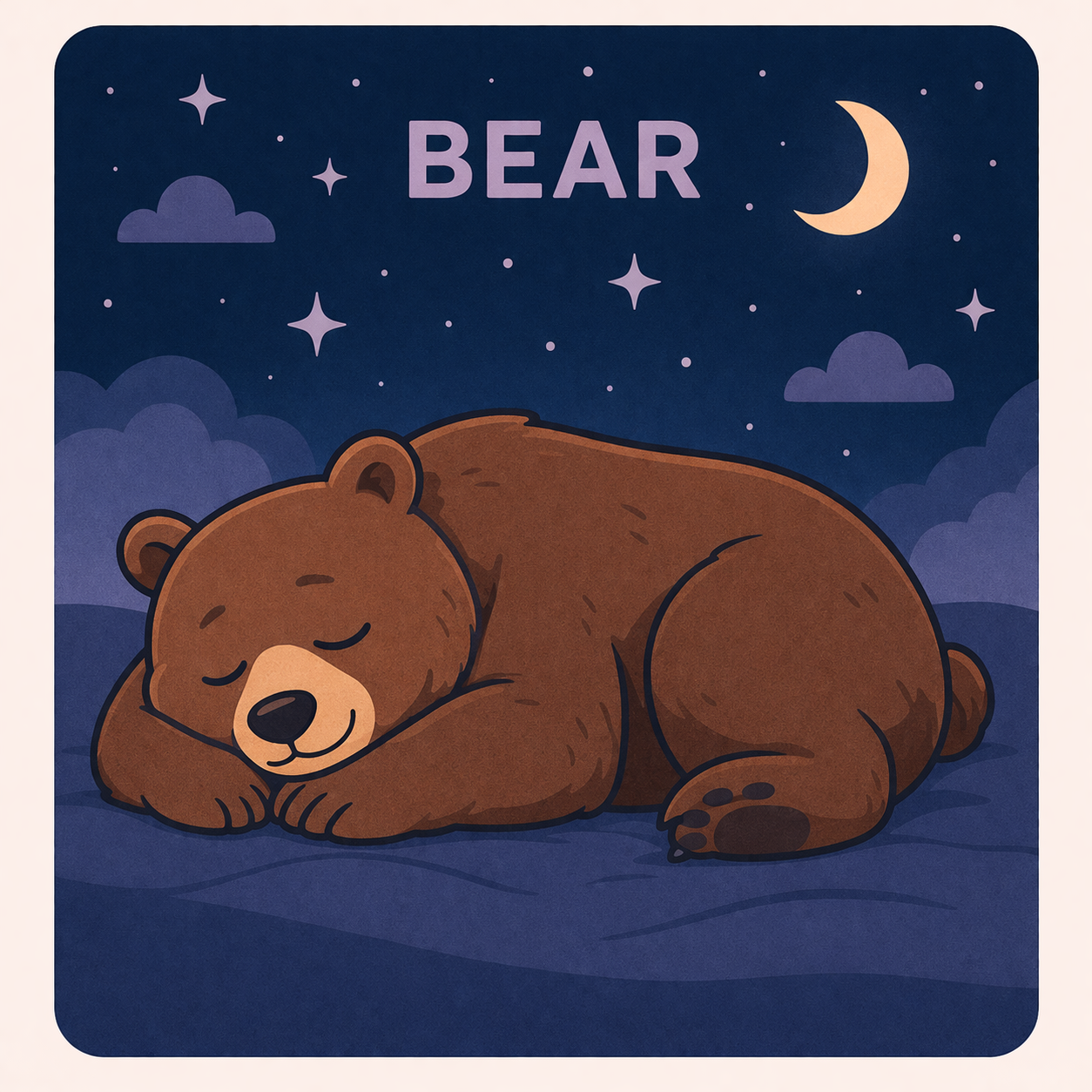
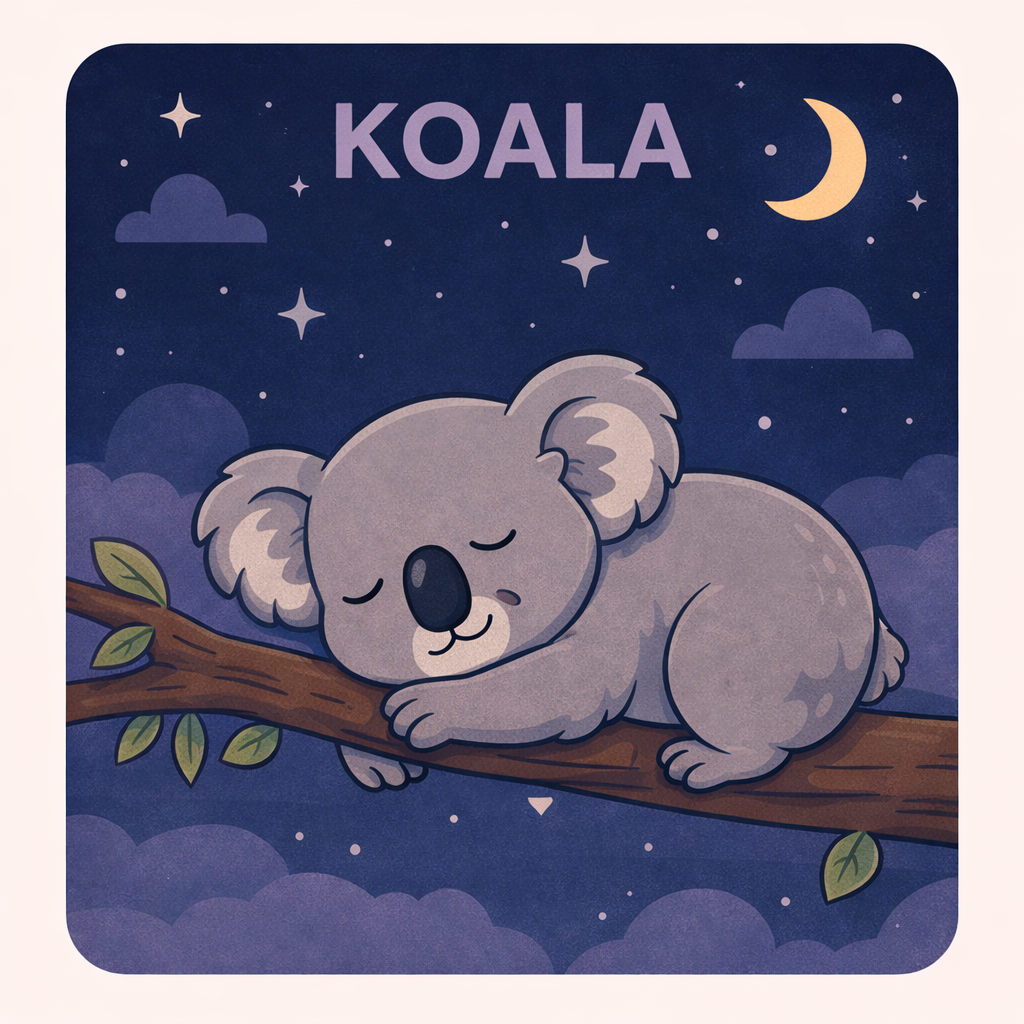
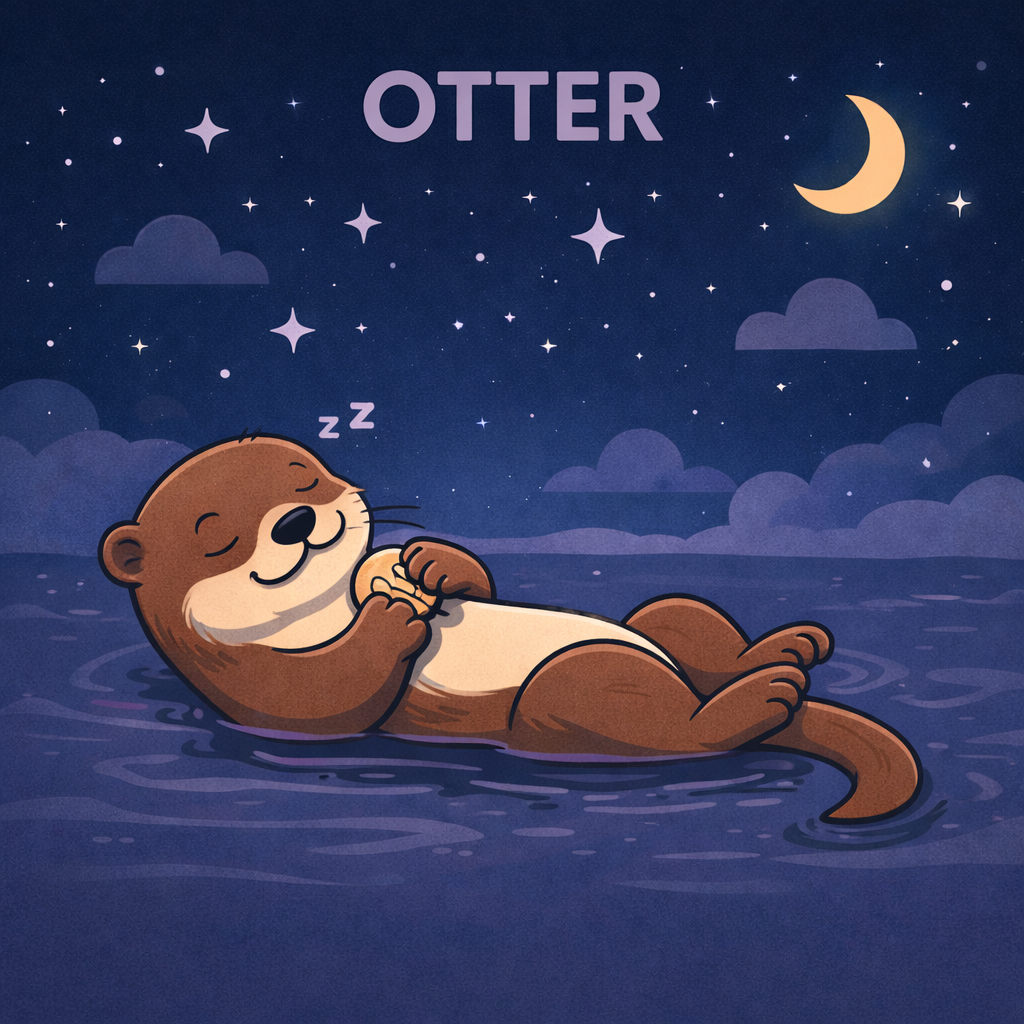
A few recognizable profiles
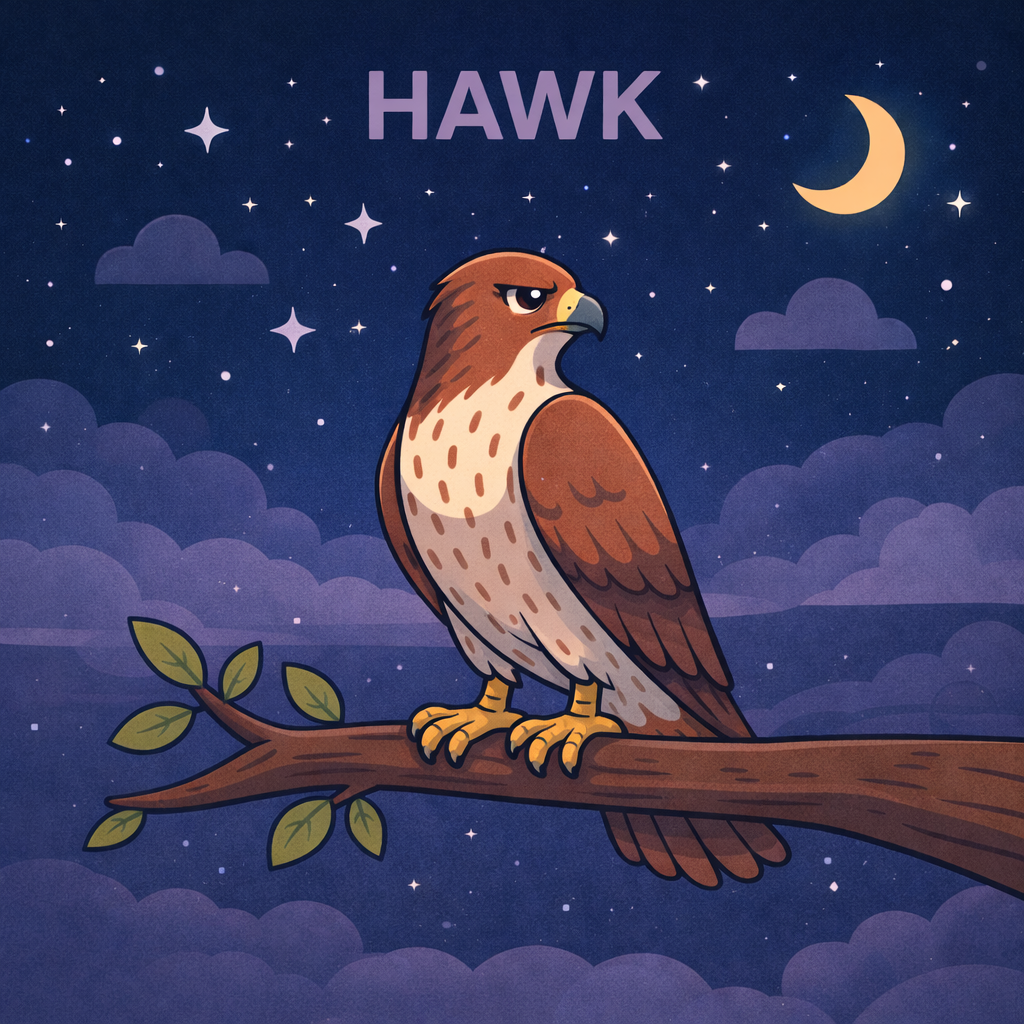
Some people are Bears. Some are Hawks. Some are simply under-recovered.
A healthy sleeper and a sleep-deprived shift worker should not get the same advice. Neither should a jet-lagged traveler and someone whose body clock is naturally delayed. The goal is not just naming a pattern. It is linking that pattern to the right next move.
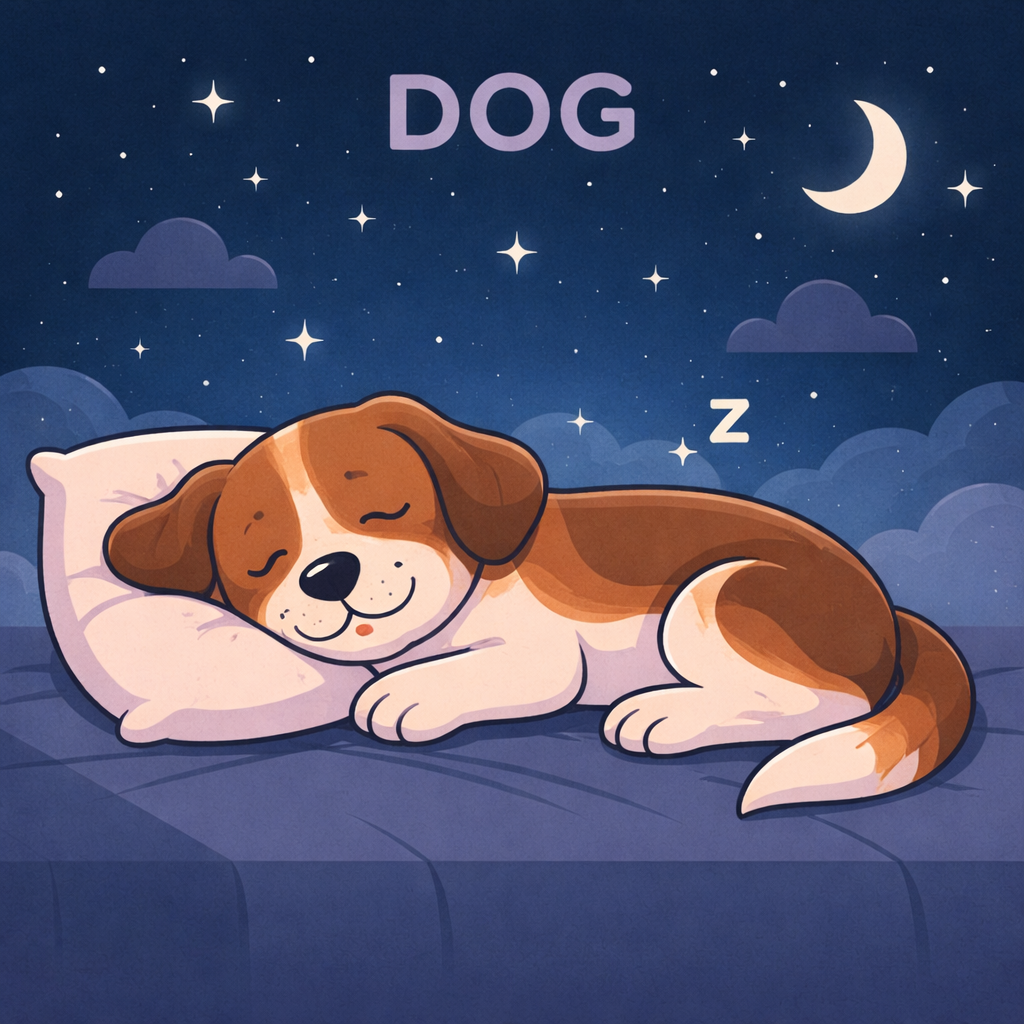
Dog
Flexible Sleeper
Bear
Consistent Restorer
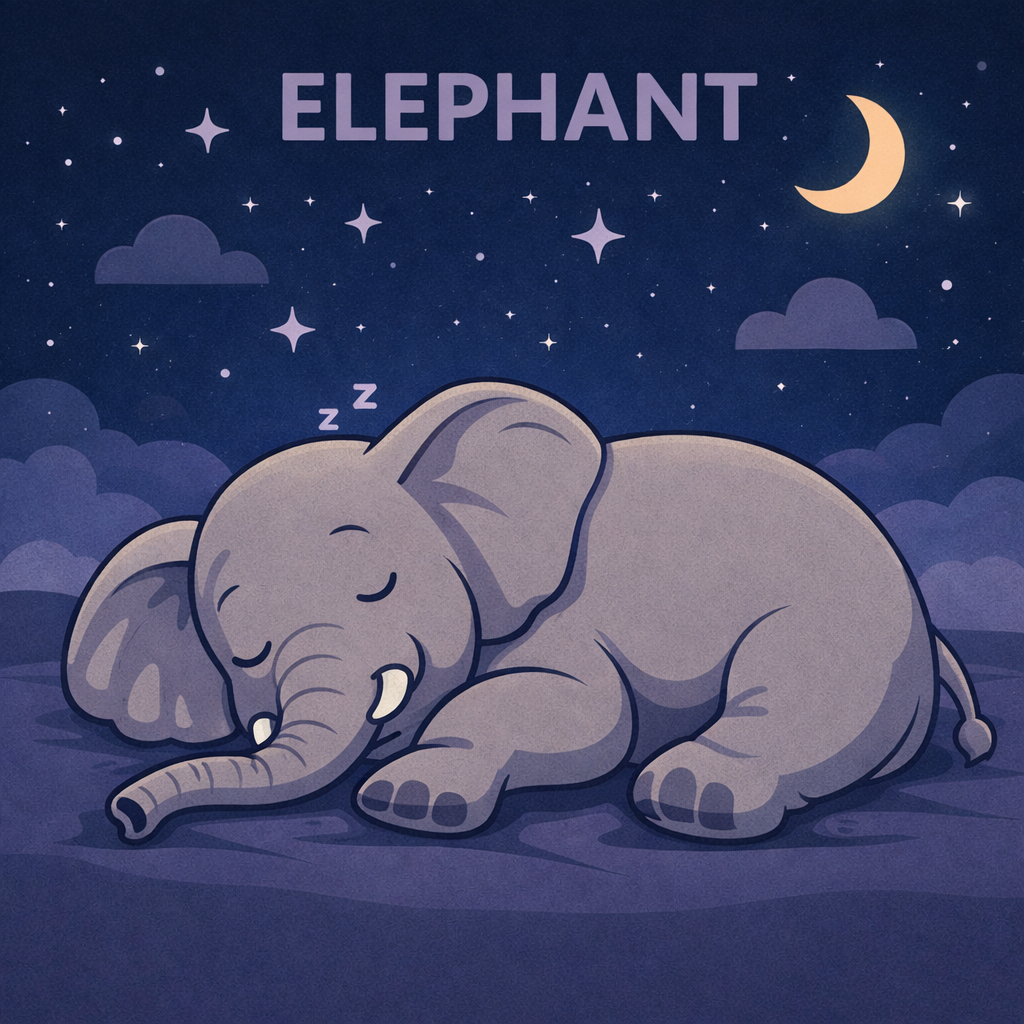
Elephant
Short-Sleep Ace
Otter
Balanced Builder
Koala
Long-Sleep Restorer
Hawk
Precision Performer
How the 70 animals are built
The 70 Sleep Animals come from combinations, not random mascots
Each profile reflects a mix of timing, sleep pressure, continuity, stress load, and physical disruptors. The animal is simply a memorable way to describe a real sleep pattern and point to the right next move. The more real-world sleep data you collect in the app after your onboarding quiz, the more precisely SleepSpace can tell whether your strongest pattern is stable, seasonal, stress-related, or changing over time.
Circadian Patterns
Morning types, evening types, shift workers, irregular sleepers, and travelers can all look “tired” for completely different reasons.
Sleep Debt Profiles
Some sleepers are under-recovered because life is too full, not because their biology is broken. Quantity matters.
Stress and Falling Asleep Issues
Hyperarousal, racing thoughts, bedtime dread, grief, and night waking create a very different treatment path than simple schedule drift.
Physical Disruption Profiles
Snoring, breathing strain, pain, heat, environment, and body discomfort can make a long night feel completely unrefreshing.
Built for action, not just description
The point is not the animal. The point is the next best intervention.
Once you know whether your pattern is driven by challenges falling asleep and staying asleep, circadian mismatch, sleep debt, or quality disruption, the next question becomes easier: what should you do tonight, this week, and this month to get better sleep?
For hyperarousal
Focus on calming the nervous system, reducing sleep effort, and improving schedule reliability.
For circadian rhythm problems
Focus on timing anchors, light exposure, and protecting the sleep window from social jet lag.
For sleep debt and workload
Focus on reclaiming quantity first, then make limited sleep opportunities more restorative.
For airway and body-load issues
Focus on quality, follow-up, and removing hidden disruptors that keep the night from becoming restorative.
FAQ
Frequently asked questions about the Sleep Pyramid and the Sleep Animals
Is this just a chronotype quiz?
It starts with timing patterns, but it goes further. Morningness and eveningness matter, but so do fragmented sleep, breathing and snoring patterns, pain, stress reactivity, travel, and sleep debt.
Can two people both be tired but have different Sleep Animals?
Yes. One person may be carrying sleep debt. Another may be getting enough time in bed but poor-quality recovery. The pattern matters more than the label.
Does the Sleep Pyramid work for athletes, parents, and shift workers?
Yes. That is exactly why the model exists. It was built to distinguish high performers, new parents, caregivers, long commuters, travelers, and schedule-disrupted sleepers instead of pretending they all share the same problem.
What if my sleep does not fit one clean category?
That is normal. Many people land in overlap profiles such as stress-triggered sleep, position-sensitive breathing patterns, or mixed timing and recovery issues. The framework is meant to improve clarity, not flatten complexity.
Ready to personalize your sleep?
Turn your sleep data into language people can understand and a plan you can use
If you want a more useful and personalized sleep assessment without drowning in jargon, the Sleep Pyramid and Sleep Animals are the bridge. Better sleep starts when your sleep pattern feels accurately described, and the SleepSpace app can make that picture more precise after your onboarding quiz through advanced tracking features and wearable integrations.