
Adaptive and Context-Sensitive Profiles pattern
Raccoon: Night Worker
Your sleep has to recover from work that happens when most people are asleep.
These animals change with season, travel, grief, late performance timing, fragmentation, or an unusually high need for sleep.


Start here
Turn this into a practical next step
Pick one small action, then check the pattern over several nights. You do not need to solve everything at once.
Interpretation
What this pattern means
Your sleep has to recover from work that happens when most people are asleep. [1] [2]
This pattern is strongly shaped by context. Travel, grief, stress, caregiving, or unstable routines can all change timing, continuity, and next-day function without making the pattern random. This is why tracking matters so much here. Once you can see how the night changes with context, the right next step gets much easier to choose. Timing matters more than force here: the same tool can help or backfire depending on when it is used. [3] [4] [5]
Recovery-focused papers keep showing the same thing: a strong baseline is something to protect before it slips, not chase after it is gone. Breathing-related sleep problems can change dramatically with position and airway mechanics, which is why the night can look very different on the back than on the side. That is where SleepSpace becomes more useful than a static score alone: it can help you see the pattern more clearly and, when appropriate, respond in real time with sound and light changes while the night is still unfolding. [6]
In real life: Night work can create two problems at once: a shifted clock and a noisy daytime sleep environment. A consistent workday sleep window, light management, and clear household boundaries are practical starting points.
What this often looks like
Common signals in real life
- You may look different in different seasons, life chapters, or travel weeks.
- A multi-night or multi-context perspective is often more revealing than a single snapshot.
- Portable routines matter because consistency is being challenged by external context.
- The most helpful framing is often adaptive rather than pathologizing.
Why this page exists
What makes Raccoon distinct
These pages benefit from highlighting variability and the value of multi-night tracking.
Build stronger daytime sleep protection and steadier post-shift routines. SleepSpace can help create a more workable recovery system around night work.
Scientific read
Context-sensitive sleepers are often easier to understand once you stop expecting the same night every night. Travel, grief, stress, caregiving, and short windows can all change the pattern without making it random. That is why these pages care so much about diaries, repeated observation, and what changes from one week to the next. The signal is often in the variation itself. The literature here also makes a useful point: temporary strain can still create predictable biology. A compressed or emotionally loaded period can change timing, depth, and next-day recovery in consistent ways. This is why the most helpful tools here are often the ones that capture the pattern as it changes rather than pretending you should look the same every night. [7] [10] [13]
Once the context is visible, the right solution becomes much easier to choose and much easier to stick with. The overlap papers in this lane are useful because context keeps reshaping the night: grief, travel, caregiving, stress, and unstable schedules can all change the same sleeper in different weeks. That is why repeated measurement beats snap judgment for these profiles. The pattern often makes sense once the context gets logged clearly enough. The problem is often not just less sleep, but sleeping against the clock often enough that recovery never fully catches up. [8] [11] [14]
Timing matters more than force here: the same tool can help or backfire depending on when it is used. The night can become self-reinforcing when the bed turns into a place for monitoring, rehearsing, and trying too hard. Strategic naps can restore more than people expect when the alternative is trying to grind through a biologically low period. Recovery-focused papers keep showing the same thing: a strong baseline is something to protect before it slips, not chase after it is gone. [9] [12] [15]
Tracking and wearables
What data often helps separate this pattern from nearby ones
Because these patterns change with context, the best data are often multi-night and multi-setting: travel versus home, stressful versus calm weeks, winter versus summer, and high-demand versus lower-demand periods. [2] [13]
Track bed and wake times across workdays and free days. The useful signal is the timing gap, not a single sleep score. [11] [13] [12]
SleepSpace app features
Use these tools if you want to improve this pattern instead of just reading about it
Start with the assessment, download the app, and use the features below to turn this sleep animal into a practical plan.
SleepSpace feature
Sleep assessment
Start here if you want a clearer read on your sleep animal, your main bottlenecks, and what to work on first.
Learn how to use it

SleepSpace feature
Smart alarm
Use smart wake timing when your biggest issue is schedule drift, grogginess, or waking at the wrong point in the sleep cycle.
Learn how to use it
SleepSpace feature
Smart light ramp-up
Use light-based wake support when circadian timing, late mornings, travel, or schedule shift is part of the problem.
Learn how to use it
SleepSpace resources
SleepSpace resources that fit this pattern
Use these practical guides and tools to understand this sleep pattern and choose a useful next step.
SleepSpace article
SleepSpace learning hub
A broad SleepSpace article library that can serve as the hub resource on every page.
SleepSpace article
SleepSpace science page
Useful when the page needs a product-adjacent evidence destination.
SleepSpace article
Tracking and wearables guide
Useful for pages that emphasize data quality, sleep diaries, and wearables.
SleepSpace article
Circadian schedule guide
Useful for circadian, travel, and timing-mismatch pages.
SleepSpace article
SleepSpace Phone system
Useful for pages that talk about integrated tracking, environment control, and bedside sleep technology.
FAQ
Questions Dr. Dan would expect about this animal
Quick answers to the questions people usually ask when this sleep pattern feels familiar.
What does the Raccoon sleep animal mean?
This profile is a more specific version of shift-work disruption. It fits people whose actual work hours occupy the night and force sleep into daylight or irregular margins. The challenge is not just timing. It is that your schedule repeatedly asks sleep to happen against strong biological resistance. The more protected your daytime recovery becomes, the less punishing this pattern usually feels. Sleep can be shaped by schedule, stress load, sleep environment, body signals, and what happens the following day. Looking for repeatable changes across several nights makes it easier to identify a useful next step.
What should you track if this raccoon pattern sounds like you?
Because these patterns change with context, the best data are often multi-night and multi-setting: travel versus home, stressful versus calm weeks, winter versus summer, and high-demand versus lower-demand periods. [2] [13] Start with the SleepSpace sleep assessment and then use the app to watch what happens to timing, continuity, symptoms, and next-day recovery over time.
When should you get extra help for raccoon-style sleep problems?
If this pattern is getting more intense, affecting safety, or leaving you persistently exhausted, treat this page as educational and talk with a doctor or sleep specialist. SleepSpace can help you organize the pattern, but medical concerns still deserve medical care.
Important note
Protect sleep after the night shift
The pattern language is educational and pattern-based. It becomes most useful when paired with trend data, practical experimentation, and medical follow-up when symptoms are severe, persistent, or safety-relevant.
Use SleepSpace to improve recovery when your working hours live where sleep usually belongs.
Research references
Research behind these sleep insights
Show citations (15)
- Lowden et al. (2004). Suppression of sleepiness and melatonin by bright light exposure during breaks in night work.
This trial is especially relevant because timing matters more than force here: the same tool can help or backfire depending on when it is used.
Full article - Mallis et al. (2004). Summary of the key features of seven biomathematical models of human fatigue and performance.
This review is useful because recovery-focused papers keep showing the same thing: a strong baseline is something to protect before it slips, not chase after it is gone.
Full article - Flo et al. (2012). Shift work disorder in nurses--assessment, prevalence and related health problems.
Breathing-related sleep problems can change dramatically with position and airway mechanics, which is why the night can look very different on the back than on the side.
Full article - Dinges et al. (2004). Critical research issues in development of biomathematical models of fatigue and performance.
This review is useful because the problem is often not just less sleep, but sleeping against the clock often enough that recovery never fully catches up.
Full article - Wilkinson et al. (1968). Sleep deprivation.
This trial is especially relevant because a recurring finding in the sleep-loss literature is that people feel more adapted than their attention, mood, and reaction time really are.
Full article - Swanson et al. (2018). The importance of the circadian system & sleep for bone health.
This review is useful because timing matters more than force here: the same tool can help or backfire depending on when it is used.
Full article - Costa et al. (2003). Shift work and occupational medicine: an overview.
The problem is often not just less sleep, but sleeping against the clock often enough that recovery never fully catches up.
Full article - Smith et al. (2008). Night shift performance is improved by a compromise circadian phase position: study 3. Circadian phase after 7 night shifts with an intervening weekend off.
Timing matters more than force here: the same tool can help or backfire depending on when it is used.
Full article - Katz et al. (2001). Psychiatric aspects of jet lag: review and hypothesis.
This review is useful because the night can become self-reinforcing when the bed turns into a place for monitoring, rehearsing, and trying too hard.
Full article - Saijo et al. (2008). Twenty-four-hour shift work, depressive symptoms, and job dissatisfaction among Japanese firefighters.
Strategic naps can restore more than people expect when the alternative is trying to grind through a biologically low period.
Full article - Kelley et al. (2017). Is 8:30 a.m. Still Too Early to Start School? A 10:00 a.m. School Start Time Improves Health and Performance of Students Aged 13-16.
Recovery-focused papers keep showing the same thing: a strong baseline is something to protect before it slips, not chase after it is gone.
Full article - Reinberg et al. (2008). Internal desynchronization of circadian rhythms and tolerance to shift work.
The problem is often not just less sleep, but sleeping against the clock often enough that recovery never fully catches up.
Full article - Santhi et al. (2007). Acute sleep deprivation and a body clock that does not match your schedule associated with transition onto the first night of work impairs visual selective attention.
Feeling used to a short sleep schedule does not always mean attention, mood, and reaction time have recovered.
Full article - Balkin et al. (2004). Comparative utility of instruments for monitoring sleepiness-related performance decrements in the operational environment.
Feeling used to a short sleep schedule does not always mean attention, mood, and reaction time have recovered.
Full article - Tietavainen et al. (2007). Model-based posturographic sleepiness monitor tested on 20 subjects.
This trial is especially relevant because the most useful studies in this lane turn vague sleep complaints into mechanisms you can actually test.
Full article
Nearby profiles
Other animals in the same neighborhood
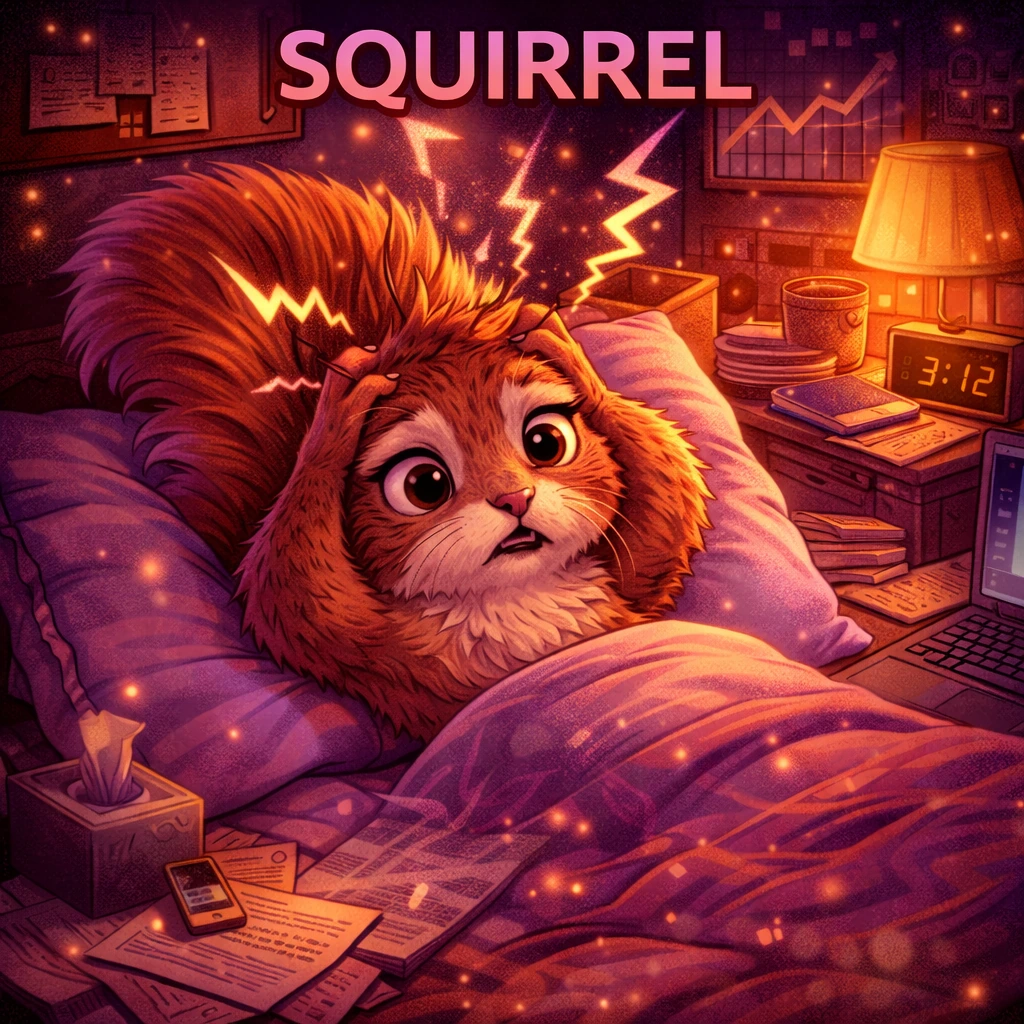
Related animal
Squirrel
Stress-Triggered Sleeper
Your sleep may be mostly fine until stress flips the switch.

Related animal
Seal
Seasonal Adapter
Your sleep seems to change when light, season, or environment shifts around you.
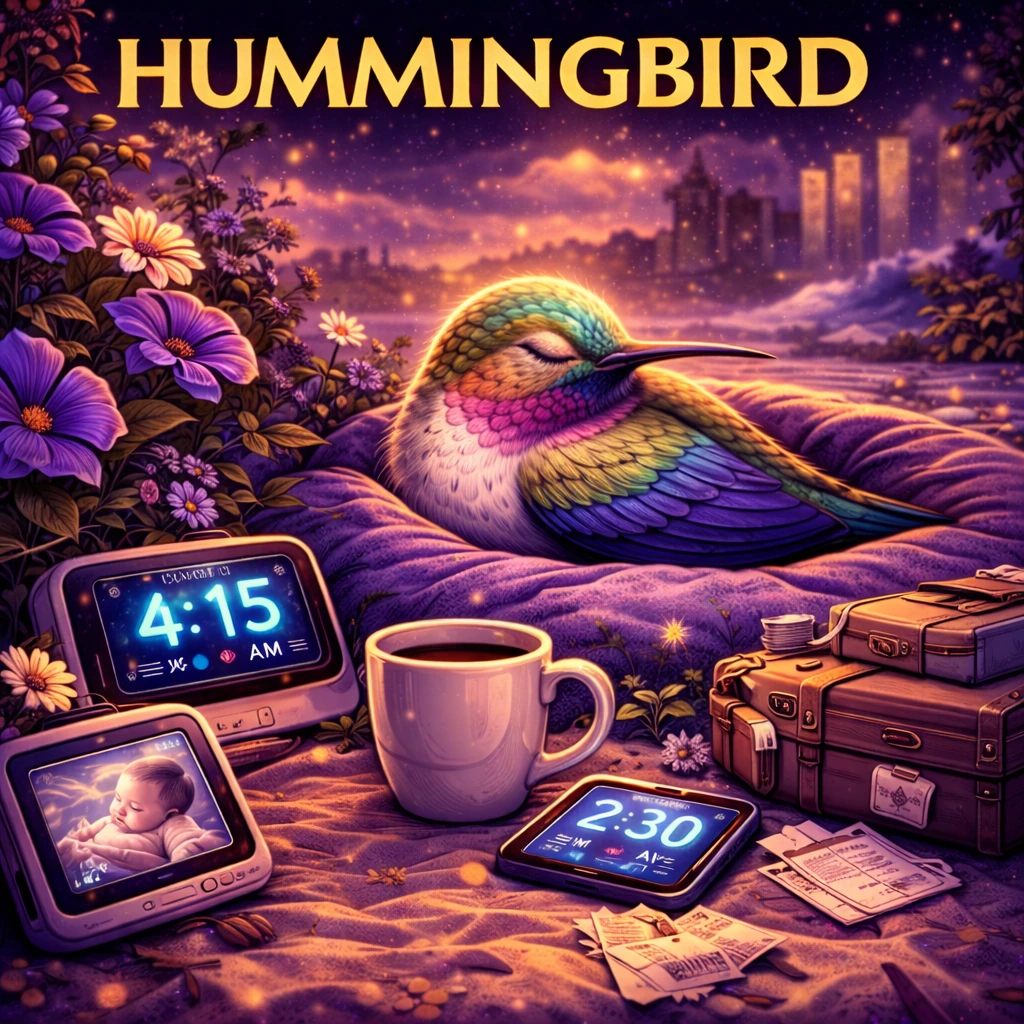
Related animal
Hummingbird
Micro-Recovery Sleeper
Your system may be surviving on short, fragmented bursts of recovery instead of one steady night.