
How to Lucid Dream
Unlocking Your Subconscious Mind Through Inception
Dream enhancement
REM-timed sound cues for more intentional dreams
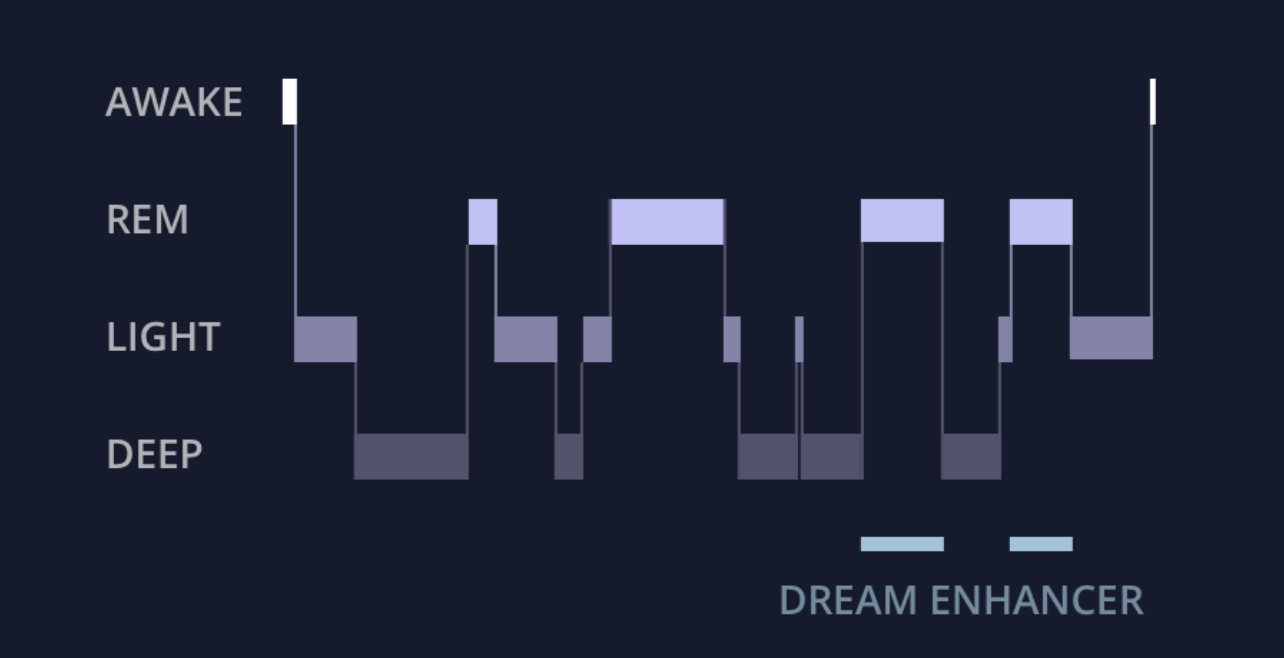
Dream enhancement uses sleep timing, sound cues, and dream recall practice to make the dream state easier to notice, remember, and work with. The goal is not to force dreams. It is to create a gentler bridge between waking intention and REM-rich parts of the night.
A lucid dream is a dream in which you realize that you are dreaming. That awareness can make dreams feel more vivid, memorable, and flexible. Research on lucid dream induction has focused on skills such as dream recall, reality testing, Wake Back to Bed, and MILD, the mnemonic induction of lucid dreams.
SleepSpace applies the same practical idea through sound. A user can pair a tone or calming rain sound with an intention before sleep, then let SleepSpace play that cue when movement and sleep timing suggest a dream-rich window. The cue is meant to be soft enough to blend into sleep while still meaningful enough to be recognized in the dream.
Keywords

Vivid dreams are often associated with REM sleep, especially later in the night when REM periods tend to lengthen.
The mnemonic induction of lucid dreams trains the sleeper to remember the intention to notice dreaming.
The SleepSpace dream enhancer sound is used as a pre-sleep cue, giving the brain a simple sound-intention association.
Targeted memory reactivation studies show that sounds paired with learning can influence memory processing during sleep.
What the studies suggest
Dream enhancement is built around timing, intention, and recall
The strongest theme across the dream and memory literature is that sleep is not a passive blackout. The brain continues to process memories, emotion, sensory information, and self-generated experience. Dream enhancement uses that idea carefully: the cue should be meaningful before sleep, timed to a dream-rich part of the night, and gentle enough to preserve sleep continuity.
Dreaming is a brain state, not just a story
Nir and Tononi reviewed evidence from dream reports, brain lesions, imaging, and sleep physiology. Their key point is that dreams are conscious experiences generated by a sleeping brain, and they are not perfectly reducible to REM sleep alone. REM sleep is especially dream-rich, but dream-like reports can also occur outside REM. The implication is practical: dream cueing should respect sleep-stage timing without pretending that one stage explains every dream.
Lucid dreaming depends on remembered intention
Aspy's lucid dream induction studies found that MILD and related techniques can increase lucid dreaming, especially when people already have stronger dream recall and can fall back asleep quickly after practicing the technique. The useful takeaway is not that lucidity can be forced on demand. It is that intention, rehearsal, dream recall, and a smooth return to sleep all matter.
The dreaming mind can sometimes receive signals
Konkoly and colleagues showed that some lucid dreamers in REM sleep could receive questions and respond in real time using eye movements or facial muscle signals. That does not mean ordinary sleepers are fully interactive during dreams. It does show that the boundary between outside signal and dream experience is more flexible than people used to assume.
Sounds can carry learned meaning into sleep
Rudoy, Voss, Westerberg, and Paller paired object-location memories with sounds before a nap, then replayed some of those sounds during non-REM sleep. After waking, people remembered the cued locations more accurately than uncued locations. The implication for dream enhancement is modest but important: a sound that has been paired with an intention before bed may still be meaningful to the sleeping brain.
Cueing can shape more than memory strength
Targeted memory reactivation research does not only show memory strengthening. Schechtman and colleagues found that sleep cues linked to intentional forgetting could selectively weaken associated spatial memories. This matters because it frames sleep cueing as context dependent. The sleeping brain is not simply boosted by sound; it responds based on what the cue was paired with before sleep.
Dream recall has a measurable sleep signature
Scarpelli and colleagues found that REM sleep brain activity could predict whether older adults recalled dreams after awakenings. Other work from the same research group reviews dreaming as part of emotional processing. Together, those findings support a simple design principle: dream work should include a morning recall habit, because the value of a cue is much easier to see when dream fragments are captured quickly.
What this means in practice: dream enhancement should feel like a repeated learning loop, not a one-night trick. Pair the sound with an intention before sleep, protect sleep quality during the night, and write down what you remember in the morning. Over time, the pattern is more useful than any single dream.
The lucid dream skill
Awareness inside the dream starts while awake
Lucid dreaming is often trained as a prospective memory skill: you rehearse the intention to recognize that you are dreaming, then carry that intention into sleep. The classic MILD approach includes remembering a dream, imagining becoming lucid in that dream, and repeating the intention to notice the next dream state.
Reality checks support the same skill during the day. The practice is simple: pause, look carefully at your environment, and ask whether you might be dreaming. People often use a watch, written text, or their hands as reality-check anchors because dream details may change in ways that are easier to notice when you have practiced looking for them.
Dream recall matters because lucid dreaming is easier to build when dreams are remembered. A short morning note, a consistent wake time, and a few moments of stillness before checking the phone can make dream recall feel less random.
The research also argues for restraint. Techniques that require waking up in the middle of the night may help some motivated dreamers, but they can also make the routine feel disruptive. SleepSpace emphasizes a softer pathway: build the intention before sleep, use a familiar audio cue, and keep the morning recall step simple enough to repeat.

How SleepSpace supports dream enhancement
Sound cues timed to dream-rich sleep
Cue before sleep
Choose the dream enhancer sound and listen for several minutes while focusing on what you want to dream about, remember, or explore. The cue can be linked to a study goal, a creative problem, a future vision, or a calmer response to a repeating dream theme.
Detect the window
SleepSpace estimates when a dream-rich window is likely based on sleep timing and movement patterns. That timing matters because dream cueing is not the same as leaving sound on continuously.
Play the cue gently
The cue should be noticeable enough for the sleeping brain to process, but soft enough to preserve sleep. The best version feels like a subtle signal inside the night, not a disruption.
Review the morning
After waking, write down any dream fragments, emotions, themes, or moments of awareness. Dream enhancement improves with repetition because the cue, intention, and recall practice become linked over time.
Targeted memory reactivation
Why a meaningful sound can matter during sleep
Targeted memory reactivation, often shortened to TMR, is a sleep-science method where a sound or odor is paired with learning while awake and then replayed softly during sleep. Classic studies found that cues presented during sleep could selectively influence later memory for material linked to those cues.
The important detail is selectivity. In the Rudoy study, the sleeping brain did not improve every object-location memory equally. It improved memories associated with the sounds that were replayed. In the Schechtman study, a cue linked with a forgetting instruction led to more forgetting for the associated material. Those studies point to the same principle: the pre-sleep association gives the cue its meaning.
Dream enhancement uses a related principle in a more experiential way: pair a sound with an intention before bed, then replay that sound during a dream-rich window. The cue gives the sleeping brain a familiar thread to pull on. Sometimes that may support dream recall, sometimes it may enter dream content, and sometimes it may simply make the night feel more connected to the pre-sleep routine.
This is why SleepSpace connects dream enhancement to broader sleep audio: deep sleep stimulation is about NREM slow waves, while dream enhancement is about REM-rich timing, cue meaning, and recall.
How to use it
A simple dream enhancer routine
The routine centers on a short sound-intention practice before starting the Sleep Journey.
Sound and sleep stage
Dream cues belong in a wider sleep audio system
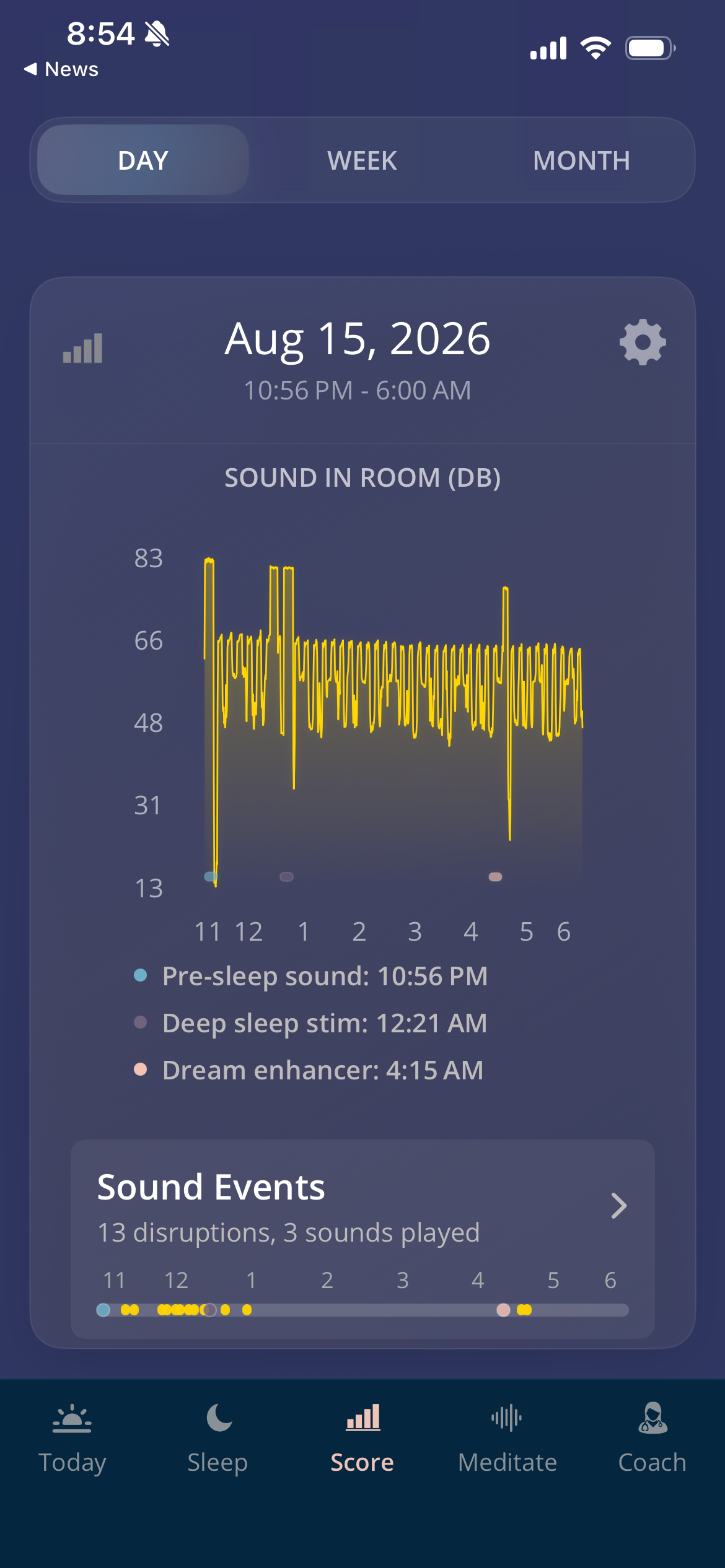
Dream enhancement is one part of the SleepSpace sound ecosystem. A sound can support relaxation before sleep, adaptive noise masking during the night, deep sleep stimulation during NREM sleep, dream cueing during REM-rich sleep, and a smart alarm near a lighter sleep window.
That sequence matters because timing changes the meaning of sound. The same rain cue that feels calming before sleep can become a dream cue later. A different sound pathway can support delta waves during deep sleep. The best experience is not constant audio; it is context-aware audio.
Dream and sleep tools
Use the full sleep loop, not just one cue

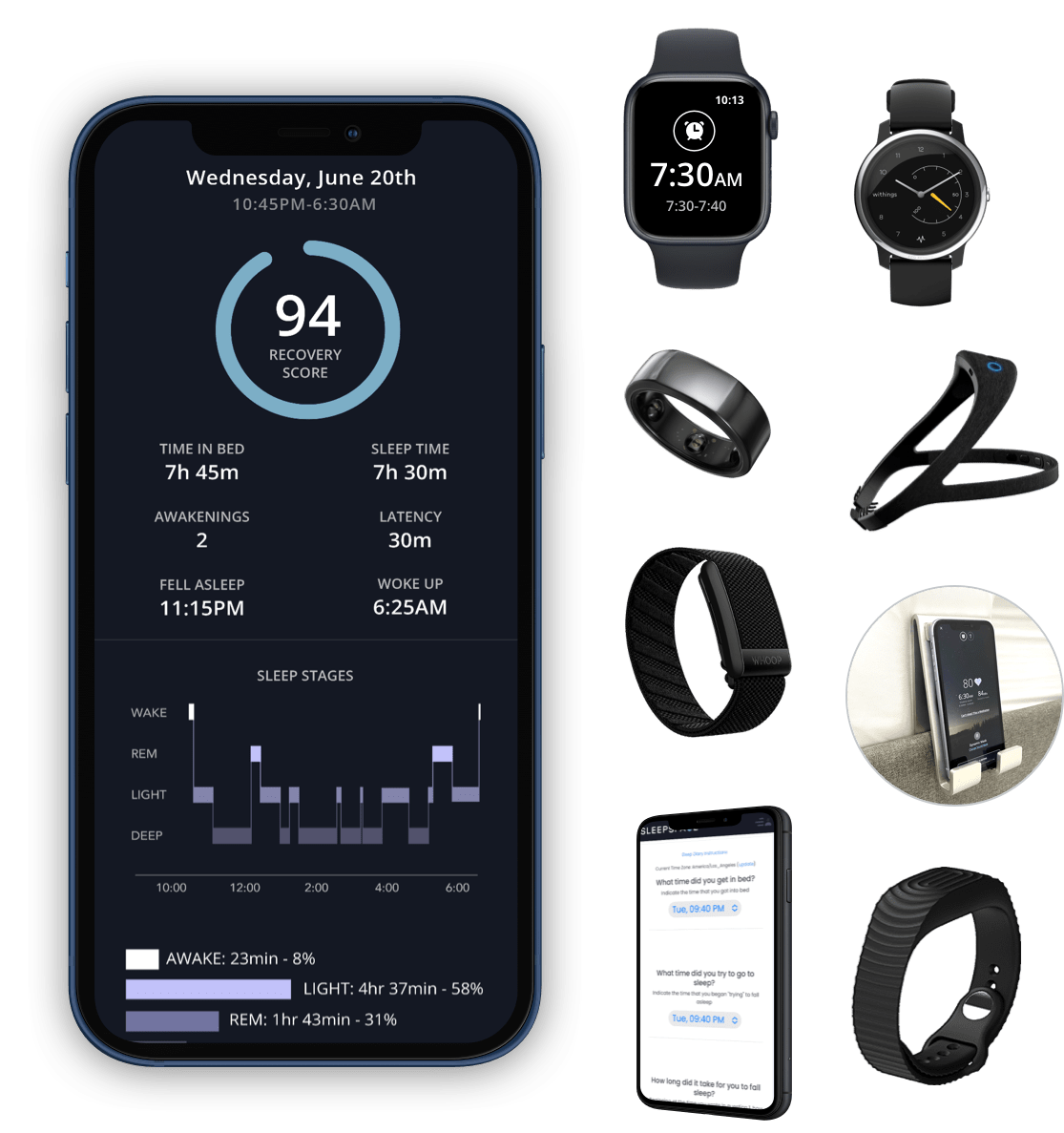
What to expect
A practice for dreams, recall, and sleep continuity
Dream recall first
Lucid dreaming is much easier when dreams are remembered. A quick morning note can be more useful than trying to reconstruct the dream later.
Cue gently
A dream cue should be soft and familiar. The aim is to invite recognition, not to wake the sleeper out of the dream.
Respect sleep quality
The best dream practice should protect the night. If a routine makes sleep more fragmented, simplify the cue or use it less often.
Use repeated practice
Reality checks, MILD, and dream cueing tend to work through repetition. One night is less meaningful than the pattern across several weeks.
Pair with relaxation
Before dream work, a calmer wind-down can make it easier to fall asleep and return to sleep after late-night awakenings.
Keep it personal
The strongest cue is often the one that means something to you: a sound, image, phrase, or memory target you deliberately rehearsed before sleep.
FAQ
Dream enhancement questions
What is dream enhancement?
Dream enhancement is the use of pre-sleep intention, dream recall practice, and timed sound cues to make dreams easier to notice and remember.
What is lucid dreaming?
A lucid dream is a dream in which you realize that you are dreaming. Some people use that awareness to guide the dream, practice a skill, explore creativity, or reduce fear inside a disturbing dream.
What is the MILD technique?
MILD stands for mnemonic induction of lucid dreams. It trains the intention to remember that you are dreaming, often by rehearsing a recent dream and imagining becoming lucid inside it.
How does SleepSpace time dream cues?
SleepSpace uses sleep timing and movement signals to estimate when dream-rich sleep is more likely, then plays the chosen cue during that window when Dream Enhancer is enabled.
Is dream enhancement the same as deep sleep stimulation?
No. Deep sleep stimulation focuses on sound during NREM slow-wave sleep. Dream enhancement focuses on cueing during dream-rich sleep, which is commonly associated with REM sleep later in the night.
What is targeted memory reactivation?
Targeted memory reactivation is a research method where a sound or odor is paired with learning while awake and then replayed during sleep. The cue can influence the reactivation of associated memories.
Can dream cues help with recurring dream themes?
A gentle cue can be paired with a calming intention before sleep, which may help some people relate differently to recurring dream themes. If dreams are severe, persistent, or distressing, additional professional support may be appropriate.
How do I improve dream recall?
Keep a short dream note near your bed, stay still for a few moments after waking, write fragments before checking your phone, and look for patterns across multiple mornings.
References Dream enhancement science
- Nir, Y., & Tononi, G. (2010). Dreaming and the brain: from phenomenology to neurophysiology. Trends in Cognitive Sciences, 14(2), 88-100.
- Aspy, D. J., Delfabbro, P., Proeve, M., & Mohr, P. (2017). Reality testing and the mnemonic induction of lucid dreams: Findings from the national Australian lucid dream induction study. Dreaming, 27(3), 206-231.
- Aspy, D. J. (2020). Findings from the International Lucid Dream Induction Study. Frontiers in Psychology, 11, 1746.
- Konkoly, K. R., Appel, K., Chabani, E., et al. (2021). Real-time dialogue between experimenters and dreamers during REM sleep. Current Biology, 31(7), 1417-1427.e6.
- Rudoy, J. D., Voss, J. L., Westerberg, C. E., & Paller, K. A. (2009). Strengthening individual memories by reactivating them during sleep. Science, 326(5956), 1079.
- Oudiette, D., & Paller, K. A. (2013). Upgrading the sleeping brain with targeted memory reactivation. Trends in Cognitive Sciences, 17(3), 142-149.
- Schechtman, E., Witkowski, S., Lampe, A., Wilson, B. J., & Paller, K. A. (2020). Targeted memory reactivation during sleep boosts intentional forgetting of spatial locations. Scientific Reports, 10, 2327.
- Scarpelli, S., Bartolacci, C., D'Atri, A., Gorgoni, M., & De Gennaro, L. (2019). The functional role of dreaming in emotional processes. Frontiers in Psychology, 10, 459.
- Scarpelli, S., D'Atri, A., Bartolacci, C., Mangiaruga, A., Gorgoni, M., & De Gennaro, L. (2019). Oscillatory EEG activity during REM sleep in elderly people predicts subsequent dream recall after awakenings. Frontiers in Neurology, 10, 985.
- Walker, M. P., & Stickgold, R. (2004). Sleep-dependent learning and memory consolidation. Neuron, 44(1), 121-133.