
What are Delta Waves?
A Regenerative Brainwave that Characterizes Deep Sleep
By Dr. Dan Gartenberg
Last Updated: July 13, 2026
Overview of Delta Waves
Our brain waves in deep sleep have these long-burst brain waves that are very different from our waking life brain waves - called delta waves. Deep sleep measurement occurs using electrodes attached to the skull. When we don’t get the deep sleep we need, it inhibits our ability to learn and for our cells and bodies to recover. Sleep is how we convert all those interactions that we make during the day into our long-term memory and personalities. As we get older, we’re more likely to lose these regenerative delta waves. So in sense, deep sleep and delta waves are actually a marker for biological youth. Watch Dr. Dan Gartenberg's TED talk on the brain benefits of deep sleep.
Types of brainwaves
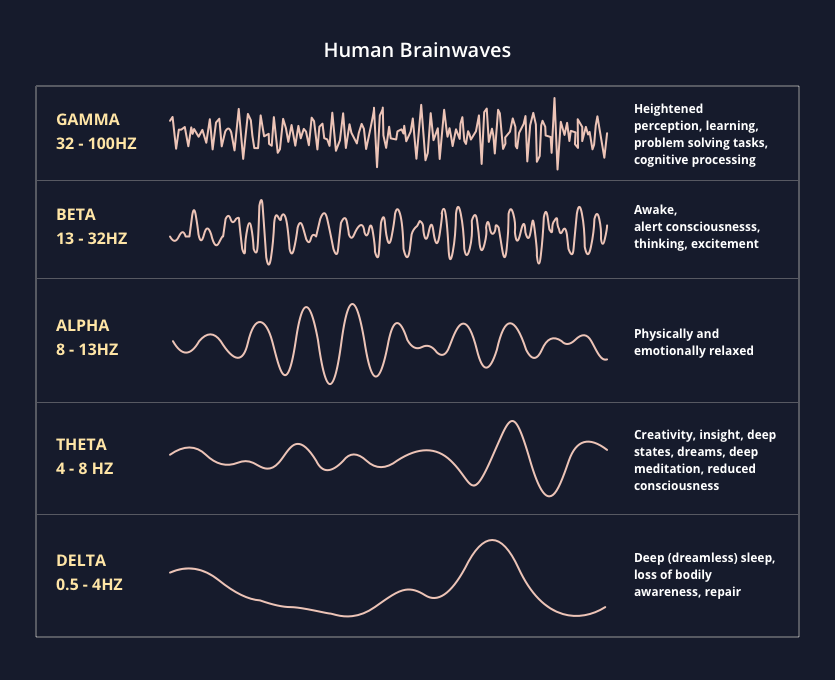
European sleep docs define 4 stages of sleep: N1, N2, N3, N4, and REM, while Americans combine N3 and N4. This points to the fact that these stages are in some respects defined in arbitrary ways (essentially N3 and N4 sleep are defined by a percentage of delta brainwaves). Delta brainwaves occur at the 0.5 - 4Hz range, characterized by having long wavelengths. They are thought to be essential for clearing out metabolic waste that forms in the brain throughout the day, which explains the link between delta waves and Alzheimer's disease and related dementia. Specifically, deep sleep promotes the glymphatic cleansing system in the brain that clears out destructive amyloid plaques. In REM sleep, our brainwaves are similar to what they are like in waking life when we experience Beta brainwaves, but our bodies are completely paralyzed (except for our eyes). This is to ensure that we do not hurt ourselves while we are dreaming. REM sleep is essential to integrating shorter-term memories into your personality and long-term memory store. Both REM and deep sleep are essential to healthy sleep (you want more REM and you want more deep). But also remember, even light sleep is regenerative to your body, and brief delta waves can also occur in this stage of sleep.
How Sleep Stages Change with Age
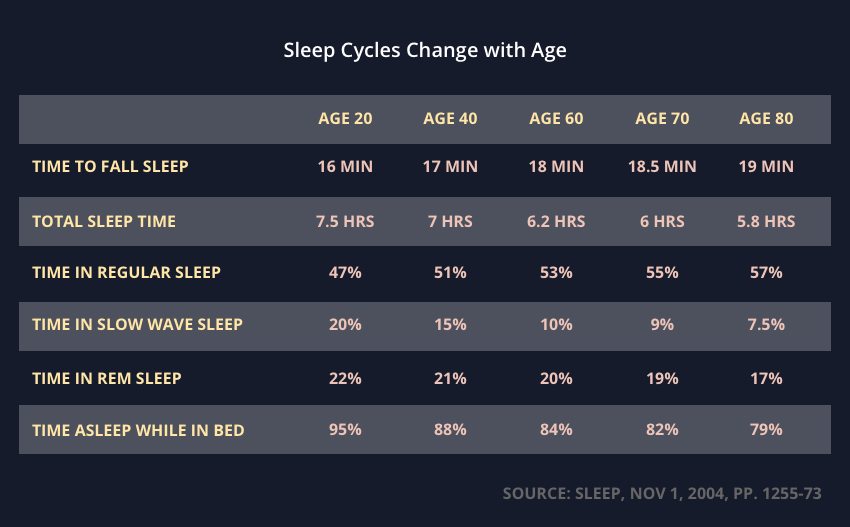
Above is a 2004 population health study that shows how brainwaves change with age. Notice that as we get older, we generally sleep less. However, this does not mean that you need less sleep as you get older, it may be a bi-product of your body breaking down. It is likely healthy to maintain at least 7 hours of sleep a night for all adults. Oftentimes, chronic stress occurs with age which results in less sleep and a weaker circadian rhythm. As a result, there is typically a marked decrease in deep sleep brainwaves, which is thought to play a causal role in the conversion to dementia. This is what we study with our collaborators at Penn State. The relationship between slow-wave sleep, cognitive aging, and Alzheimer's disease is an active area of research. Studies have linked changes in deep sleep and slow-wave activity with cognitive aging, but more research is needed to understand whether modifying slow-wave activity can meaningfully affect long-term cognitive outcomes.
How Much Deep Sleep Do I Need?
At SleepSpace, we have conducted peer-reviewed research on auditory stimulation during sleep. In these studies, carefully timed sound patterns were associated with changes in slow-wave activity under specific study conditions. Participants generally did not report awareness of the sounds the next day, suggesting that subtle nighttime audio may be able to interact with sleep physiology without fully waking the sleeper. This research helps inform SleepSpace's sound features, but it should not be interpreted as a guarantee that any specific sound, app session, or device setup will increase deep sleep or delta power.
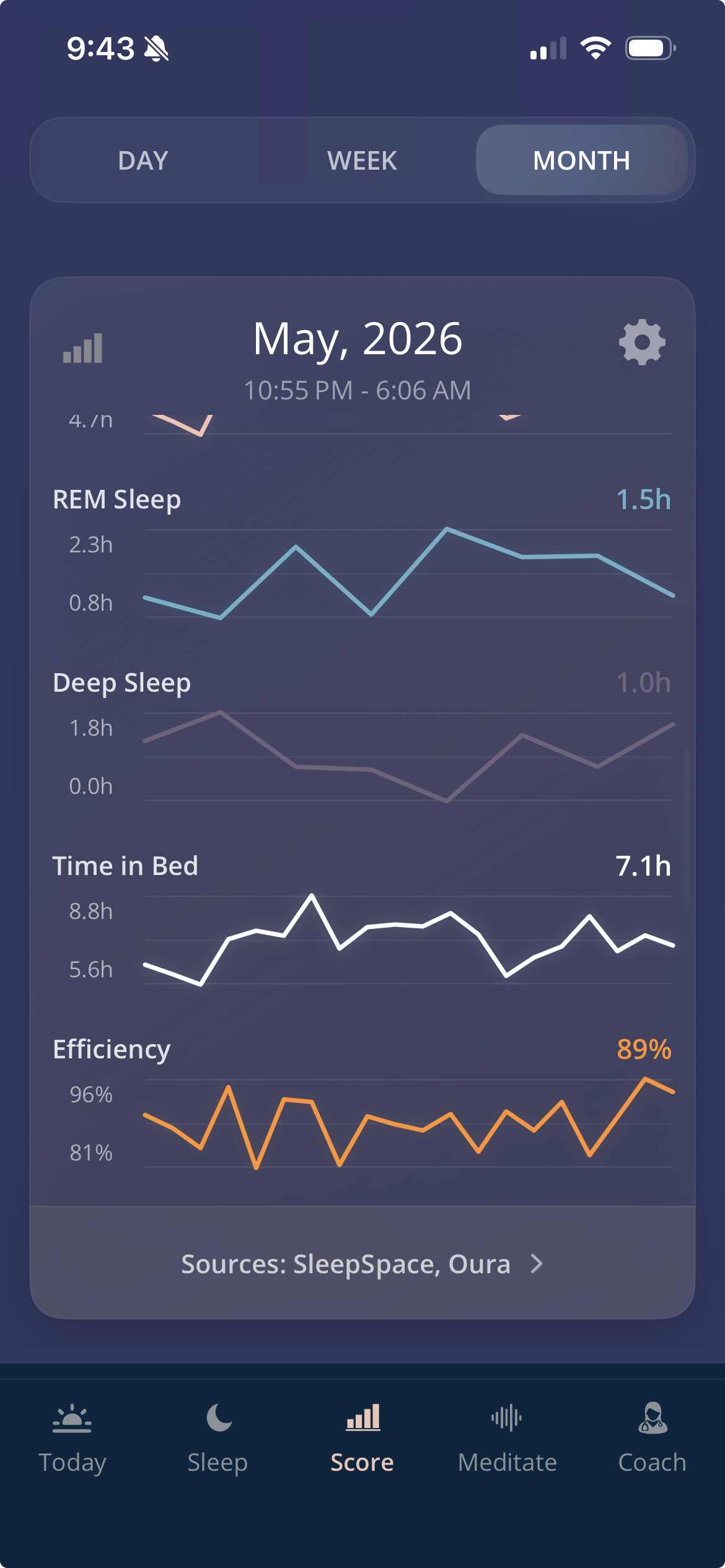
If you are getting more than 1.5 hours of deep sleep and REM a night, I'd consider this very healthy. If you are getting that much deep sleep and you are above 50 years of age, we would consider this extremely healthy. But remember, don't focus too much on what your wearable tells you. While it provides great relative truth, it can get the sleep stages a bit wrong for some people. Electrodes are the gold standard for measuring sleep stages and wearables can only provide approximations that are moderately accurate. Possible ways of improving deep sleep include sleeping in a dark, quiet, and cool room, exercise, elevating body temperature during the day, and using our adaptive sound machine that blocks out disruptive noises and promotes deeper sleep.
Dr. Dan Gartenberg's TED Talk about entraining delta waves using the science of sound
Since this TED Talk in 2018, we implemented the sound stimulation feature described using real-time sleep tracking algorithms within SleepSpace. SleepSpace is one of the only apps that measures sleep during sleep. Every 30-seconds the software detects what stage of sleep you are in. When your are very likely to be in a deep sleep stage, we play the delta wave frequency. The deep sleep acoustic stimulation is more accurately and can play more precisely when you also use our patented SleepSpace Smart Bed and Phone Charger.

Deep sleep science
Delta waves are the signature rhythm of deep sleep
Delta waves are the slow, high-amplitude brain rhythms that show up most clearly during deep non-REM sleep. They matter because they sit inside the part of the night most closely tied to restoration, overnight memory processing, and the feeling that sleep actually did its job.
If you want to understand delta waves, start with sleep stages. Delta activity is most strongly associated with deep sleep, also called slow-wave sleep or N3 sleep in current scoring systems. [1] [2]
This is why delta waves come up so often in conversations about recovery, learning, and aging. Deep sleep is not the whole story of a healthy night, but it is one of the clearest biological signals that the brain is moving into a more restorative state. [2] [3] [4]
Inside SleepSpace, you can connect the science to your own pattern. The Sleep Score, real-time tracking, and SleepSpace Science help make deep sleep less abstract and more actionable.
Brainwave basics
Delta waves are the slowest common sleep-related brain rhythm
Delta
About 0.5 to 4 Hz
Delta waves are the long, slow waves most strongly associated with deep sleep. They dominate the deepest parts of non-REM sleep and are part of why this stage feels more restorative than lighter sleep. [1] [2]
Theta
About 4 to 8 Hz
Theta activity is more closely associated with drowsiness and lighter early-stage sleep. It matters, but it does not mean the same thing as the deeper delta-rich portion of the night.
Alpha
About 8 to 12 Hz
Alpha is usually discussed in the context of relaxed wakefulness. If you are comparing brainwave bands, alpha sits much closer to quiet alertness than to deep sleep.
Beta and faster rhythms
More wake-like activity
Faster rhythms are more typical of wakefulness or REM-like activity than of deep slow-wave sleep. That difference helps explain why delta waves feel like a different state altogether.
If you are reading older sleep literature, you may also see deep sleep split into stages 3 and 4. Current scoring typically groups deep sleep into N3, while older systems separated it based on how much delta activity was present in the epoch. [1]
Deep sleep context
Delta waves and deep sleep are closely related, but they are not the same thing as every app-based sleep-stage estimate
Delta waves are measured directly with EEG. Deep sleep in consumer apps is usually estimated indirectly through signals like heart rate, movement, sound, and timing. That means the concept is related, but the measurement method is different. [1] [5] [6]
In practical terms, this is why it helps to read deep sleep as a trend instead of a courtroom verdict. One night of stage output can be noisy. A repeated pattern across several nights tells a much more useful story, especially when you compare different device outputs or review the full night in Sleep Score.
If you want a broader explanation of what deep sleep is, why it matters, and how it fits into the night, start with the Deep Sleep Guide. Then read Sleep Cycles for a clearer picture of how deep sleep shows up across the full night.
Aging and recovery
Delta activity tends to decline with age, which is part of why deep sleep becomes such an important target to protect
As adults get older, slow-wave activity and deep sleep often become less robust. That does not mean older adults stop needing restorative sleep. It means the night may deliver less of it, even when total time in bed looks similar. [3] [4]
That is one reason the link between deep sleep, memory, and cognitive aging gets so much scientific attention. The healthiest response is not panic. It is to protect the parts of life that give deep sleep the best chance to show up: regular timing, enough sleep opportunity, lower noise and light, good breathing, and less unnecessary bedtime stress. [2] [4]
If schedule drift is part of the pattern, also read circadian rhythm and keeping a regular sleep schedule. Timing and deep sleep often travel together.
Measurement reality
Wearables can estimate deep sleep, but direct delta-wave measurement still belongs to EEG
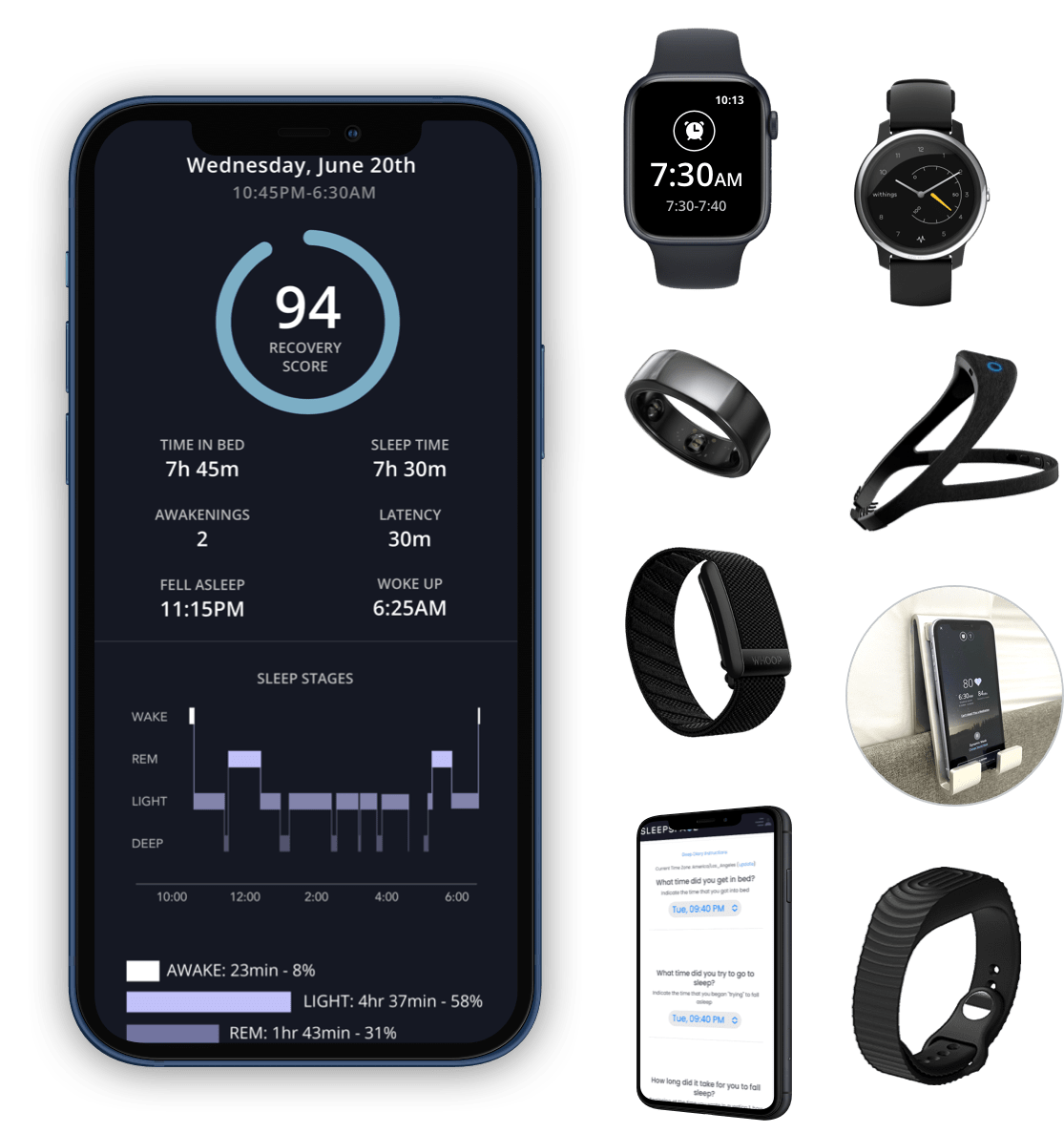
If you are asking whether Apple Watch, Oura, or another wearable can directly measure delta waves, the careful answer is no. Direct delta-wave measurement requires EEG or polysomnography. Consumer devices estimate sleep stages using other physiological signals. [1] [5] [6]
That does not make the devices useless. It just changes the job they are good at. Wearables and nearables are valuable for multi-night pattern detection, bedtime consistency, awakenings, recovery trends, and stage estimates that become more useful when you review them in context. [5] [6]
SleepSpace is built around that reality. You can use wearables and nearables, connect Apple Watch, and compare different sources of sleep data instead of treating one algorithm as the whole truth.
You can also review real-time sleep tracking, How It Works, and Our Science for more context on how SleepSpace interprets nighttime data.
Improving deep sleep
Support delta-rich deep sleep by protecting the conditions that make it more likely
1. Protect the first half of the night
Deep sleep is usually front-loaded. If bedtime drifts later and later, or total sleep opportunity gets squeezed, deep sleep often loses first. [1] [3]
2. Keep timing and light aligned
A stable wake time, daytime light exposure, and better circadian alignment make it easier for the night to unfold in a cleaner way. [2]
3. Lower fragmentation
Snoring, overheating, late alcohol, and environmental disruption can break up the parts of sleep where slow-wave activity would otherwise be stronger.
4. Use evidence-based sleep support
Auditory stimulation research suggests that well-timed sound can influence slow-wave activity. SleepSpace's own published science is part of that lane, but it still makes sense to treat the tool as support for healthy sleep architecture, not a shortcut around sleep fundamentals. [7] [8]
Check your own pattern
To understand your own deep-sleep pattern instead of guessing, start with the SleepSpace assessment, then review your Sleep Score, stage trends, and connected device data together. That gives you a clearer view of whether you are dealing with schedule issues, fragmented sleep, or a need for better measurement context.
Related SleepSpace resources
These topics help you make more sense of deep sleep and sleep-stage data
Deep Sleep Guide
A focused guide to what deep sleep does, why it matters for recovery, and what tends to help protect it.
Sleep Cycles
A fuller explanation of light sleep, REM, deep sleep, and how the night is structured from one cycle to the next.
Understanding Your Sleep Score
See how deep sleep trends fit beside duration, timing, and overall sleep quality.
Using Devices
See how SleepSpace works with wearables, nearables, and other data sources when you want more context around stage estimates.
Compare Device Data
See why different sleep trackers can disagree while still pointing to the same broad pattern.
How It Works
See how SleepSpace combines tracking, sound, and smart-alarm features into nightly sleep guidance.
Our Science
Review SleepSpace's published work on sleep detection, deep sleep stimulation, and technology-assisted sleep care.
Common questions
Delta waves FAQ
Are delta waves the same as deep sleep?
Not exactly. Delta waves are the EEG pattern most strongly associated with deep sleep, while deep sleep is the stage classification. The ideas are closely linked, but one is a brainwave signature and the other is a scored sleep state.
What frequency are delta waves?
Delta waves are generally described in the 0.5 to 4 Hz range. They are slower than theta, alpha, and beta activity and are a hallmark of slow-wave sleep. [1]
References
Selected references for delta waves, deep sleep, and measurement
- American Academy of Sleep Medicine. The AASM Manual for the Scoring of Sleep and Associated Events.
- Diekelmann S, Born J. The memory function of sleep. Nature Reviews Neuroscience. 2010.
- Ohayon MM, Carskadon MA, Guilleminault C, Vitiello MV. Meta-analysis of quantitative sleep parameters from childhood to old age in healthy individuals: developing normative sleep values across the human lifespan. Sleep. 2004.
- Mander BA, Rao V, Lu B, et al. Prefrontal atrophy, disrupted NREM slow waves and impaired hippocampal-dependent memory in aging. Nature Neuroscience. 2013.
- Roberts DM, Schade MM, Mathew GM, Gartenberg DI, Buxton OM. Detecting Sleep Using Heart Rate and Motion Data from Multisensor Consumer-Grade Wearables, Relative to Wrist Actigraphy and Polysomnography. Sleep. 2020.
- Roberts DM, Schade MM, Master L, et al. Performance of an open machine learning model to classify sleep/wake from actigraphy across ~24-hour intervals without knowledge of rest timing. Sleep Health. 2023.
- Ngo HVV, Claussen JC, Born J, Molle M. Induction of slow oscillations by rhythmic acoustic stimulation. Journal of Sleep Research. 2013.
- Schade MM, Mathew GM, Roberts DM, Gartenberg D, Buxton OM. Enhancing Slow Oscillations and Increasing N3 Sleep Proportion with Supervised, Non-Phase-Locked Pink Noise and Other Non-Standard Auditory Stimulation During NREM Sleep. Nature and Science of Sleep. 2020.
- Xie L, Kang H, Xu Q, et al. Sleep drives metabolite clearance from the adult brain. Science. 2013.