
SleepSpace x Hostage Tape
Better nights.
More insight.
Your Hostage Tape offer: 30 days of SleepSpace, complimentary.
- Unwind with sounds and guided breathing
- Track sleep, snoring, and how you feel
- Discover patterns across your nights
SleepSpace app access. Mouth tape is optional. Check whether it is right for you.

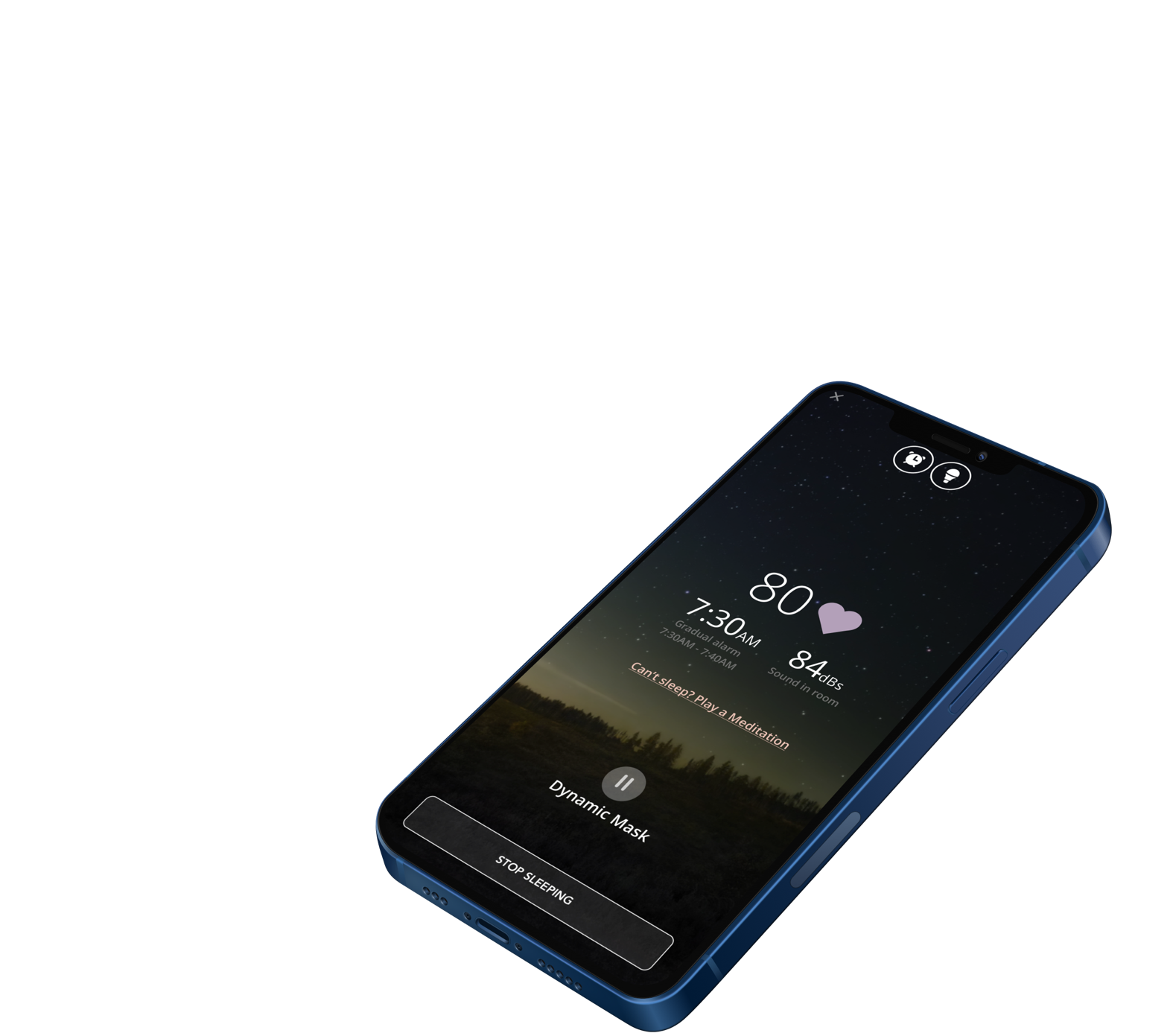
A complete SleepSpace experience
Support the whole journey from bedtime to morning.
- Before bed: choose breathing, relaxing audio, or gentle haptic cues.
- Overnight: capture sleep and sound context with your preferred tracking setup.
- In the morning: note restfulness, dry mouth, and anything that felt different.
Included for 30 days
More than a mouth-tape experiment.
Your 30 days includes these SleepSpace tools, with or without mouth tape.
Sleep diary
Log sleep, awakenings, and morning energy.
Sound and snore playback
Hear what happened overnight.
Connected devices
Bring compatible wearable and Nearable data together.
Sounds and breathing
Build a wind-down you look forward to.
Personalized feedback
Turn recurring patterns into your next step.
Support better sleep quality
Explore adaptive sounds and deep-sleep audio stimulation, not just tracking.
The SleepSpace x Hostage Tape study
A completed study. A closer look at your nights.
The controlled study is complete. Full analyses and results are being prepared for peer-reviewed publication.
Explore the Hostage Tape study
This 30-day app offer is not a report of published study results or a guarantee of benefit.
How the study was designed
Baseline before change
Participants documented their usual sleep and breathing-related experience before introducing a new routine.
Consistent app guidance
SleepSpace delivered the study instructions and repeated prompts in the setting where the routine actually happened: at home.
Active-control comparison
Guided breathing was used as a credible sleep-related comparison routine rather than asking participants to do nothing.
Blinded study interaction
During the randomized portion, study-team members interacting with participants were blinded to the assigned condition.
Fall asleep
Give yourself a calmer path into sleep.
Choose the cue that helps you unwind: a breathing rhythm, a sleep sound, or a gentle vibration.


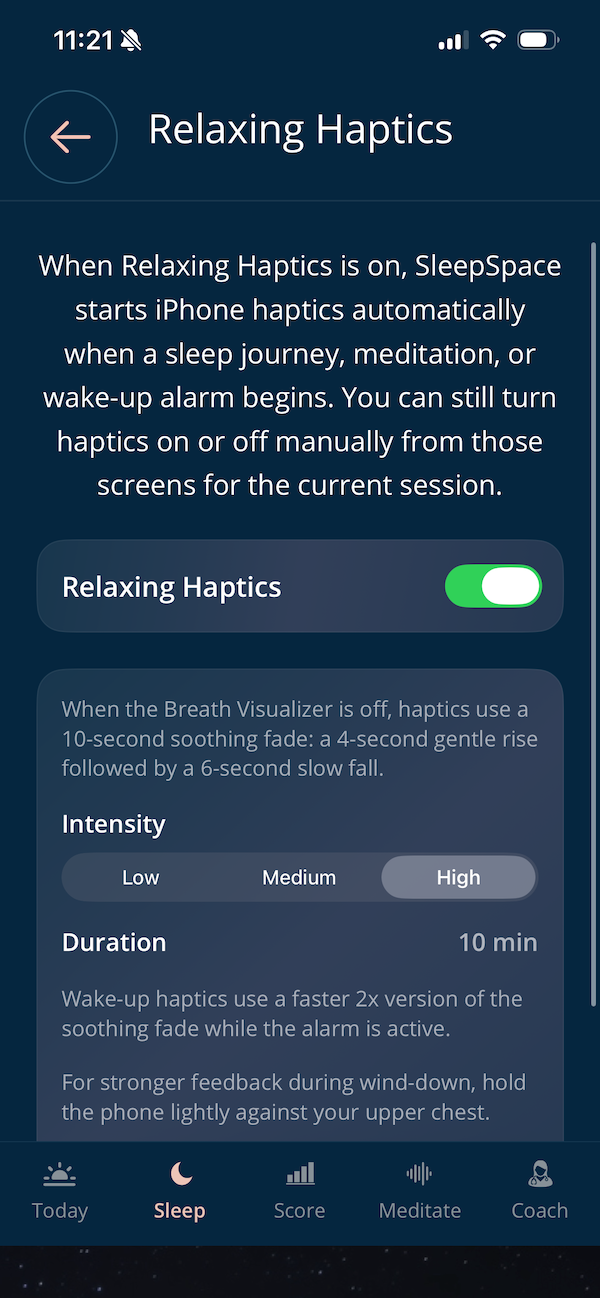
Relaxing Haptics
Feel a soothing cue while you settle in.
Follow a gentle vibration rhythm during breathing and relaxation, without watching the screen.
Wake refreshed
Make the first minutes of morning feel more deliberate.
Set your Smart Alarm, add haptic wake-up cues, and check in on how rested you feel.

Stay settled
Understand the patterns that shape the middle of your night.
Combine your sleep diary, snore recordings, and compatible device data. Look for repeated patterns, not a verdict from one night.
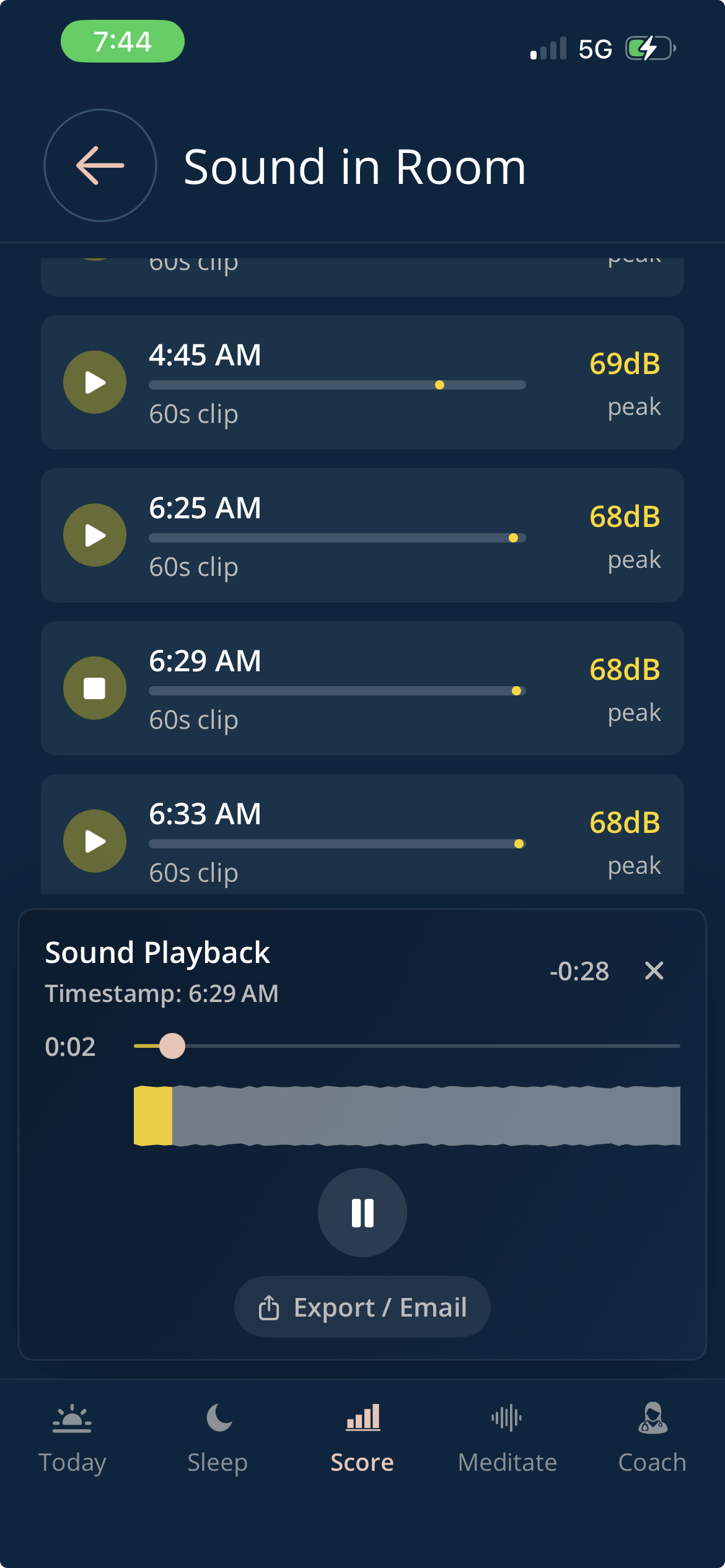
Sound in context
Review snoring as part of the whole night.
Listen back to overnight sounds. Compare their timing with your diary, dry-mouth notes, and morning energy.
Your 30-day routine
Give your sleep routine enough time to reveal a pattern.
One night is a snapshot. Use 30 days to build a repeatable routine and notice what changes.
What you will do
- Complete a brief readiness check before beginning.
- Set up the sleep diary, sound tracking, and any compatible devices you use.
- Follow simple in-app guidance and log the same observations over time.
- Review repeated patterns rather than chasing a single score.
- Pause the routine and seek guidance if it feels uncomfortable or symptoms raise concern.
What the research says
The evidence supports careful measurement, not one-size-fits-all promises.
The published literature on mouth taping is still limited and varied. The studies use different participant groups, designs, and outcomes, so a single result cannot tell you what will happen in your own sleep. [1]
Explore the published mouth-taping research
A small preliminary study explored short-term mouth taping in a selected group of mouth-breathing adults with mild obstructive sleep apnea and reported changes in snoring and sleep-disordered-breathing measures. It was not a randomized study and did not test Hostage Tape. [2]
Research on mouth closure and airflow also shows that responses can differ from person to person, especially when nasal or upper-airway obstruction is present. That is why comfortable nasal breathing and breathing red flags matter before trying a new nighttime routine. [3]
A separate randomized crossover study of 62 mouth-breathing patients using prescribed CPAP found that adding mouth tape increased average CPAP use by 51.8 minutes per day and improved several reported outcomes, including dryness and night awakenings. This was an add-on to prescribed CPAP, not an alternative to CPAP. [4]
Safety first
Mouth tape is optional and is not appropriate for everyone.
Mouth tape is not recommended for untreated sleep apnea.
- Do not self-treat suspected or untreated sleep apnea with tape. It is not a replacement for CPAP or a clinical evaluation.
- Skip tape and seek clinical guidance for habitual loud snoring, gasping, choking, witnessed breathing pauses, morning headaches, significant daytime sleepiness, or nasal obstruction.
- If you are unsure whether tape is safe for you, ask your clinician first. You can use SleepSpace without tape.
SleepSpace supports personal tracking and education. It does not diagnose sleep disorders, and tracking data are not medical advice. You can still use the program's diary, sound tracking, and guided wind-down tools without using tape.
Start your 30 days
Build a better sleep routine and learn from every night.
Your complimentary 30 days brings tracking, relaxation, and morning feedback together. Start with the tools that fit you.
Unlock My 30 DaysScientific context
References
Why screen for fit before studying mouth tape?
Published literature includes selected mouth-breathing populations and CPAP-adjunct use cases, rather than a broad recommendation for every sleeper. Screening for nasal-breathing comfort and breathing red flags improves both safety and interpretability.
Published literature on mouth closure and sleep
- [1]Fangmeyer SK, Badger CD, Thakkar PG. Nocturnal mouth-taping and social media: A scoping review of the evidence. American Journal of Otolaryngology. 2025.
- [2]Lee YC, Lu CT, Cheng WN, Li HY. The impact of mouth-taping in mouth-breathers with mild obstructive sleep apnea: a preliminary study. Healthcare. 2022.
- [3]Yang H, Huyett P, Wang TY, et al. Mouth closure and airflow in patients with obstructive sleep apnea: a nonrandomized clinical trial. JAMA Otolaryngology–Head & Neck Surgery. 2024.
- [4]Meksukree A, Pitipanyakul S, Laohavinij W, et al. The role of mouth tape for CPAP use in patients with mouth breathing and OSA. Journal of Clinical Sleep Medicine. 2025.
What this program does not claim
The preliminary findings were promising, but this program does not publish the underlying results or final scientific conclusions before peer review. It does not guarantee a change in sleep or breathing, diagnose a sleep disorder, or position mouth tape as a treatment for sleep apnea or another medical condition. The purpose is structured personal observation and continued consumer research.