
Track Your Sleep With Our Digital Sleep Diary
A digital sleep diary helps you understand your sleep patterns, identify causes of insomnia, and track whether your sleep is actually improving over time.
A better measure of sleep
A sleep diary is still one of the most useful ways to understand insomnia and sleep disruption because it captures what happened night by night, not just what a device estimated happened. When people record their sleep prospectively, they usually get a clearer view of sleep onset latency, nighttime awakenings, wake after sleep onset, final wake time, and sleep efficiency. Those are some of the exact measures clinicians use to understand whether the problem is mainly difficulty falling asleep, difficulty staying asleep, schedule drift, or a mismatch between time in bed and actual sleep. [1][2]
This is one reason sleep diaries remain central in insomnia care. Clinical guidance and CBT-I workflows still rely heavily on diary data because it helps translate a vague complaint like “I sleep badly” into a pattern that can actually be reviewed, interpreted, and treated. [2][3][5]
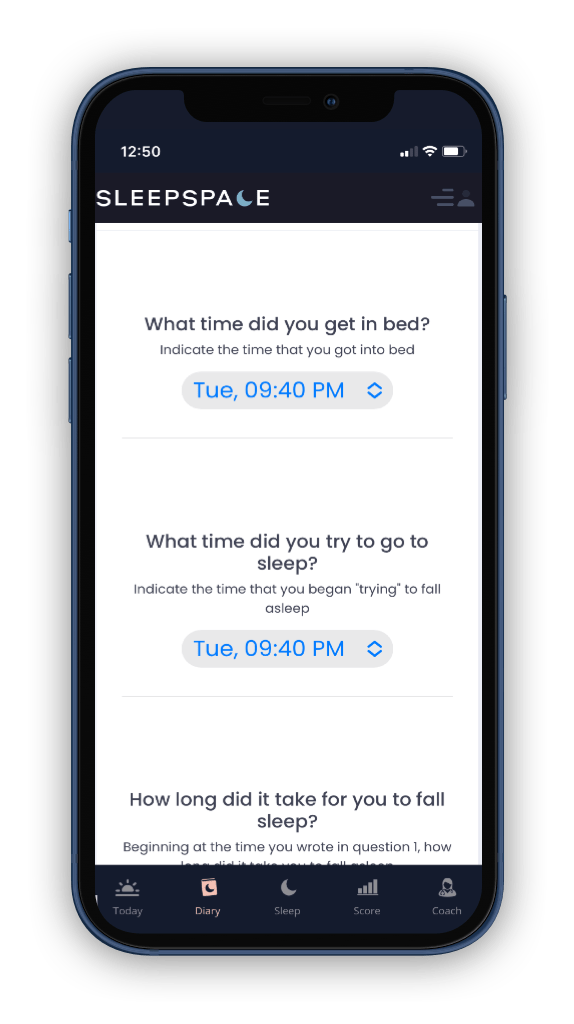
In SleepSpace, the diary is based on the Consensus Sleep Diary, and it can be reviewed alongside a coach or clinician if you are using the app that way. That makes it easier to keep the information in one place rather than scattering it across memory, paper notes, and device dashboards.
Why clinicians still use sleep diaries
Sleep is highly variable across nights. That is exactly why a diary is useful. A single bad night can be misleading, while a week or two of entries often reveals the real pattern. The original Consensus Sleep Diary paper was built around this problem: it aimed to standardize the nightly measures that matter most so sleep could be assessed more consistently over time. [1]
Diaries are also valuable because they preserve subjective sleep. That matters more than people sometimes realize. Objective tools such as actigraphy and wearables can be helpful, but they do not replace the patient’s own experience of the night. In insomnia work, both perspectives matter, and they do not always match perfectly. [2][4]
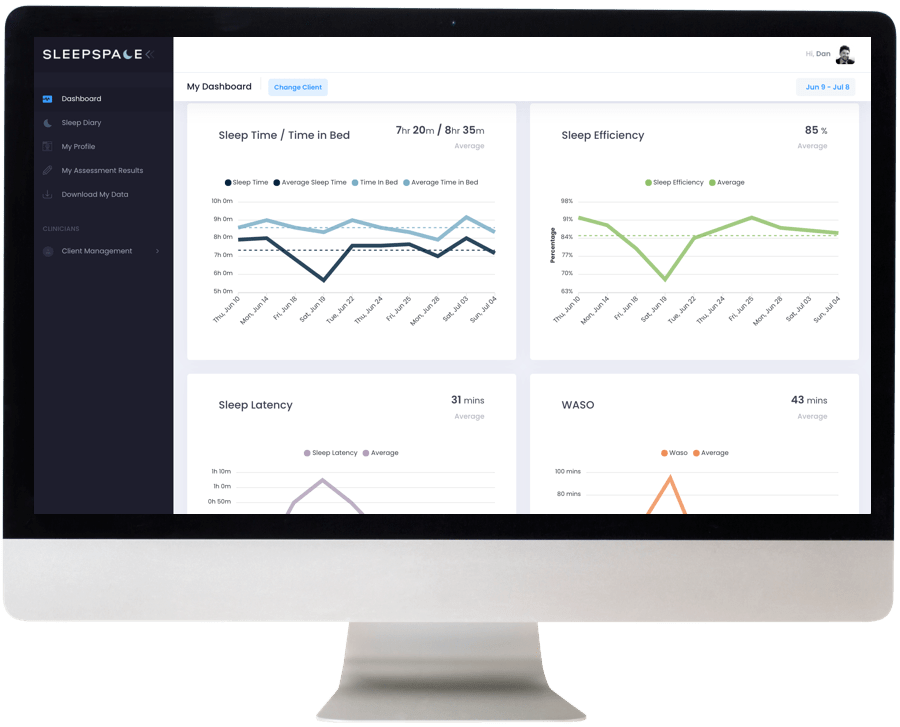
If you are working with a provider, a diary often becomes the document that makes the conversation more concrete. A coach or clinician can look for irregular wake times, prolonged time in bed, fragmented sleep, or improving sleep efficiency instead of relying on a general impression. That is one reason the diary remains so embedded in CBT-I style care. [3][5]
What a sleep diary helps you notice
A well-kept sleep diary can help identify several common patterns:
- Difficulty falling asleep despite spending more time in bed
- Frequent awakenings or long stretches awake after sleep onset
- Inconsistent wake times that make the whole schedule drift later
- Large differences between weekday and weekend sleep timing
- Low sleep efficiency despite long nights in bed
- Differences between subjective sleep and device-based sleep estimates
Those patterns are particularly important if you are also working on keeping a regular sleep schedule, using real-time sleep tracking, or comparing diary-based sleep with data from wearables and nearables.
Why a digital diary can be easier to keep
Traditional paper sleep logs can work, but they are easy to forget, easy to lose, and often hard to review once they accumulate. A digital diary reduces that friction. More recent work on digital sleep diaries also suggests that app-based diary use can be feasible over time and can help both users and providers evaluate sleep measures and follow progress more easily. [6]
That does not make a digital diary automatically better than a paper one in every situation. The real value is whether the person actually keeps it and whether the entries are useful enough to support better decisions. A good digital diary should make that easier, not noisier.
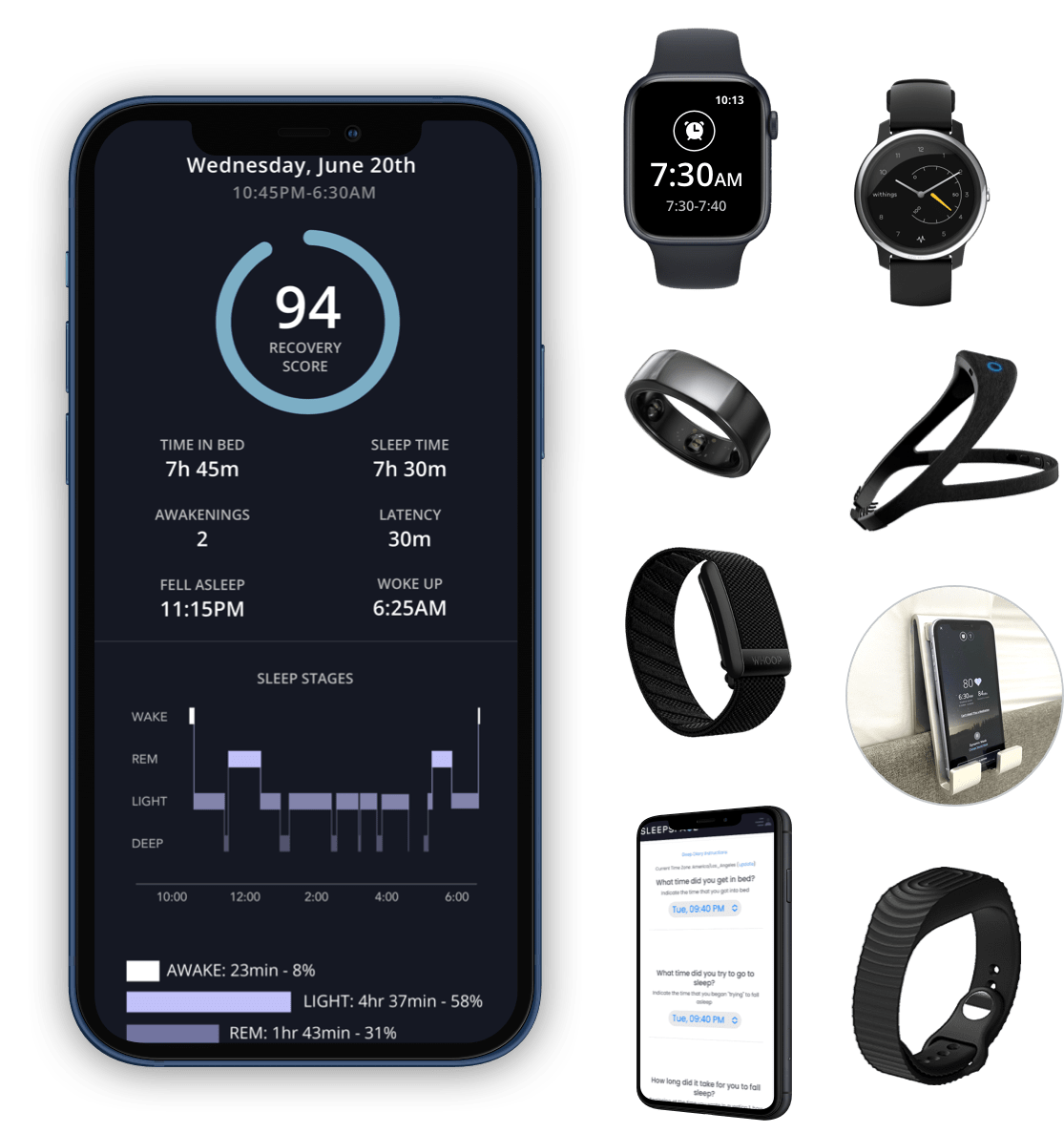
If you already use connected devices, SleepSpace can also sit alongside that workflow through wearable syncing and pages such as Comparing SleepSpace, Oura, and Apple Watch. If you do not, the diary still stands on its own as a useful starting point.
A note on orthosomnia and diary-focused feedback
Some people become more anxious when they look at sleep-device feedback before they have reflected on how the night actually felt. That is one reason diary-first review can be helpful. In SleepSpace, Diary Focused Feedback lets you look at the diary side of the night before device data takes over the interpretation. This can be especially useful for people worried about orthosomnia, where sleep tracking starts adding pressure instead of insight. [7]
How SleepSpace fits into this more practical approach
The informational point here is simple: a sleep diary is useful because it helps people and clinicians see the pattern more clearly. SleepSpace’s role is not to replace that logic. It is to make the Consensus Sleep Diary easier to complete, easier to review over time, and easier to use in a setting where a coach or clinician may also be involved.
If you want to go deeper into related topics, the best companion pages are 5 Ways to Track Your Sleep, Keeping a Regular Sleep Schedule, Real-Time Sleep Tracking, and How to Use SleepSpace with a Human Sleep Specialist or AI Sleep Coach.
Related SleepSpace resources
References
- Carney CE, Buysse DJ, Ancoli-Israel S, Edinger JD, Krystal AD, Lichstein KL, Morin CM. The Consensus Sleep Diary: Standardizing Prospective Sleep Self-Monitoring. Sleep. 2012;35(2):287-302. Full article
- Buysse DJ. Insomnia. JAMA. 2013;309(7):706-716. Full article
- Qaseem A, Kansagara D, Forciea MA, Cooke M, Denberg TD. Management of Chronic Insomnia Disorder in Adults: A Clinical Practice Guideline From the American College of Physicians. Annals of Internal Medicine. 2016;165(2):125-133. Full article
- McCall C, McCall WV. Comparison of Actigraphy with Polysomnography and Sleep Logs in Depressed Insomniacs. Journal of Sleep Research. 2012;21(1):122-127. Full article
- Wilson SJ, Nutt DJ, Alford C, et al. Cognitive Behavioral Therapy for Insomnia (CBT-I): A Primer. Sleep Medicine Clinics. 2023. Full article
- Kristbergsdottir H, Schmitz L, Arnardottir ES, Islind AS. Evaluating User Compliance in Mobile Health Apps: Insights from a 90-Day Study Using a Digital Sleep Diary. Diagnostics. 2023;13(18):2883. Full article
- Baron KG, Abbott S, Jao N, Manalo N, Mullen R. Orthosomnia: Are Some Patients Taking the Quantified Self Too Far? Journal of Clinical Sleep Medicine. 2017;13(2):351-354. Full article