
SleepSpace Band vs Oura
Want more than
a sleep score?
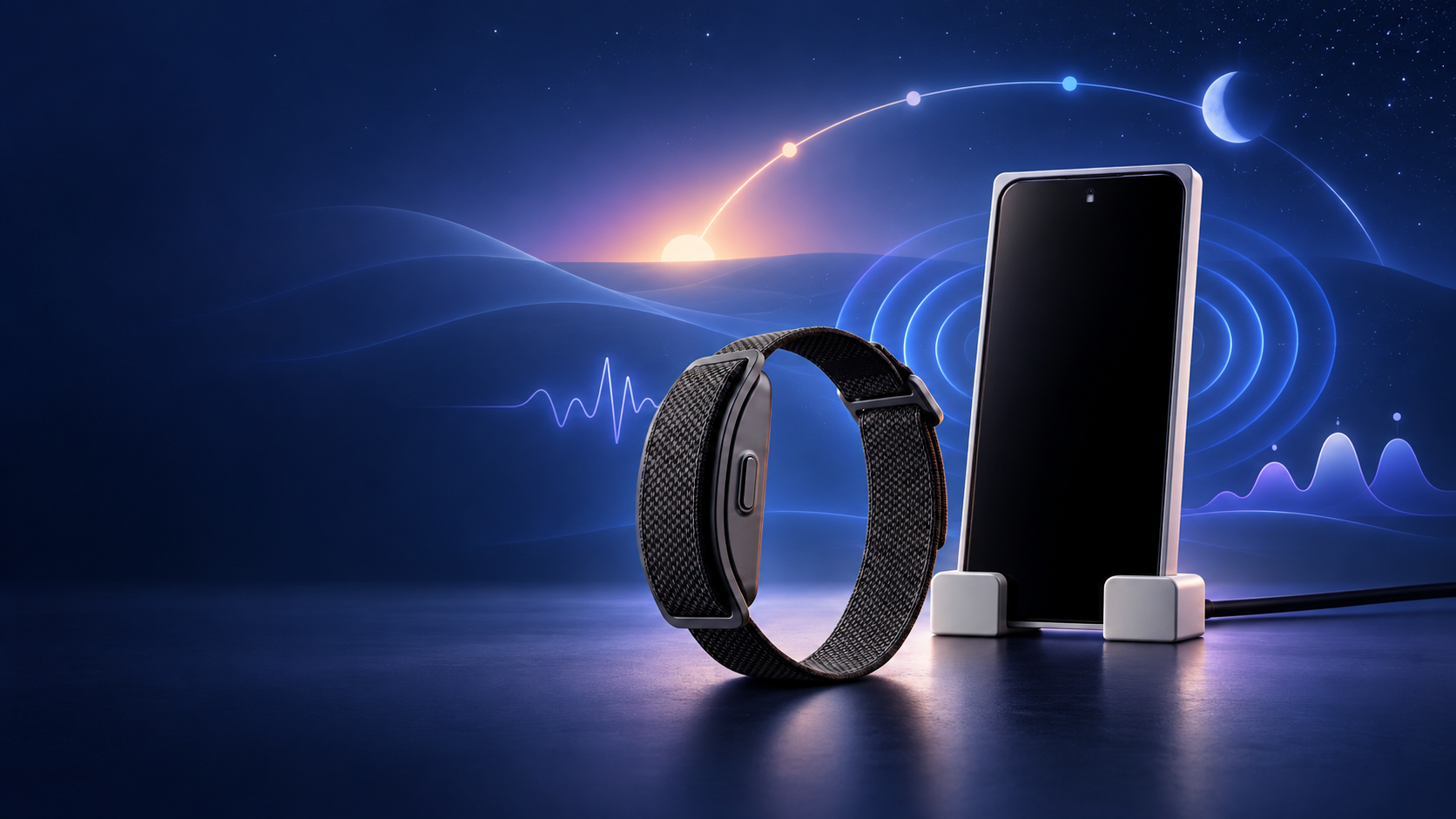
Connect what you learn about your nights to sound, light, and a personalized sleep routine.
- Band + Nearable: body and bedside signals
- Smart sounds and connected-bedroom tools
- Programs that help you build better habits
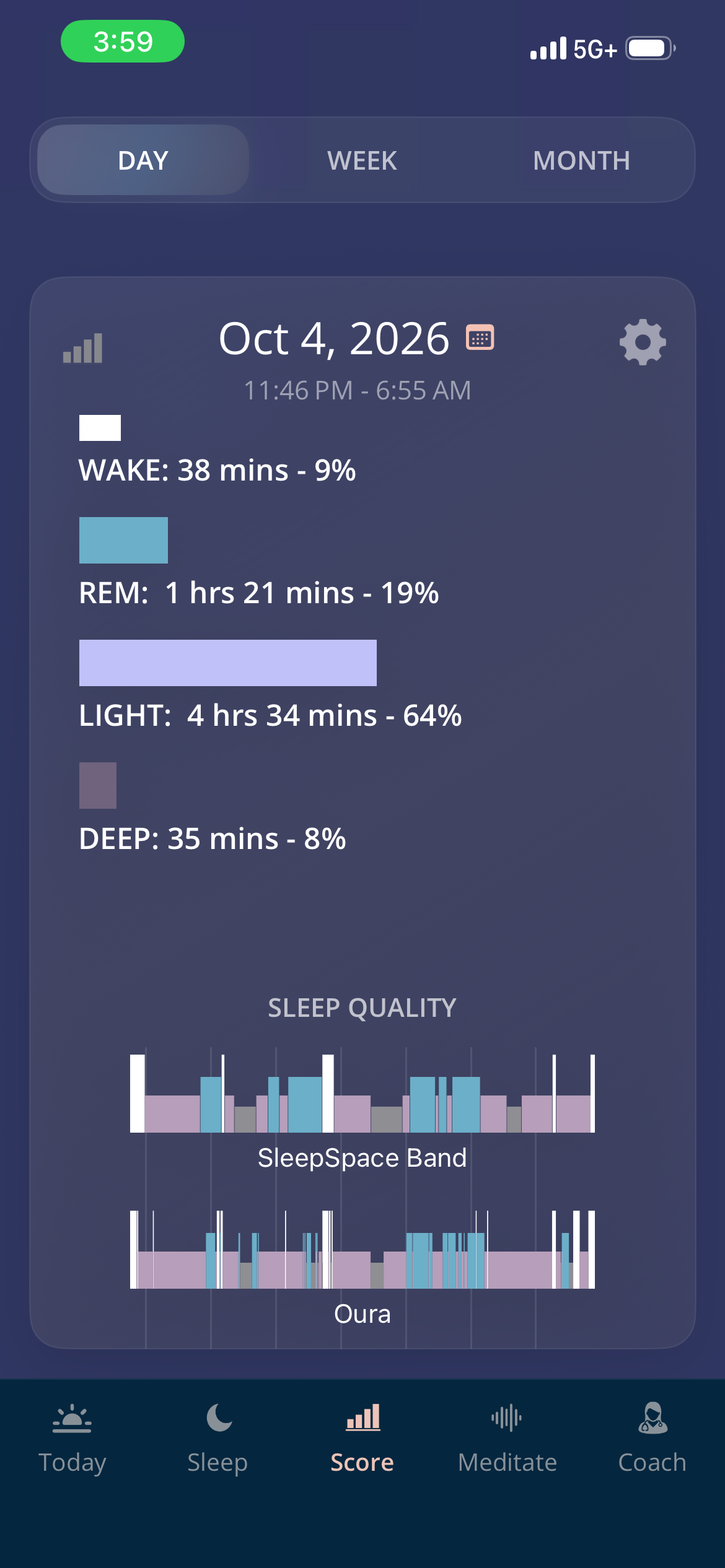
Written by Dr. Dan Gartenberg, PhD, sleep scientist and founder of SleepSpace. Updated October 18, 2026.
A different reason to wear a tracker
Your next step matters more than another number.
A sleep score can help you notice a pattern. The next question is what to do tonight. SleepSpace brings wearable insights into a wider system of bedside tracking, wind-down tools, and structured learning. That makes it an option worth considering when your priority is building a sleep routine, not simply collecting more data.
Sense
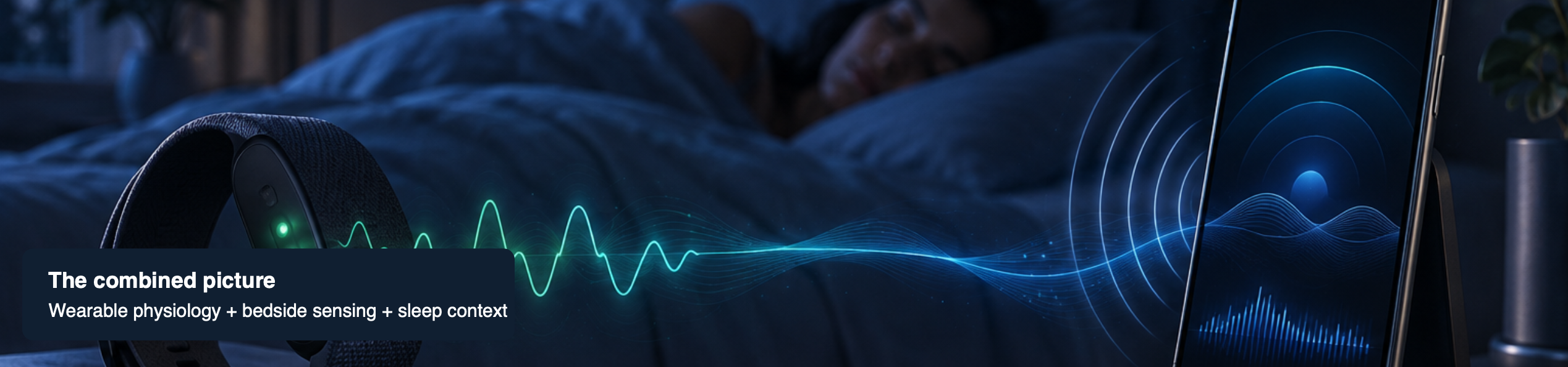
Use the Band for wearable context and a Nearable Charger for touchless phone-based tracking.
Set the scene
Explore adaptive audio, supported smart lights, and phone or watch vibration tools.
Build the habit
Bring your diary, personalized guidance, and six-week CBT-I-based course into one routine.
Connected features require the relevant compatible hardware and access plan. The Band itself does not play audio or control every bedroom device.
Compare what matters to you
A ring for health insights.
A connected system for your nights.
Oura offers sleep and readiness insights plus personalized guidance. SleepSpace takes a different approach by bringing tracking together with tools for your sleep environment. Neither device is the best choice for every person.
| Your priority | SleepSpace Band + system | Oura Ring + membership |
|---|---|---|
| Wearable format | Wrist-worn Band | Finger-worn ring |
| Sleep context | Wearable signals alongside a diary and optional Nearable setup | Sleep and readiness insights, trends, and broader health metrics |
| Personalized guidance | Dr. Snooze AI and sleep programs | Personalized insights and Oura Advisor |
| Bedtime environment | Phone audio, supported lighting, and compatible haptic tools across the system | Oura's membership emphasizes health sensing and guidance; it is not the same SleepSpace bedroom setup |
| Without wearing a device | Basic touchless tracking with a Nearable Charger and compatible phone | Wearing the ring is required for the full daily insights experience |
| Start without buying hardware | Free app: diary, tracking summaries, and selected smart sounds | Ring purchase required for the membership experience |
Sources: Oura membership, SleepSpace compatibility, and SleepSpace Band product details. This is a feature comparison, not proof of superior measurement accuracy or sleep outcomes.
Look beyond the nightly average
A closer look at your night.
SleepSpace Band provides 5-second heart-rate and HRV data, alongside a 30-second sleep/wake graph. Follow changes across the night and bring live signals into personalized biofeedback.
| Data view | SleepSpace Band | Oura |
|---|---|---|
| Heart rate and HRV | 5-second data updates | Nighttime HR and HRV API time series: 5-minute resolution |
| Sleep graph | 30-second sleep/wake graph | App sleep-stage graph: 5-minute display intervals |
An update interval is not an HRV calculation window. Sleep/wake classification is also different from classifying REM, light, and deep sleep. Finer resolution alone does not establish greater accuracy. Oura's underlying sensor sampling and exported sleep data may differ from its app display.
Sources: Oura API metrics and Oura sleep graphs. SleepSpace intervals are product specifications supplied by SleepSpace. Reviewed October 18, 2026.
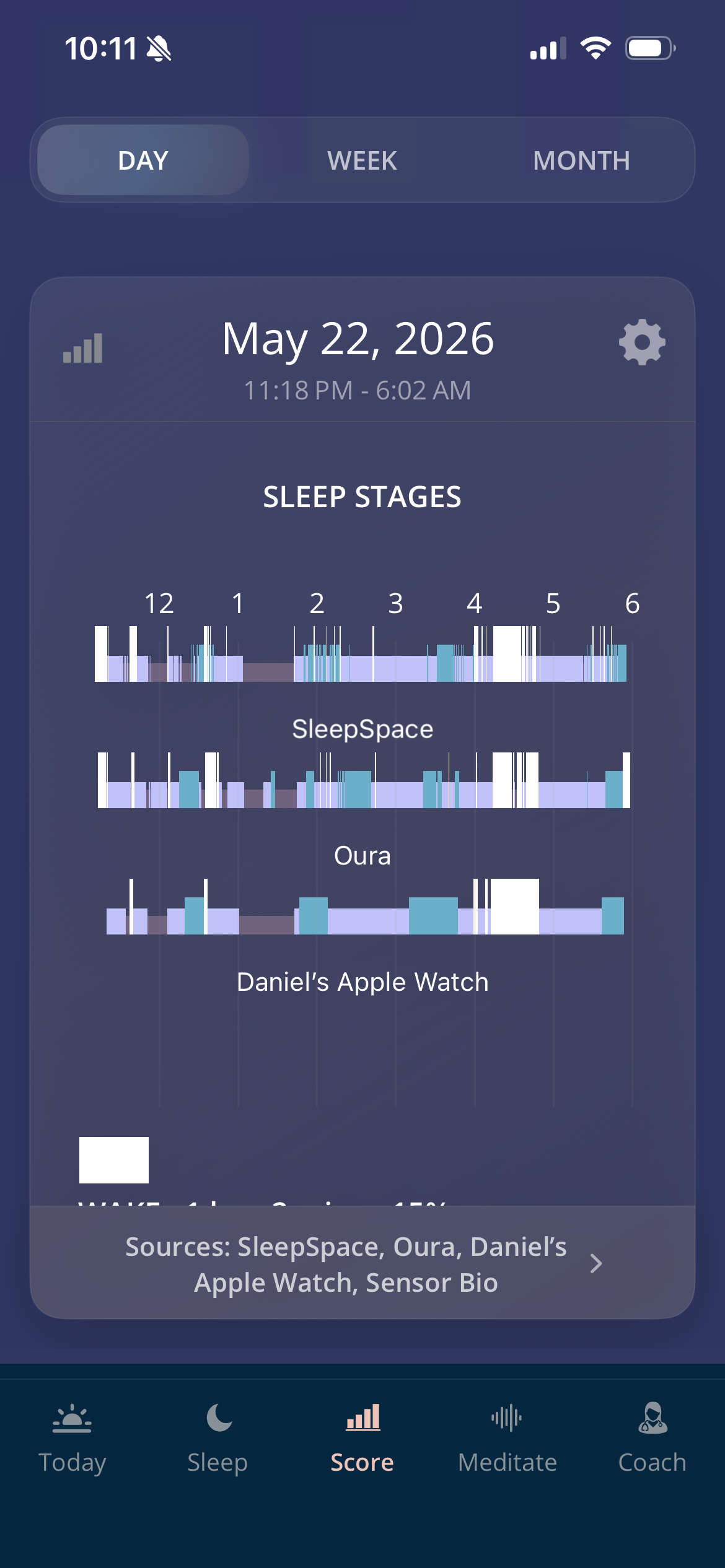
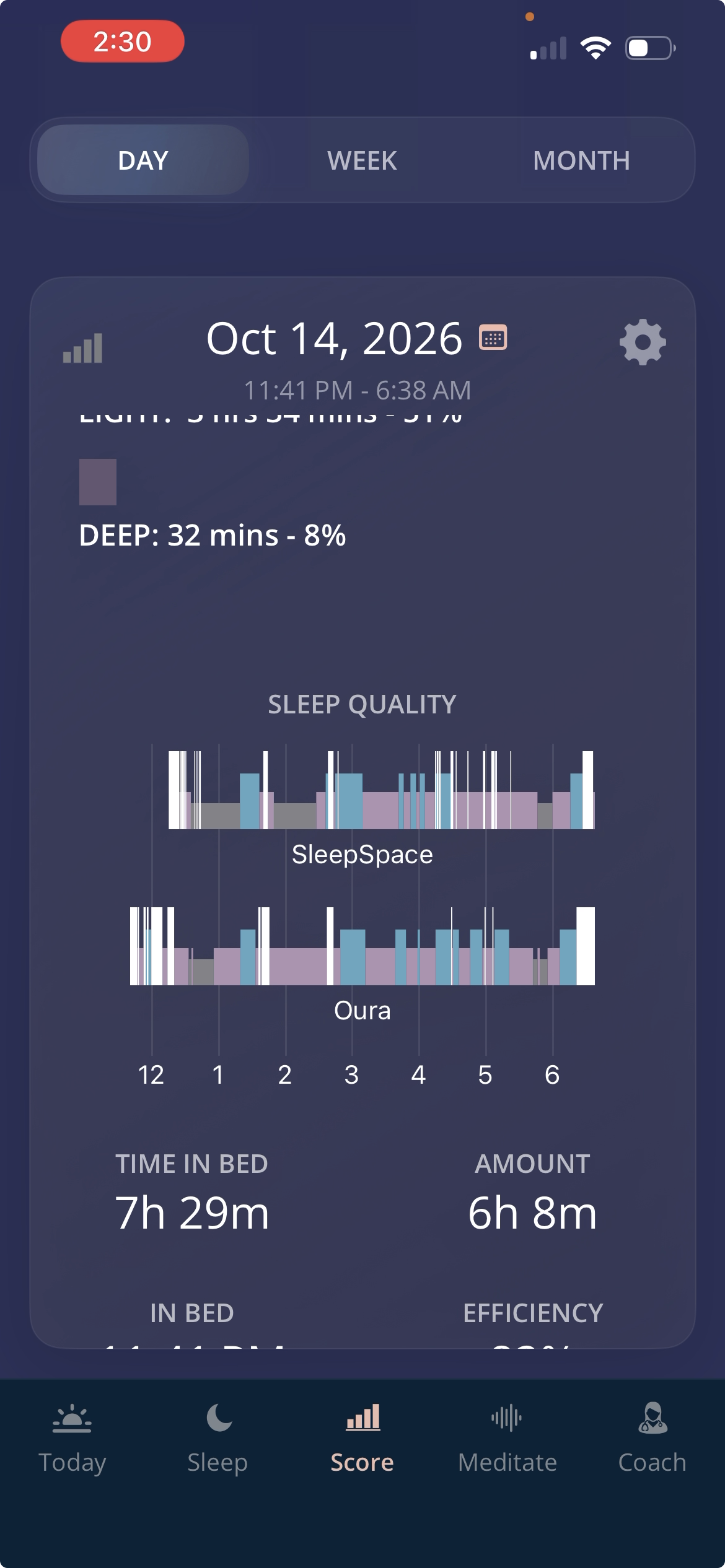
See brief awakenings in context.
A nightly score can hide the shape of your night. Explore estimated wake periods alongside your diary and compare how different algorithms describe the same sleep session.
This existing example compares SleepSpace's Apple Watch algorithm with Oura and Apple's algorithm, not the SleepSpace Band. It illustrates differences in estimated awakenings, not a head-to-head Band accuracy test.
Brief estimated wake periods are not the same as EEG-confirmed microarousals. Oura also reports brief awakenings.
Explore the original comparisonYour timing matters, too
Connect bedtime with your daily rhythm.
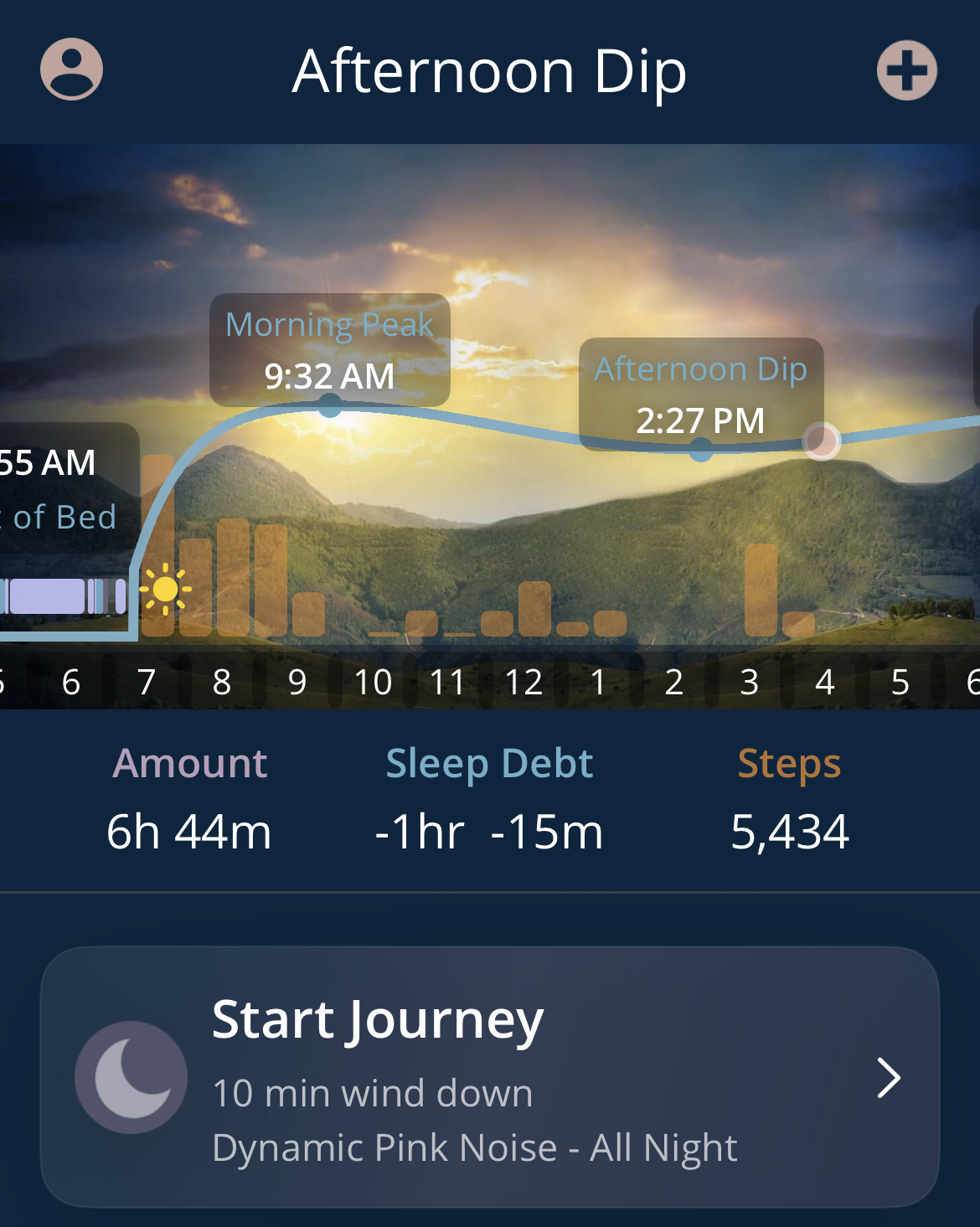
Use SleepSpace's circadian chart to explore estimated alertness across the day. Pair it with your diary and Sleep Journey to distinguish when you start your routine from when sleep is estimated to begin.
Bedside tracking adds another source of context for time in bed, especially when you are not wearing a device. Keep bedtime, sleep onset, and wake time in view rather than relying on a single score.
Oura also offers Body Clock, chronotype, and bedtime guidance. This is a difference in tools and workflow, not a verified claim that SleepSpace detects bedtime more accurately.
Explore your circadian chart · Oura Body Clock documentation
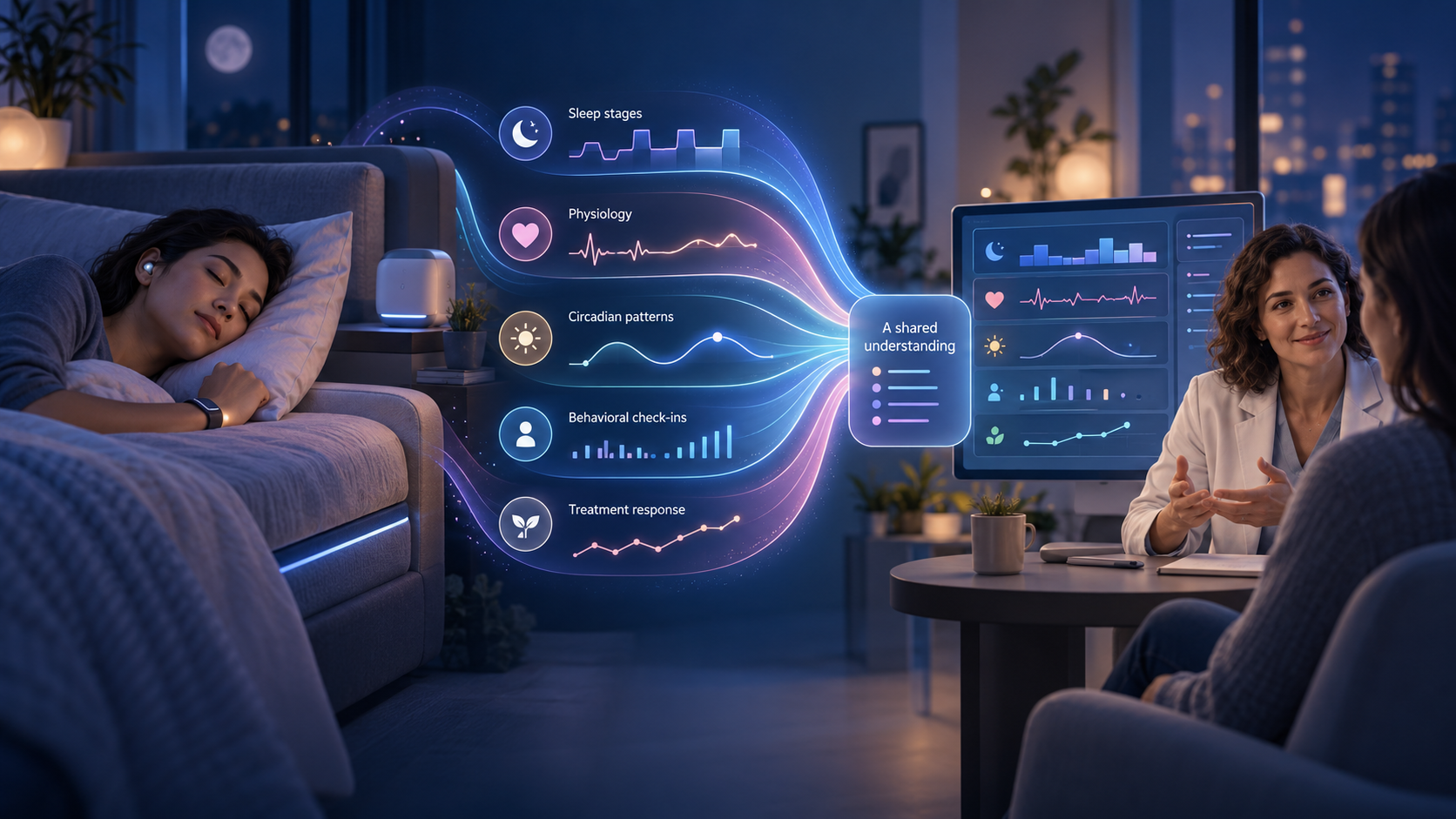
Bring it together
Make your bedroom part of your routine.
- Sound: choose a calming wind-down and explore adaptive nighttime audio.
- Light: use compatible smart bulbs for evening transitions and sunrise routines.
- Vibration: explore relaxation and wake-up cues on supported phones and watches.
- Programs: practice habits with a six-week CBT-I-based course.
You choose the tools that fit your nights. Start small, look for patterns over time, and adjust one part of your routine rather than chasing a perfect score.
Explore all three SleepSpace setupsBody + bedside
Your ring is charging. Your night still counts.
Use a compatible phone and Nearable Charger for touchless tracking when your Oura Ring or SleepSpace Band is charging, or when you simply prefer not to wear it. Start a Sleep Journey to keep an independent bedside record.
Basic Nearable tracking and summary statistics stay free after your included Premium period ends. The Charger is included in both connected bundles. This is an alternative sleep record, not a replacement for missing ring HR/HRV or automatic backfilling of Oura data.
Choose for your goals
When is SleepSpace the better fit?
You want a bedtime toolkit.
Choose SleepSpace if sounds, connected lighting, and sleep programs matter alongside tracking.
You want flexibility.
Start with your phone, add a Band, or build a bedside setup without needing to wear something every night.
You already own Oura.
You may not need to replace it. Check supported SleepSpace integrations and add the tools you want around your existing wearable.
Check your integrationIf you prefer a ring and want a broad health-insights experience, Oura may be the better match. If you want your tracker to be part of a connected sleep routine, explore SleepSpace.
Start where you are
Free tools first. More when you want it.
Both retain some essentials without membership. SleepSpace keeps diary access, summary metrics, selected sounds, and basic Nearable tracking available. Oura retains daily Sleep, Readiness, and Activity scores, plus limited app functionality; detailed views require membership on current generations. Gen2 is an exception. See Oura membership details.
Try the app
Free
Your sleep diary, tracking summaries, and selected smart sounds stay free forever. A compatible Nearable setup keeps basic bedside tracking available without a paid renewal.


Full standalone app
$79/year
Includes sleep courses, circadian insights, adaptive sounds, smart alarm, and breathing biofeedback. A seven-day free trial lets you explore full access.
Explore the appRenews until canceled. Cancel before the trial ends to avoid a charge; your free features remain available.
Connected sleep
$399 bundle
Add wearable and bedside tools. The $399 bundle includes the Band, Nearable Charger, and one year of full connected access. Renew connected software for $99/year after the included year.
See Band OptionsConnected Bedroom is $699: Band, Nearable Charger, two smart bulbs, a pre-owned iPhone 13 or newer in good condition, and two years of access; then $99/year.
Oura's published US membership is $69.99/year or $5.99/month, with ring hardware purchased separately. Compare total setup costs, not subscriptions alone. Check Oura's current terms.
Science, without the score chasing
What does the research actually tell us?
Multicomponent CBT-I is recommended for chronic insomnia in adults. [1] SleepSpace's CBT-I-based course brings behavioral principles into an app-guided routine; that is not the same as claiming every app feature has been tested as clinical treatment.
Laboratory research has also explored precisely timed auditory stimulation during sleep. [2] Those findings help explain the interest in sound-based tools, but do not establish that the SleepSpace Band outperforms Oura or reproduces an EEG-based laboratory protocol.
For tracking accuracy, look for studies of the specific device and algorithm against polysomnography. A feature list or side-by-side graphic cannot establish clinical superiority. Explore SleepSpace's research and validation.
Questions before you choose?
Is SleepSpace Band more accurate than Oura?
This page does not establish a head-to-head accuracy advantage. The practical distinction is SleepSpace's connected toolkit. Read device-specific validation research before making accuracy comparisons.
Does the Band deliver sound, light, and vibration by itself?
No. Sound plays through the phone or supported audio device, lights require compatible bulbs, and vibration features depend on the supported phone or watch. The Band adds wearable context to the wider system.
Can I use SleepSpace with my Oura Ring?
SleepSpace supports wearable integrations, including Oura. Check the current compatibility information for your device, phone, permissions, and available features.
Do I have to subscribe to try SleepSpace?
No. The sleep diary and selected smart sounds are free forever. App Premium is $79/year. Connected membership is $99/year and includes app Premium plus Band data and richer live biofeedback; it replaces, rather than adds to, the app subscription.
Can either tracker diagnose a sleep disorder?
Consumer sleep estimates are not a diagnosis. If persistent sleep difficulty, loud snoring, or significant daytime sleepiness concerns you, discuss it with a qualified clinician rather than relying on a wearable score.
Research and comparison sources
- Edinger, J. D., Arnedt, J. T., Bertisch, S. M., et al. (2021). Behavioral and psychological treatments for chronic insomnia disorder in adults: An American Academy of Sleep Medicine clinical practice guideline. Journal of Clinical Sleep Medicine, 17(2), 255-262. doi:10.5664/jcsm.8986.
- Ngo, H.-V. V., Martinetz, T., Born, J., & Molle, M. (2013). Auditory closed-loop stimulation of the sleep slow oscillation enhances memory. Neuron, 78(3), 545-553. doi:10.1016/j.neuron.2013.03.006.
- Oura. Membership features and pricing. Accessed October 16, 2026.
- SleepSpace. Scientific validation. Device compatibility. Band product listing.
Go from insight to a nightly routine
Build your SleepSpace.
Bring together your body, your bedside, and the habits that make your nights your own.
Or start with the free app