
Airway, Environment, and Physical Load pattern
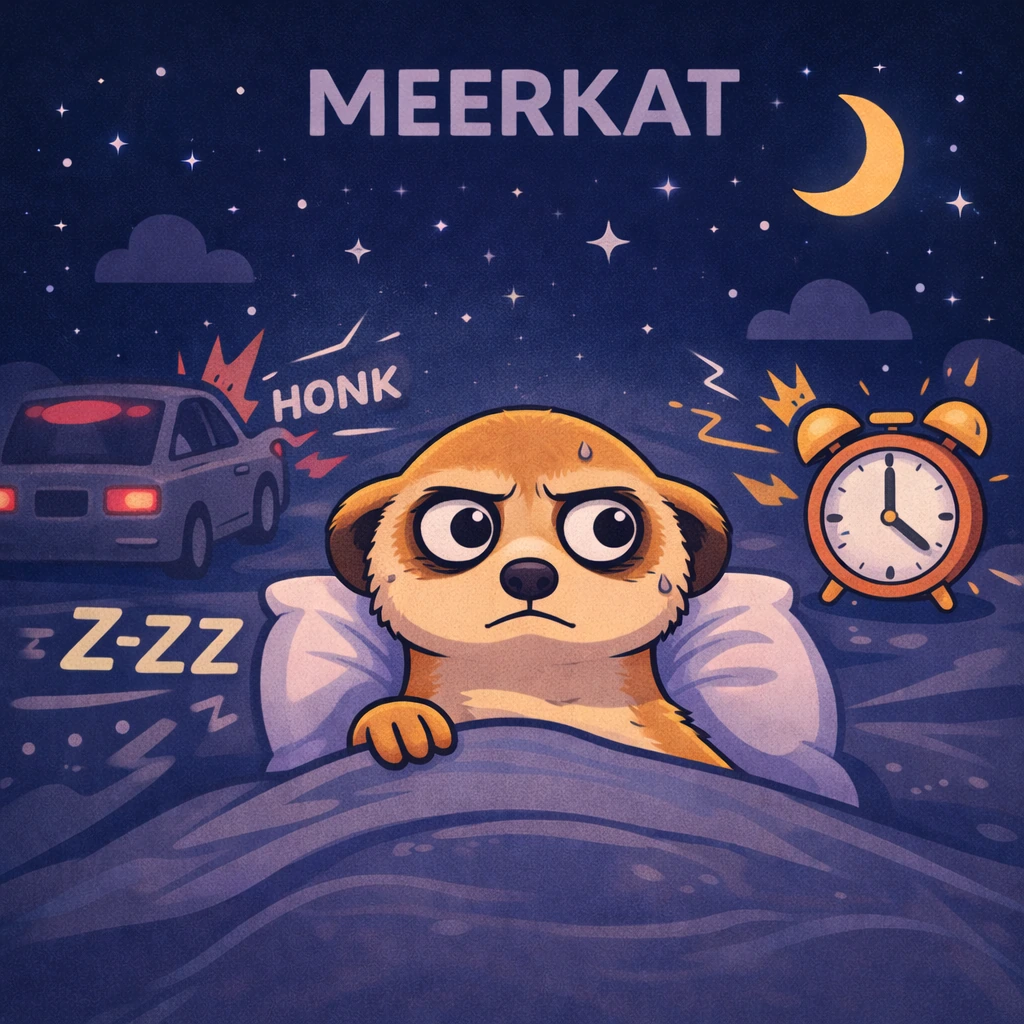
Meerkat: Noise Guard
Your sleep stays on alert for the next disturbance.
The recurring theme here is that the body or the room keeps breaking the night apart: breathing strain, pain, heat, noise, movement, or bed-partner disruption.


Start here
Turn this into a practical next step
Pick one small action, then check the pattern over several nights. You do not need to solve everything at once.
Interpretation
What this pattern means
Your sleep stays on alert for the next disturbance. [1] [2]
This pattern is characterized by disrupted sleep continuity. If breathing effort, sound, pain, movement, or temperature keeps pulling the body upward, the morning can feel much worse than the clock suggests. This group usually improves once the main disruptor gets named clearly. Generic sleep tips matter less when the real bottleneck is physical, positional, or environmental. Deep-sleep papers matter here because they connect restoration to what the brain is doing during the night, not just how long you stayed in bed. [3] [4] [5]
Deep sleep is not just about logging enough hours; it is where the night often becomes truly restorative. A rough morning can come from repeated breathing strain and micro-disruption even when you do not remember many awakenings. That is where SleepSpace becomes more useful than a static score alone: it can help you see the pattern more clearly and, when appropriate, respond in real time with sound and light changes while the night is still unfolding. [6]
In real life: Noise-sensitive sleepers are often reacting to unpredictability rather than volume alone. Use steady masking sound for sudden disturbances and remove the simplest repeating noise sources first.
What this often looks like
Common signals in real life
- A physical, environmental, or breathing-related factor may be interrupting sleep.
- Brief awakenings are easy to forget, but they can still leave you unrefreshed.
- Snoring, gasping, or marked daytime sleepiness are worth discussing with a clinician.
- Pain, temperature, noise, movement, position, and a bed partner can all contribute.
Why this page exists
What makes Meerkat distinct
This cluster needs practical realism: some causes are behavioral, some need screening, and many overlap.
Reduce environmental triggers and help your nervous system lower its guard. SleepSpace can layer sound, consistency, and calming routines to make sleep easier to stay in.
Scientific read
These profiles are often about fragmentation happening below awareness. You may not remember many long awakenings, yet the night still keeps stepping out of deeper recovery. Breathing papers matter because airway strain can hide behind snoring, dry mouth, morning heaviness, headaches, or a partner’s observations rather than dramatic self-reported wake-ups. Environmental and physical-disruption papers matter because temperature, pain, movement, and noise can create the same under-restored morning without looking identical on the surface. This is why the right question is not just whether you slept. It is what kept nudging the body out of stable recovery over and over again. [7] [10] [13]
A practical theme in this literature is that position, sound, and physical setup can change the night more than people expect. These papers are useful because they explain how a night can be disrupted below awareness. You may not recall long awakenings, yet the body keeps getting tugged out of deeper recovery. That is why sound, position, pain, heat, breathing effort, and partner observations all matter here instead of just the total hours in bed. A rough morning can come from repeated breathing strain and micro-disruption even when you do not remember many awakenings. [8] [11] [14]
Deep sleep is not just about logging enough hours; it is where the night often becomes truly restorative. The room itself can become the bottleneck when sound or unpredictability keeps the nervous system slightly on guard. Strategic naps can restore more than people expect when the alternative is trying to grind through a biologically low period. These profiles are often about fragmentation happening below awareness. You may not remember many long awakenings, yet the night still keeps stepping out of deeper recovery. [9] [12] [15]
Tracking and wearables
What data often helps separate this pattern from nearby ones
For these pages, useful data include sound events, snoring patterns, room conditions, awakenings, position notes, partner disturbance, and how often you wake unrefreshed despite apparently adequate time in bed. [11]
Use sound, position notes, morning symptoms, and repeated awakenings to identify a breathing, comfort, or environmental pattern that deserves attention. A wearable estimate alone cannot answer that question. [9] [11] [10]
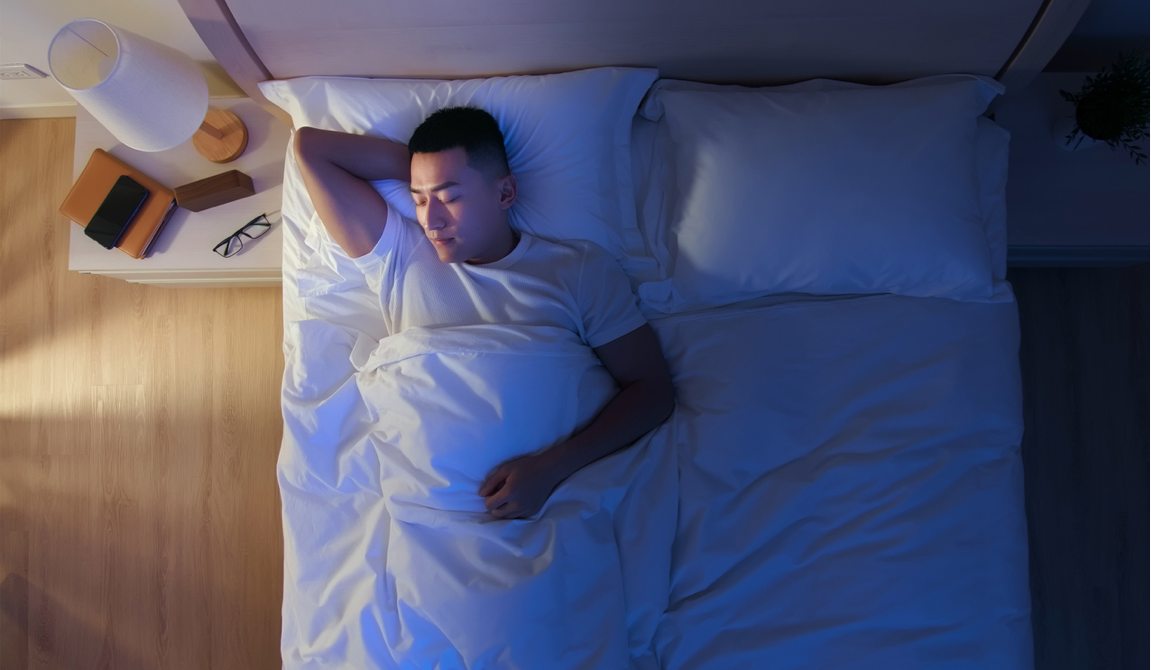
SleepSpace app features
Use these tools if you want to improve this pattern instead of just reading about it
Start with the assessment, download the app, and use the features below to turn this sleep animal into a practical plan.
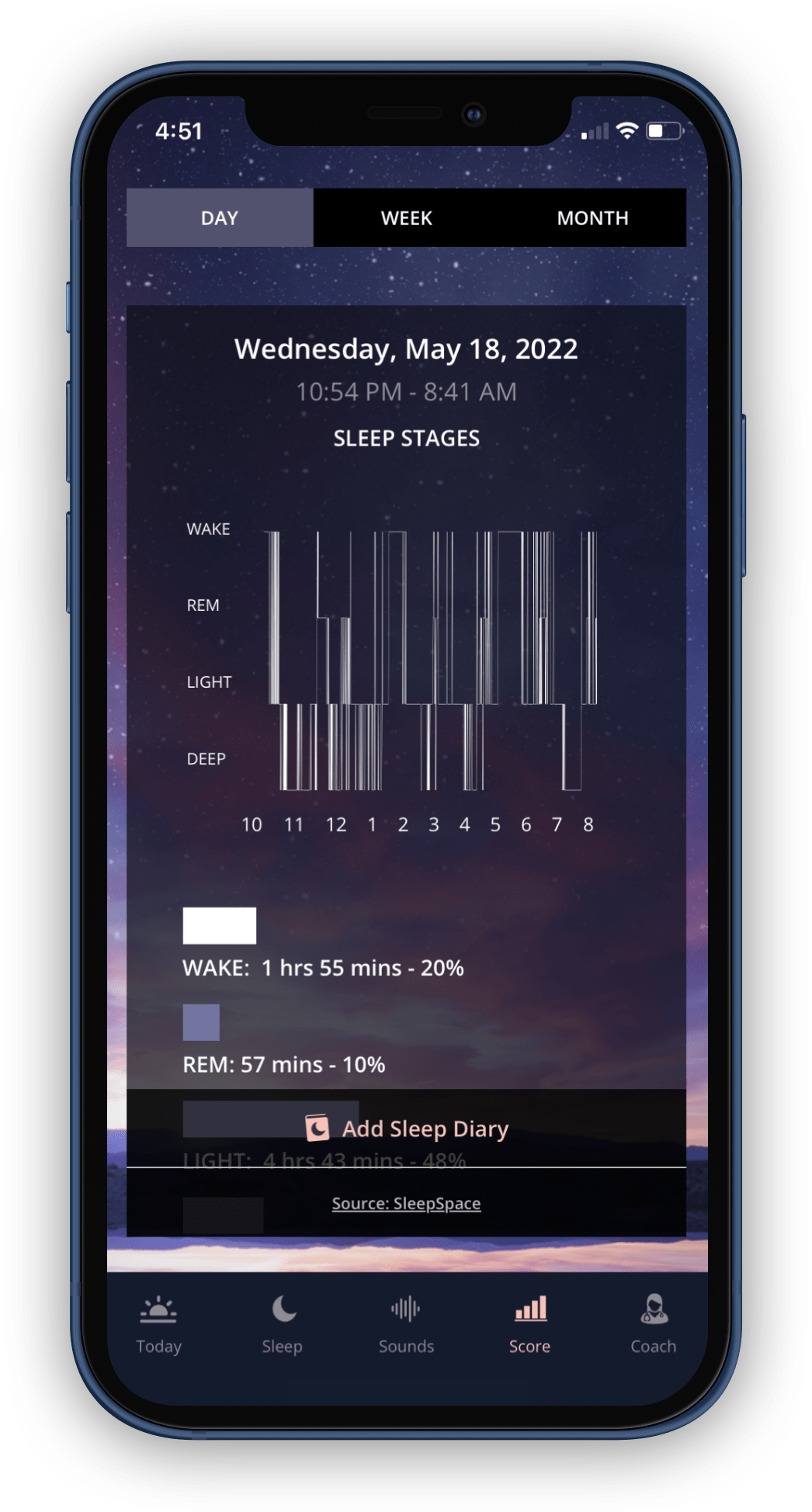
SleepSpace feature
Sleep assessment
Start here if you want a clearer read on your sleep animal, your main bottlenecks, and what to work on first.
Learn how to use it
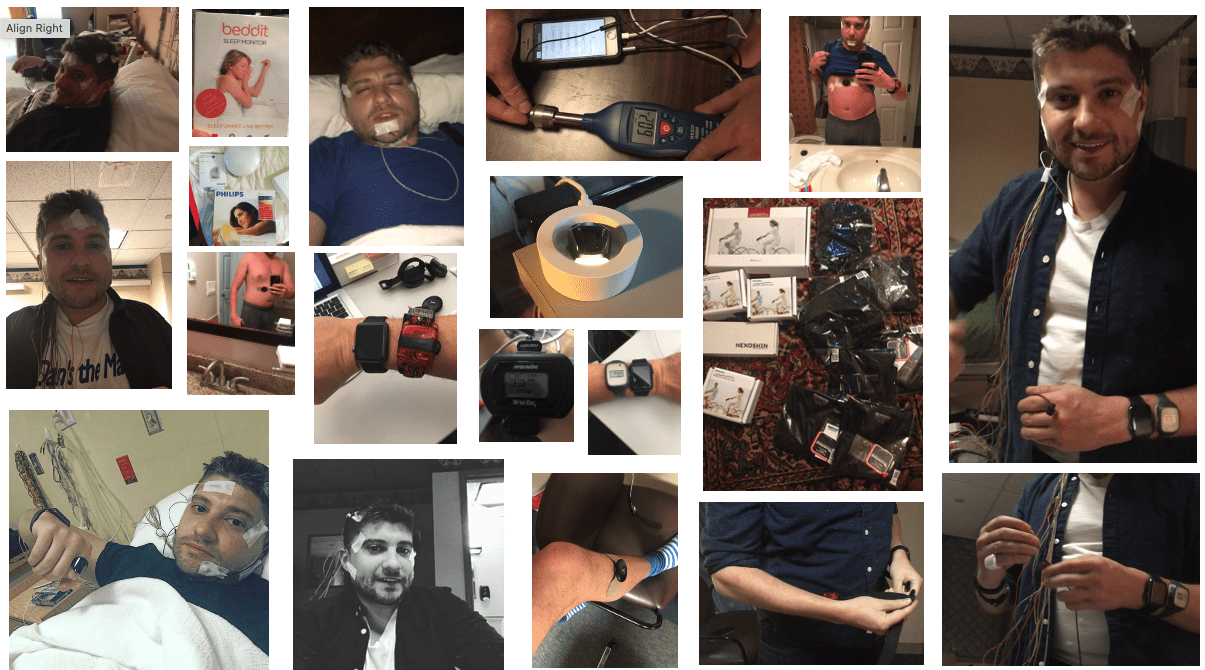
SleepSpace feature
Sleep diary
Use the diary to catch patterns in timing, awakenings, stress, recovery, and what actually changed from one night to the next.
Learn how to use it

SleepSpace feature
Weekly sleep stats
Use weekly trends to see whether you are actually improving instead of judging everything from one rough night.
Learn how to use it
SleepSpace resources
SleepSpace resources that fit this pattern
Use these practical guides and tools to understand this sleep pattern and choose a useful next step.
SleepSpace article
SleepSpace learning hub
A broad SleepSpace article library that can serve as the hub resource on every page.
SleepSpace article
SleepSpace science page
Useful when the page needs a product-adjacent evidence destination.
SleepSpace article
Snoring and breathing tracking guide
Useful for airway, snoring, and breathing-disruption pages.
SleepSpace article
Sound masking guide
Useful for noise, partner, and light-sleeper pages.
SleepSpace article
Tracking and wearables guide
Useful for pages that emphasize data quality, sleep diaries, and wearables.
FAQ
Questions Dr. Dan would expect about this animal
Quick answers to the questions people usually ask when this sleep pattern feels familiar.
What does the Meerkat sleep animal mean?
You seem highly sensitive to noise, light, or environmental unpredictability. Instead of fully powering down, your system keeps monitoring the space around you, which can make sleep lighter and more fragmented. This is especially common when you are stressed or sleeping in a noisy environment. Better sleep for you usually begins with making the room feel more predictable and safe. For this pattern, environmental calm is not a luxury. It is often the entry ticket to deeper sleep. Sleep can be shaped by schedule, stress load, sleep environment, body signals, and what happens the following day. Looking for repeatable changes across several nights makes it easier to identify a useful next step.
What should you track if this meerkat pattern sounds like you?
For these pages, useful data include sound events, snoring patterns, room conditions, awakenings, position notes, partner disturbance, and how often you wake unrefreshed despite apparently adequate time in bed. [11] Start with the SleepSpace sleep assessment and then use the app to watch what happens to timing, continuity, symptoms, and next-day recovery over time.
When should you get extra help for meerkat-style sleep problems?
If this pattern is getting more intense, affecting safety, or leaving you persistently exhausted, treat this page as educational and talk with a doctor or sleep specialist. SleepSpace can help you organize the pattern, but medical concerns still deserve medical care.
Important note
Help your room feel quieter to your nervous system
If loud snoring, observed breathing pauses, gasping, severe daytime sleepiness, or blood-pressure concerns are part of the story, a formal sleep evaluation matters. These pages can orient you, but they do not replace diagnostic workup for sleep-disordered breathing. [6]
SleepSpace can help you reduce environmental reactivity and sleep more continuously through the night.
Research references
Research behind these sleep insights
Show citations (15)
- Schade et al. (2018). Auditory stimulation during sleep transiently increases delta power and all-night proportion of NREM stage 3 sleep while preserving total sleep time and continuity.
This trial is especially relevant because deep-sleep papers matter here because they connect restoration to what the brain is doing during the night, not just how long you stayed in bed.
Full article - Basner et al. (2008). Aircraft noise effects on sleep: a systematic comparison of EEG awakenings and automatically detected cardiac activations.
Deep sleep is not just about logging enough hours; it is where the night often becomes truly restorative.
Full article - Gozal et al. (2013). Chemoreceptors, baroreceptors, and autonomic deregulation in children with obstructive sleep apnea.
A rough morning can come from repeated breathing strain and micro-disruption even when you do not remember many awakenings.
Full article - Sharma et al. (2018). Obstructive Sleep Apnea Severity Affects Amyloid Burden in Cognitively Normal Elderly. A Longitudinal Study.
A rough morning can come from repeated breathing strain and micro-disruption even when you do not remember many awakenings.
Full article - Schultz et al. (1978). Synthesis of social surveys on noise annoyance.
This review is useful because the room itself can become the bottleneck when sound or unpredictability keeps the nervous system slightly on guard.
Full article - Griefahn et al. (2008). Autonomic arousals related to traffic noise during sleep.
Deep sleep is not just about logging enough hours; it is where the night often becomes truly restorative.
Full article - Yim-Yeh et al. (2010). Vascular Dysfunction in Obstructive Sleep Apnea and Type 2 Diabetes Mellitus.
A rough morning can come from repeated breathing strain and micro-disruption even when you do not remember many awakenings.
Full article - Sallinen et al. (1996). Processing of auditory stimuli during tonic and phasic periods of REM sleep as revealed by event‐related brain potentials.
This trial is especially relevant because deep sleep is not just about logging enough hours; it is where the night often becomes truly restorative.
Full article - Atkeson et al. (2009). Endothelial function in obstructive sleep apnea.
This review is useful because a rough morning can come from repeated breathing strain and micro-disruption even when you do not remember many awakenings.
Full article - Fidell et al. (1995). Field study of noise-induced sleep disturbance.
The room itself can become the bottleneck when sound or unpredictability keeps the nervous system slightly on guard.
Full article - Pearsons et al. (1995). Predicting noise-induced sleep disturbance.
The room itself can become the bottleneck when sound or unpredictability keeps the nervous system slightly on guard.
Full article - Stevenson et al. (1989). The effect of traffic noise on sleep of young adults in their homes.
The room itself can become the bottleneck when sound or unpredictability keeps the nervous system slightly on guard.
Full article - Basner et al. (2004). Nocturnal aircraft noise effects.
Deep sleep is not just about logging enough hours; it is where the night often becomes truly restorative.
Full article - Muzet et al. (2007). Environmental noise, sleep and health.
Strategic naps can restore more than people expect when the alternative is trying to grind through a biologically low period.
Full article - Thiessen et al. (1978). Disturbance of sleep by noise.
The room itself can become the bottleneck when sound or unpredictability keeps the nervous system slightly on guard.
Full article
Nearby profiles
Other animals in the same neighborhood
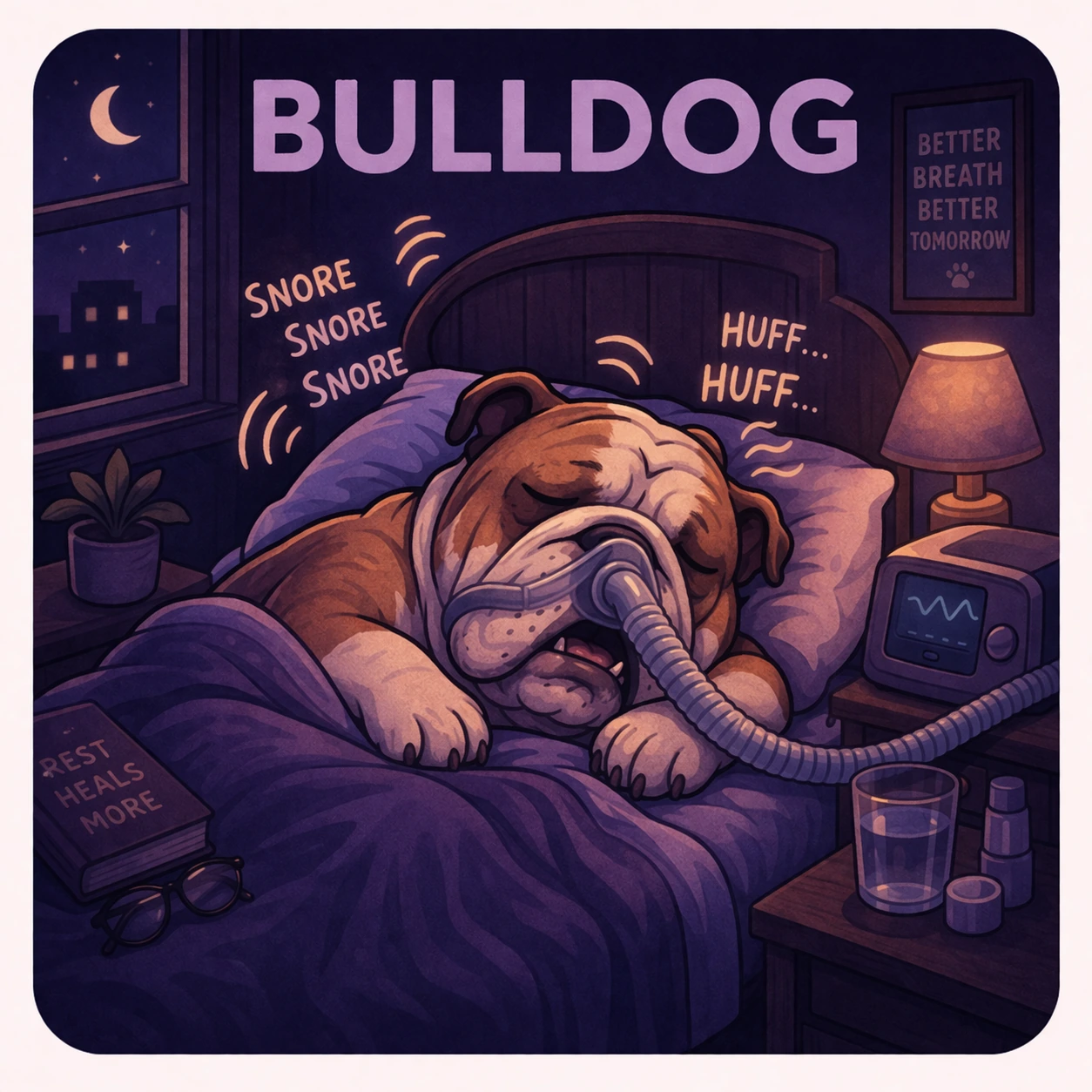
Related animal
Bulldog
Airway Clencher
Your sleep may be getting disrupted by breathing, snoring, or nighttime airway strain.
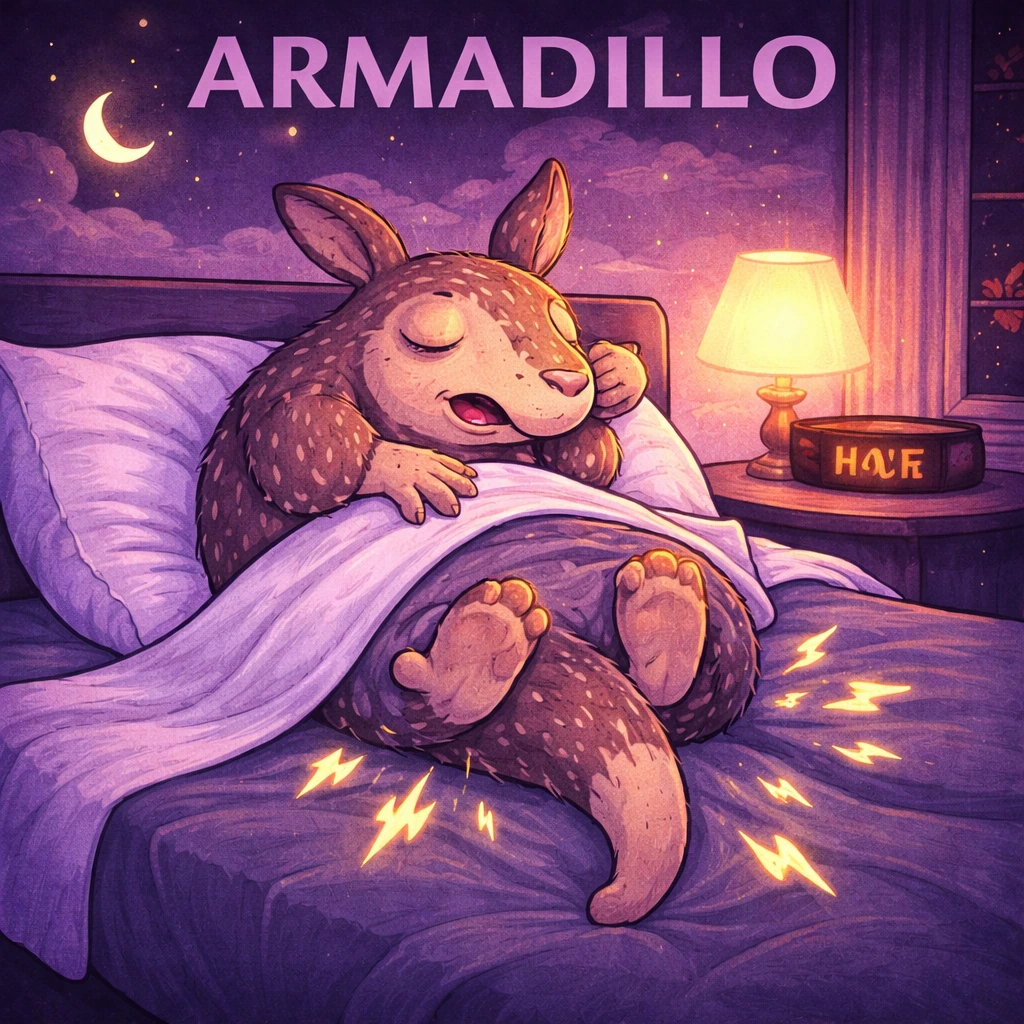
Related animal
Armadillo
Restless-Legs Sleeper
Your body may be asking you to move right when you want it to settle.
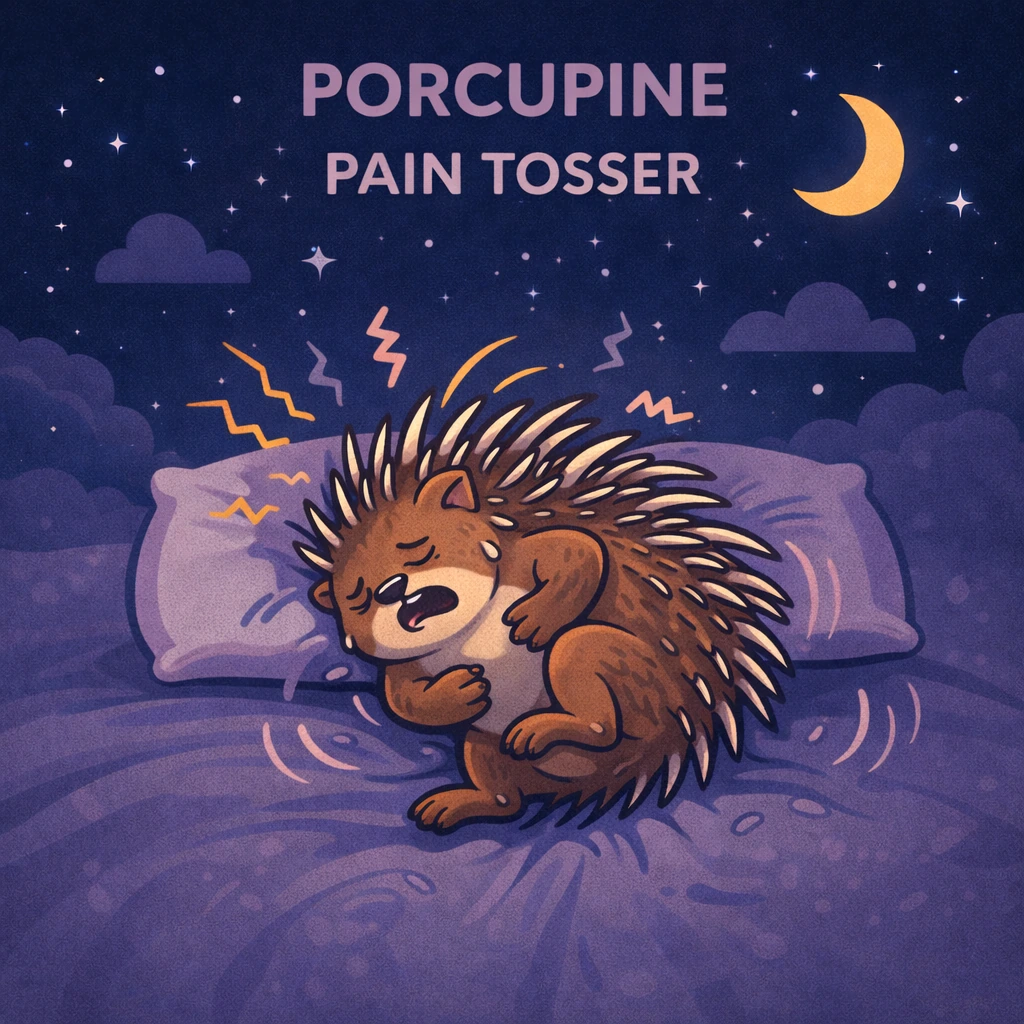
Related animal
Porcupine
Pain Tosser
Your body may be interrupting your sleep before your brain gets the chance to settle.