
Circadian and Schedule phenotype
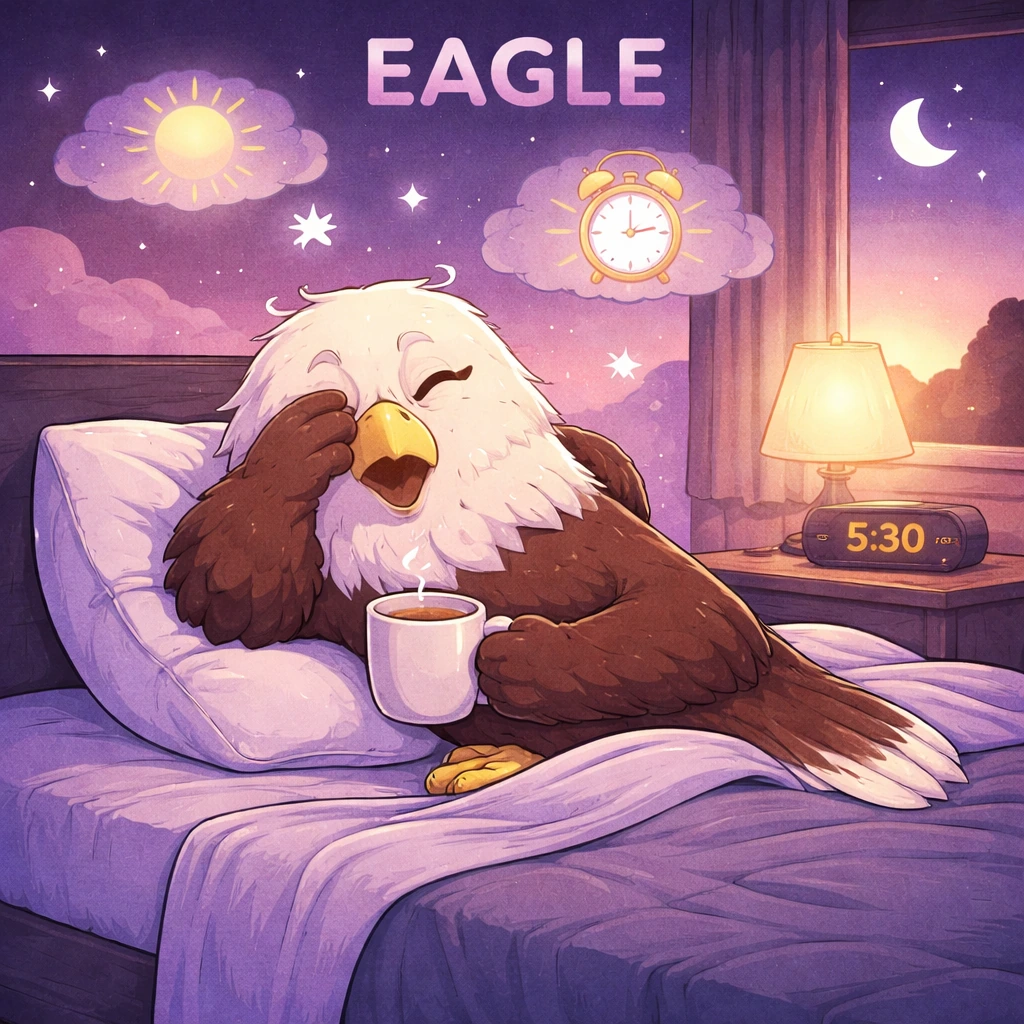
Eagle: Advanced Clock
Your internal morning may be arriving before your ideal schedule does.
These animals are often more about mistimed sleep than broken sleep. Biology, travel, work hours, and light exposure all change where the night wants to land.
Interpretation
How to read this phenotype
Your internal morning may be arriving before your ideal schedule does. [1] [2]
Read this phenotype as a timing issue before you read it as a discipline issue. If you sleep better on weekends, vacations, or self-directed days, the clock mismatch itself is probably part of the story. Most people in this lane improve when wake time, light timing, and schedule drift get more deliberate. The aim is to move biology and routine closer together, not to shame yourself into a different chronotype. Timing matters more than force here: the same tool can help or backfire depending on when it is used. [3] [4] [5]
A recurring finding in the sleep-loss literature is that people feel more adapted than their attention, mood, and reaction time really are. That is where SleepSpace becomes more useful than a static score alone: it can help you see the pattern more clearly and, when appropriate, respond in real time with sound and light changes while the night is still unfolding. [6]
What this often looks like
Common signals in real life
- Your internal morning may be arriving before your ideal schedule does.
- The sleeper often feels competent at sleeping, but at the wrong time for real life.
- Workdays and free days can drift apart, creating a social-jet-lag effect.
- Light exposure, schedule anchors, and travel pressure matter more than people realize.
- The right intervention usually targets timing first, not only relaxation.
Why this page exists
What makes Eagle distinct
The best long-form copy here frames late and early timing as biologic patterns that can be nudged and supported, rather than moral failures of discipline.
Tune evening cues and protect the back half of the night. SleepSpace can help with consistency, light timing, and schedule adjustments that reduce premature morning wakefulness.
Scientific read
The circadian literature consistently shows that some sleepers are mistimed more than they are broken. The body can produce healthy sleep, but at a time that collides with work, school, or family demands. That is why delayed and irregular timing can look like insomnia from the outside. The deeper issue is often a mismatch between biologic night and social night, not a total inability to sleep. Light timing, melatonin timing, wake time, and schedule drift matter because they tell the clock what time it is. Once those anchors move around, the rhythm often loses traction. The practical lesson is that precise timing usually helps more than self-criticism. The most effective changes tend to feel biological and repeatable rather than moralistic. [7] [10] [13] [16] [19]
This is also why late evening light keeps showing up in the literature. It is one of the clearest modern ways to push sleep later and make mornings feel worse. These papers repeatedly make one point clear: some sleepers are mistimed more than they are broken, and they often look much healthier on self-directed schedules than on forced ones. That is why wake time, light timing, and schedule consistency can matter more than trying to bully the body into an earlier identity overnight. Deep sleep is not just about logging enough hours; it is where the night often becomes truly restorative. [8] [11] [14] [17] [20]
Small thermal disruptions can keep sleep lighter than the clock would suggest, especially in the second half of the night. A recurring finding in the sleep-loss literature is that people feel more adapted than their attention, mood, and reaction time really are. Evening light exposure can stretch sleep latency, delay circadian timing, and leave the next morning feeling flatter than the total sleep time alone would predict. Actigraphy papers keep showing how much you learn when timing, duration, and fragmentation are tracked over enough nights to reveal the real pattern. [9] [12] [15] [18]
Tracking and wearables
What data often helps separate this pattern from nearby ones
Here, the most revealing signals are often the gap between workdays and free days, consistency of rise time, timing of light exposure, and how quickly the schedule shifts after travel or rotating work. A diary plus wearable timing trend is often more informative than a single sleep score. [2] [13]
SleepSpace's own tracking and wearables articles are especially relevant for these pages because they reinforce the difference between a one-night impression and an interpretable pattern. That is useful for every phenotype, but it becomes essential when the mechanism changes with context. [11] [13] [12]

SleepSpace app features
Use these tools if you want to improve this pattern instead of just reading about it
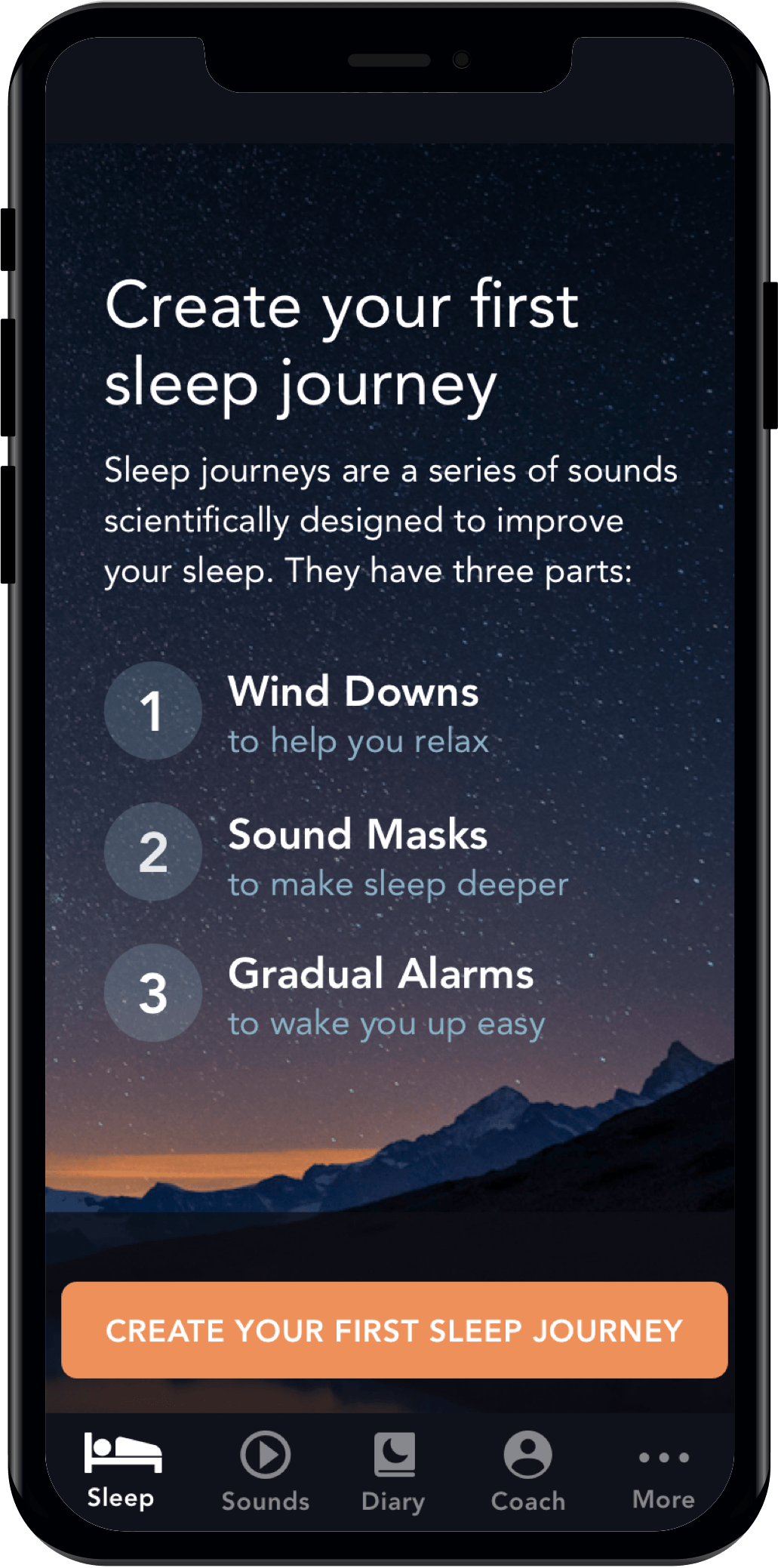
Start with the assessment, download the app, and use the features below to turn this sleep animal into a practical plan.

SleepSpace feature
Sleep assessment
Start here if you want a clearer read on your sleep animal, your main bottlenecks, and what to work on first.
Learn how to use it
SleepSpace feature
Sleep diary
Use the diary to catch patterns in timing, awakenings, stress, recovery, and what actually changed from one night to the next.
Learn how to use it
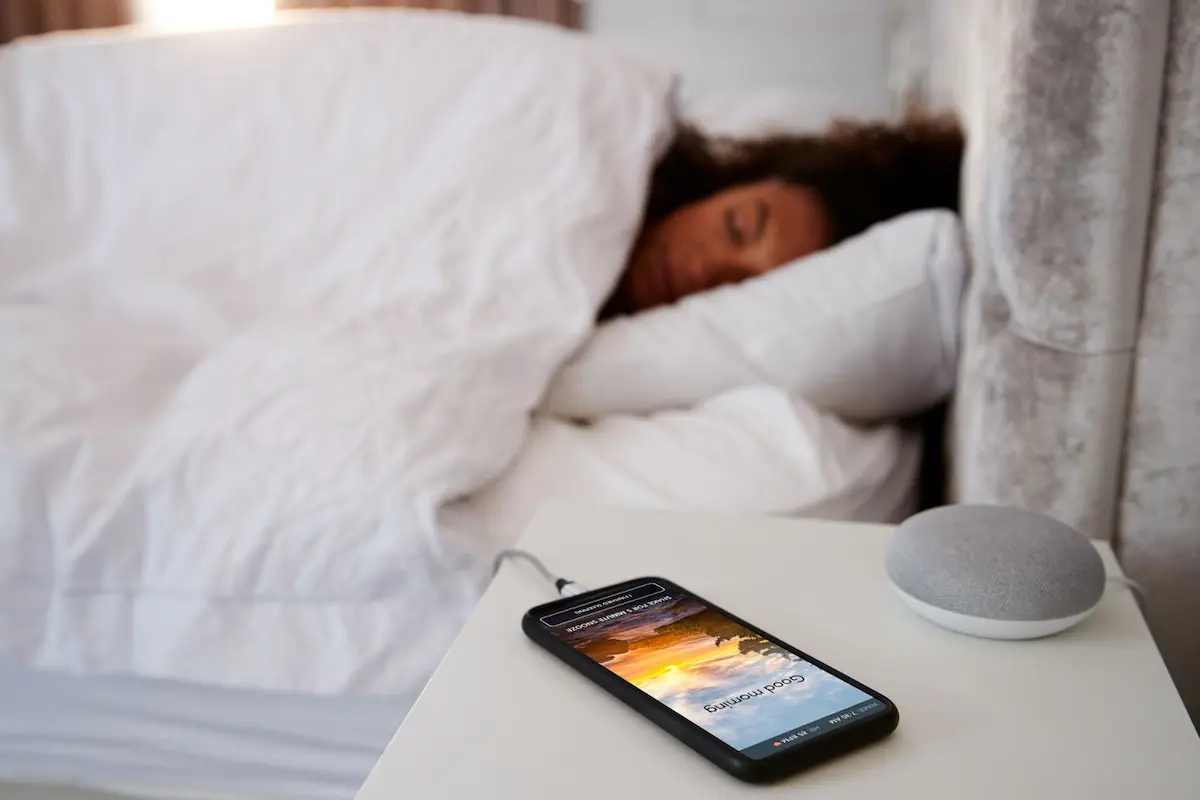
SleepSpace feature
Weekly sleep stats
Use weekly trends to see whether you are actually improving instead of judging everything from one rough night.
Learn how to use it
SleepSpace resources
SleepSpace resources that fit this phenotype
These were selected by spidering SleepSpace topic pages and product resources that match the mechanism cluster behind this animal.
SleepSpace article
SleepSpace learning hub
A broad SleepSpace article library that can serve as the hub resource on every page.
SleepSpace article
SleepSpace science page
Useful when the page needs a product-adjacent evidence destination.
SleepSpace article
Circadian schedule guide
Useful for circadian, travel, and timing-mismatch pages.
SleepSpace article
Tracking and wearables guide
Useful for pages that emphasize data quality, sleep diaries, and wearables.
FAQ
Questions Dr. Dan would expect about this animal
Quick answers to the questions people usually ask when this sleep pattern feels familiar.
What does the Eagle sleep animal mean?
This profile reflects a stronger advanced circadian pattern. You may get sleepy early, wake very early, and feel like the end of the night comes before you are finished recovering. The key is to respect the strength of your timing signal while deciding where it needs support. Tiny changes in light and routine can matter a lot here. The goal is to stop losing recovery simply because your clock is eager to start the day before you are ready. This long-form page treats Eagle as a sleep phenotype: a memorable wrapper around a recurring pattern that likely clusters across schedule, physiology, stress load, and next-day restoration. The goal is not to claim a formal diagnosis. The goal is to make the likely mechanism more understandable and the next step more obvious. This is educational guidance to help you recognize the pattern, not a medical diagnosis.
What should you track if this eagle pattern sounds like you?
Here, the most revealing signals are often the gap between workdays and free days, consistency of rise time, timing of light exposure, and how quickly the schedule shifts after travel or rotating work. A diary plus wearable timing trend is often more informative than a single sleep score. [2] [13] Start with the SleepSpace sleep assessment and then use the app to watch what happens to timing, continuity, symptoms, and next-day recovery over time.
When should you get extra help for eagle-style sleep problems?
If this pattern is getting more intense, affecting safety, or leaving you persistently exhausted, treat this page as educational and talk with a doctor or sleep specialist. SleepSpace can help you organize the pattern, but medical concerns still deserve medical care.
Important note
Keep an early clock from ending the night too soon
The phenotype language is educational and pattern-based. It becomes most useful when paired with trend data, practical experimentation, and medical follow-up when symptoms are severe, persistent, or safety-relevant.
SleepSpace helps advanced-timing sleepers extend recovery without turning sleep into a fight.
Research references
Selected citations for this page
Show citations (20)
- Kitamura et al. (2013). Intrinsic circadian period of sighted patients with circadian rhythm sleep disorder, free-running type.
Timing matters more than force here: the same tool can help or backfire depending on when it is used.
Full article - Tartar et al. (2015). Sleep restriction and delayed sleep associate with psychological health and biomarkers of stress and inflammation in women.
A recurring finding in the sleep-loss literature is that people feel more adapted than their attention, mood, and reaction time really are.
Full article - Shy et al. (2011). Emergency medicine residents' use of psychostimulants and sedatives to aid in shift work.
Timing matters more than force here: the same tool can help or backfire depending on when it is used.
Full article - Czeisler et al. (1999). Circadian and sleep-dependent regulation of hormone release in humans.
Timing matters more than force here: the same tool can help or backfire depending on when it is used.
Full article - Lowden et al. (2004). Suppression of sleepiness and melatonin by bright light exposure during breaks in night work.
This trial is especially relevant because timing matters more than force here: the same tool can help or backfire depending on when it is used.
Full article - Fucci et al. (2005). Toward optimizing lighting as a countermeasure to sleep and circadian disruption in space flight.
Timing matters more than force here: the same tool can help or backfire depending on when it is used.
Full article - Wollnik et al. (1995). Block of c-Fos and JunB expression by antisense oligonucleotides inhibits light-induced phase shifts of the mammalian circadian clock.
Deep sleep is not just about logging enough hours; it is where the night often becomes truly restorative.
Full article - Monk et al. (1989). Circadian rhythm.
Small thermal disruptions can keep sleep lighter than the clock would suggest, especially in the second half of the night.
Full article - Walters et al. (2005). Effect of menopause on melatonin and alertness rhythms investigated in constant routine conditions.
A recurring finding in the sleep-loss literature is that people feel more adapted than their attention, mood, and reaction time really are.
Full article - Forger et al. (2005). A new model for circadian clock research?.
Evening light exposure can stretch sleep latency, delay circadian timing, and leave the next morning feeling flatter than the total sleep time alone would predict.
Full article - Vitale et al. (2015). Chronotype influences activity circadian rhythm and sleep: differences in sleep quality between weekdays and weekend.
Actigraphy papers keep showing how much you learn when timing, duration, and fragmentation are tracked over enough nights to reveal the real pattern.
Full article - Kasahara et al. (2002). Opsin-G 11-Mediated signaling pathway for photic entrainment of the chicken pineal circadian clock.
The room itself can become the bottleneck when sound or unpredictability keeps the nervous system slightly on guard.
Full article - Lu et al. (2010). A Circadian Clock Is Not Required in an Arctic Mammal.
Timing matters more than force here: the same tool can help or backfire depending on when it is used.
Full article - Chang et al. (2011). The Human Circadian System Adapts to Prior Photic History.
Timing matters more than force here: the same tool can help or backfire depending on when it is used.
Full article - Fischer et al. (2017). Chronotypes in the US - Influence of age and sex.
Strategic naps can restore more than people expect when the alternative is trying to grind through a biologically low period.
Full article - Kelley et al. (2017). Is 8:30 a.m. Still Too Early to Start School? A 10:00 a.m. School Start Time Improves Health and Performance of Students Aged 13-16.
Recovery-focused papers keep showing the same thing: a strong baseline is something to protect before it slips, not chase after it is gone.
Full article - Rahman et al. (2013). Effects of filtering visual short wavelengths during nocturnal shiftwork on sleep and performance.
This trial is especially relevant because timing matters more than force here: the same tool can help or backfire depending on when it is used.
Full article - Goel et al. (2009). Circadian rhythm profiles in women with night eating syndrome.
This trial is especially relevant because timing matters more than force here: the same tool can help or backfire depending on when it is used.
Full article - Lee et al. (2009). Circadian timing of REM sleep is coupled to an oscillator within the dorsomedial suprachiasmatic nucleus.
The body clock often explains more here than willpower does, especially when free days look better than scheduled ones.
Full article - Burgess et al. (2004). Early versus late bedtimes phase shift the human dim light melatonin rhythm despite a fixed morning lights on time.
Timing matters more than force here: the same tool can help or backfire depending on when it is used.
Full article
Nearby profiles
Other animals in the same neighborhood
Related animal
Bat
Shift Worker
Your sleep has to perform under conditions biology did not design for.

Related animal
Gazelle
Jet-Lag Hopper
You may be sleeping in multiple time zones, even when your body is still in the last one.
Related animal
Fox
Irregular Schedule Sleeper
Your sleep is adapting to a moving target.