Circadian and Schedule phenotype
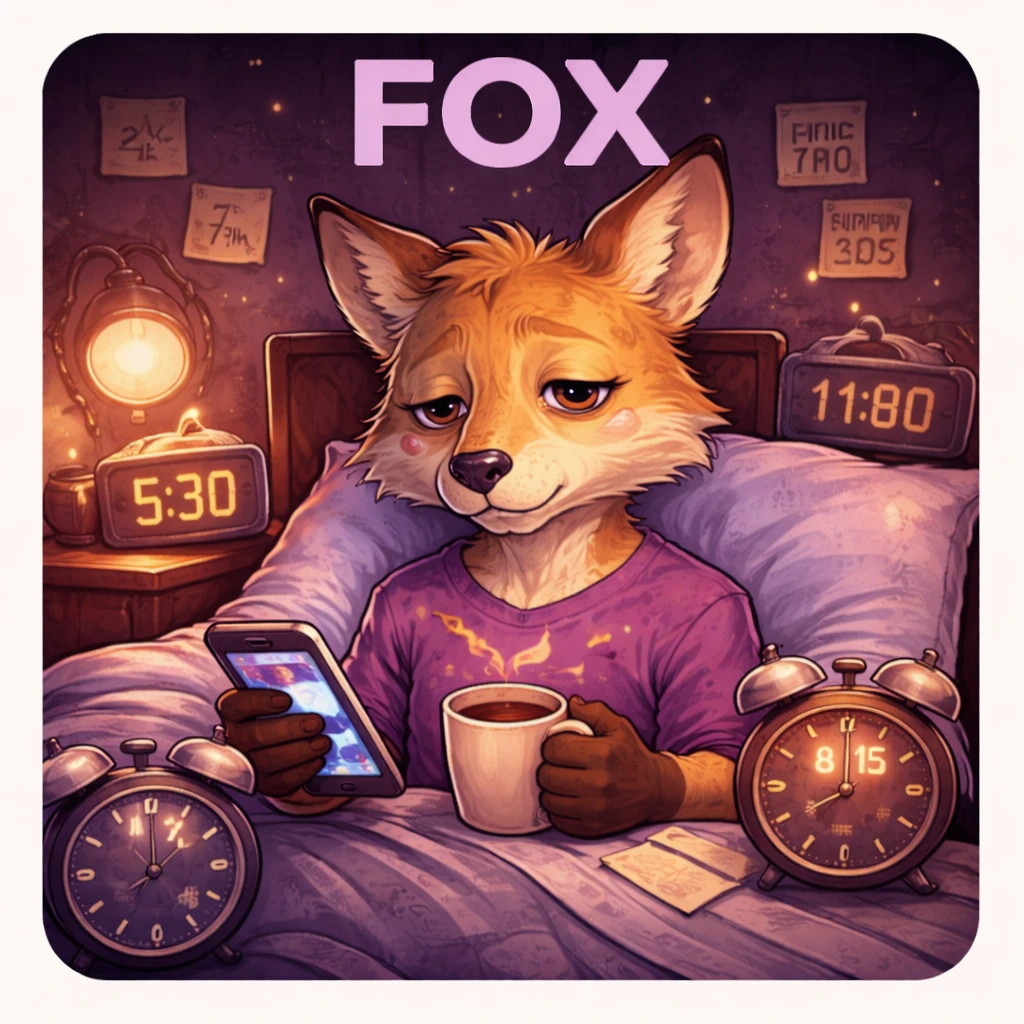
Gazelle: Jet-Lag Hopper
You may be sleeping in multiple time zones, even when your body is still in the last one.
These animals are often more about mistimed sleep than broken sleep. Biology, travel, work hours, and light exposure all change where the night wants to land.


Interpretation
How to read this phenotype
You may be sleeping in multiple time zones, even when your body is still in the last one. [1] [2]
Read this phenotype as a timing issue before you read it as a discipline issue. If you sleep better on weekends, vacations, or self-directed days, the clock mismatch itself is probably part of the story. Most people in this lane improve when wake time, light timing, and schedule drift get more deliberate. The aim is to move biology and routine closer together, not to shame yourself into a different chronotype. Small thermal disruptions can keep sleep lighter than the clock would suggest, especially in the second half of the night. [3] [4] [5]
The body clock often explains more here than willpower does, especially when free days look better than scheduled ones. Deep sleep is not just about logging enough hours; it is where the night often becomes truly restorative. That is where SleepSpace becomes more useful than a static score alone: it can help you see the pattern more clearly and, when appropriate, respond in real time with sound and light changes while the night is still unfolding. [6]
What this often looks like
Common signals in real life
- You may be sleeping in multiple time zones, even when your body is still in the last one.
- The sleeper often feels competent at sleeping, but at the wrong time for real life.
- Workdays and free days can drift apart, creating a social-jet-lag effect.
- Light exposure, schedule anchors, and travel pressure matter more than people realize.
- The right intervention usually targets timing first, not only relaxation.
Why this page exists
What makes Gazelle distinct
The best long-form copy here frames late and early timing as biologic patterns that can be nudged and supported, rather than moral failures of discipline.
Use travel-specific circadian support. SleepSpace can help you align light, sound, and timing to reduce the drag of jet lag and help your body adapt faster.
Scientific read
The circadian literature consistently shows that some sleepers are mistimed more than they are broken. The body can produce healthy sleep, but at a time that collides with work, school, or family demands. That is why delayed and irregular timing can look like insomnia from the outside. The deeper issue is often a mismatch between biologic night and social night, not a total inability to sleep. Light timing, melatonin timing, wake time, and schedule drift matter because they tell the clock what time it is. Once those anchors move around, the rhythm often loses traction. The practical lesson is that precise timing usually helps more than self-criticism. The most effective changes tend to feel biological and repeatable rather than moralistic. [7] [10] [13] [16] [19]
This is also why late evening light keeps showing up in the literature. It is one of the clearest modern ways to push sleep later and make mornings feel worse. These papers repeatedly make one point clear: some sleepers are mistimed more than they are broken, and they often look much healthier on self-directed schedules than on forced ones. That is why wake time, light timing, and schedule consistency can matter more than trying to bully the body into an earlier identity overnight. Strategic naps can restore more than people expect when the alternative is trying to grind through a biologically low period. [8] [11] [14] [17] [20]
Recovery-focused papers keep showing the same thing: a strong baseline is something to protect before it slips, not chase after it is gone. The body clock often explains more here than willpower does, especially when free days look better than scheduled ones. Timing matters more than force here: the same tool can help or backfire depending on when it is used. A recurring finding in the sleep-loss literature is that people feel more adapted than their attention, mood, and reaction time really are. [9] [12] [15] [18]
Tracking and wearables
What data often helps separate this pattern from nearby ones
Here, the most revealing signals are often the gap between workdays and free days, consistency of rise time, timing of light exposure, and how quickly the schedule shifts after travel or rotating work. A diary plus wearable timing trend is often more informative than a single sleep score. [2] [13]
SleepSpace's own tracking and wearables articles are especially relevant for these pages because they reinforce the difference between a one-night impression and an interpretable pattern. That is useful for every phenotype, but it becomes essential when the mechanism changes with context. [11] [13] [12]

SleepSpace app features
Use these tools if you want to improve this pattern instead of just reading about it
Start with the assessment, download the app, and use the features below to turn this sleep animal into a practical plan.

SleepSpace feature
Sleep assessment
Start here if you want a clearer read on your sleep animal, your main bottlenecks, and what to work on first.
Learn how to use it

SleepSpace feature
Sleep diary
Use the diary to catch patterns in timing, awakenings, stress, recovery, and what actually changed from one night to the next.
Learn how to use it
SleepSpace feature
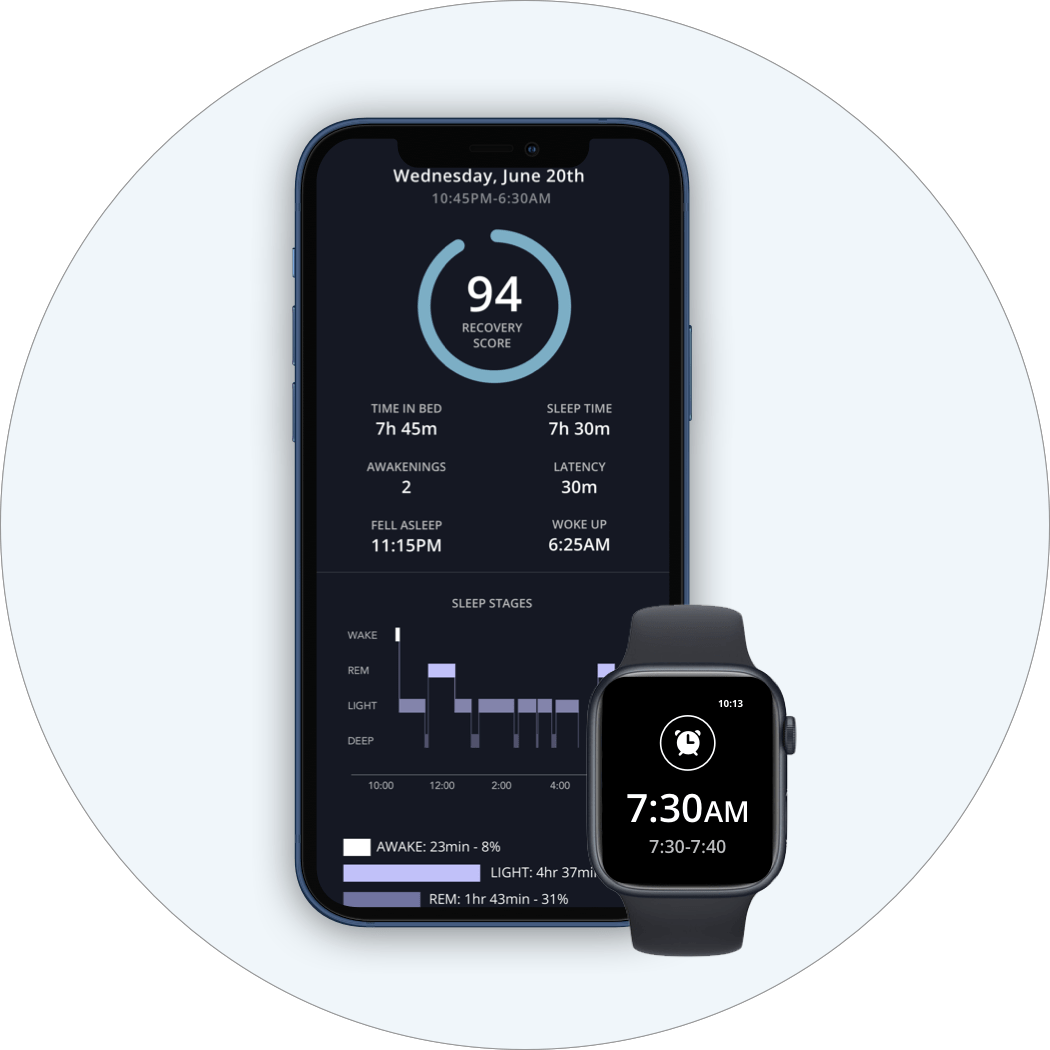
Weekly sleep stats
Use weekly trends to see whether you are actually improving instead of judging everything from one rough night.
Learn how to use it
SleepSpace resources
SleepSpace resources that fit this phenotype
These were selected by spidering SleepSpace topic pages and product resources that match the mechanism cluster behind this animal.
SleepSpace article
SleepSpace learning hub
A broad SleepSpace article library that can serve as the hub resource on every page.
SleepSpace article
SleepSpace science page
Useful when the page needs a product-adjacent evidence destination.
SleepSpace article
Circadian schedule guide
Useful for circadian, travel, and timing-mismatch pages.
SleepSpace article
Tracking and wearables guide
Useful for pages that emphasize data quality, sleep diaries, and wearables.
FAQ
Questions Dr. Dan would expect about this animal
Quick answers to the questions people usually ask when this sleep pattern feels familiar.
What does the Gazelle sleep animal mean?
Frequent travel or repeated time-zone shifts can make sleep feel detached from home base. You may be tired at the wrong times, hungry at odd hours, and unable to predict when your body will actually feel ready for sleep. This is not just inconvenience. It is a real circadian stressor. Strategic light, schedule shifts, and pre-travel planning can make a big difference. The more portable your recovery system becomes, the less every trip has to feel like starting over. This long-form page treats Gazelle as a sleep phenotype: a memorable wrapper around a recurring pattern that likely clusters across schedule, physiology, stress load, and next-day restoration. The goal is not to claim a formal diagnosis. The goal is to make the likely mechanism more understandable and the next step more obvious. This is educational guidance to help you recognize the pattern, not a medical diagnosis.
What should you track if this gazelle pattern sounds like you?
Here, the most revealing signals are often the gap between workdays and free days, consistency of rise time, timing of light exposure, and how quickly the schedule shifts after travel or rotating work. A diary plus wearable timing trend is often more informative than a single sleep score. [2] [13] Start with the SleepSpace sleep assessment and then use the app to watch what happens to timing, continuity, symptoms, and next-day recovery over time.
When should you get extra help for gazelle-style sleep problems?
If this pattern is getting more intense, affecting safety, or leaving you persistently exhausted, treat this page as educational and talk with a doctor or sleep specialist. SleepSpace can help you organize the pattern, but medical concerns still deserve medical care.
Important note
Travel with less circadian whiplash
The phenotype language is educational and pattern-based. It becomes most useful when paired with trend data, practical experimentation, and medical follow-up when symptoms are severe, persistent, or safety-relevant.
SleepSpace can help you land faster, recover faster, and sleep better when time zones keep shifting.
Research references
Selected citations for this page
Show citations (20)
- Storch et al. (2009). Daily rhythms of food-anticipatory behavioral activity do not require the known circadian clock.
This trial is especially relevant because small thermal disruptions can keep sleep lighter than the clock would suggest, especially in the second half of the night.
Full article - Arble et al. (2009). Circadian timing of food intake contributes to weight gain.
The body clock often explains more here than willpower does, especially when free days look better than scheduled ones.
Full article - Brick et al. (1984). Circadian variations in behavioral and biological sensitivity to ethanol.
Deep sleep is not just about logging enough hours; it is where the night often becomes truly restorative.
Full article - Wu et al. (2006). Distribution of MT1 melatonin receptor immunoreactivity in the human hypothalamus and pituitary gland: colocalization of MT1 with vasopressin, oxytocin, and corticotropin-releasing hormone.
Timing matters more than force here: the same tool can help or backfire depending on when it is used.
Full article - Forsling et al. (2002). The effect of exogenous melatonin on stimulated neurohypophysial hormone release in man.
This trial is especially relevant because timing matters more than force here: the same tool can help or backfire depending on when it is used.
Full article - Forsling et al. (1999). The effect of melatonin administration on pituitary hormone secretion in man.
This trial is especially relevant because timing matters more than force here: the same tool can help or backfire depending on when it is used.
Full article - Wilson et al. (2002). An Analysis of Mental Workload in Pilots During Flight Using Multiple Psychophysiological Measures.
This trial is especially relevant because strategic naps can restore more than people expect when the alternative is trying to grind through a biologically low period.
Full article - Pruchnicki et al. (2011). An exploration of the utility of mathematical modeling predicting fatigue from sleep/wake history and circadian phase applied in accident analysis and prevention: the crash of Comair Flight 5191.
Recovery-focused papers keep showing the same thing: a strong baseline is something to protect before it slips, not chase after it is gone.
Full article - Di Milia et al. (2011). Demographic factors, fatigue, and driving accidents: An examination of the published literature.
This review is useful because the body clock often explains more here than willpower does, especially when free days look better than scheduled ones.
Full article - Swanson et al. (2018). The importance of the circadian system & sleep for bone health.
This review is useful because timing matters more than force here: the same tool can help or backfire depending on when it is used.
Full article - Praninskiene et al. (2012). Diurnal melatonin patterns in children: Ready to apply in clinical practice?.
This review is useful because timing matters more than force here: the same tool can help or backfire depending on when it is used.
Full article - Crowley et al. (2011). Human puberty: Salivary melatonin profiles in constant conditions.
Timing matters more than force here: the same tool can help or backfire depending on when it is used.
Full article - Carroll et al. (2012). Novel melatonin-based treatments for major depression.
Timing matters more than force here: the same tool can help or backfire depending on when it is used.
Full article - Van Dongen et al. (2012). Systematic individual differences in sleep homeostatic and circadian rhythm contributions to neurobehavioral impairment during sleep deprivation.
A recurring finding in the sleep-loss literature is that people feel more adapted than their attention, mood, and reaction time really are.
Full article - McFarlane et al. (2010). The relationship between urinary melatonin metabolite excretion and posttraumatic symptoms following traumatic injury.
Timing matters more than force here: the same tool can help or backfire depending on when it is used.
Full article - Davies et al. (2014). Effect of sleep deprivation on the human metabolome.
A recurring finding in the sleep-loss literature is that people feel more adapted than their attention, mood, and reaction time really are.
Full article - Jones et al. (2016). Genome-Wide Association Analyses in 128,266 Individuals Identifies New Morningness and Sleep Duration Loci.
This review is useful because strategic naps can restore more than people expect when the alternative is trying to grind through a biologically low period.
Full article - Lewy et al. (2002). Low, but not high, doses of melatonin entrained a free-running blind person with a long circadian period.
Timing matters more than force here: the same tool can help or backfire depending on when it is used.
Full article - Yannielli et al. (2004). Let there be "more" light: enhancement of light actions on the circadian system through non-photic pathways.
This review is useful because deep sleep is not just about logging enough hours; it is where the night often becomes truly restorative.
Full article - Duncan et al. (2016). Greater bed- and wake-time variability is associated with less healthy lifestyle behaviors: a cross-sectional study.
Social jet lag is the sleep version of repeatedly flying a short time-zone hop every Monday, then pretending the body should not notice.
Full article
Nearby profiles