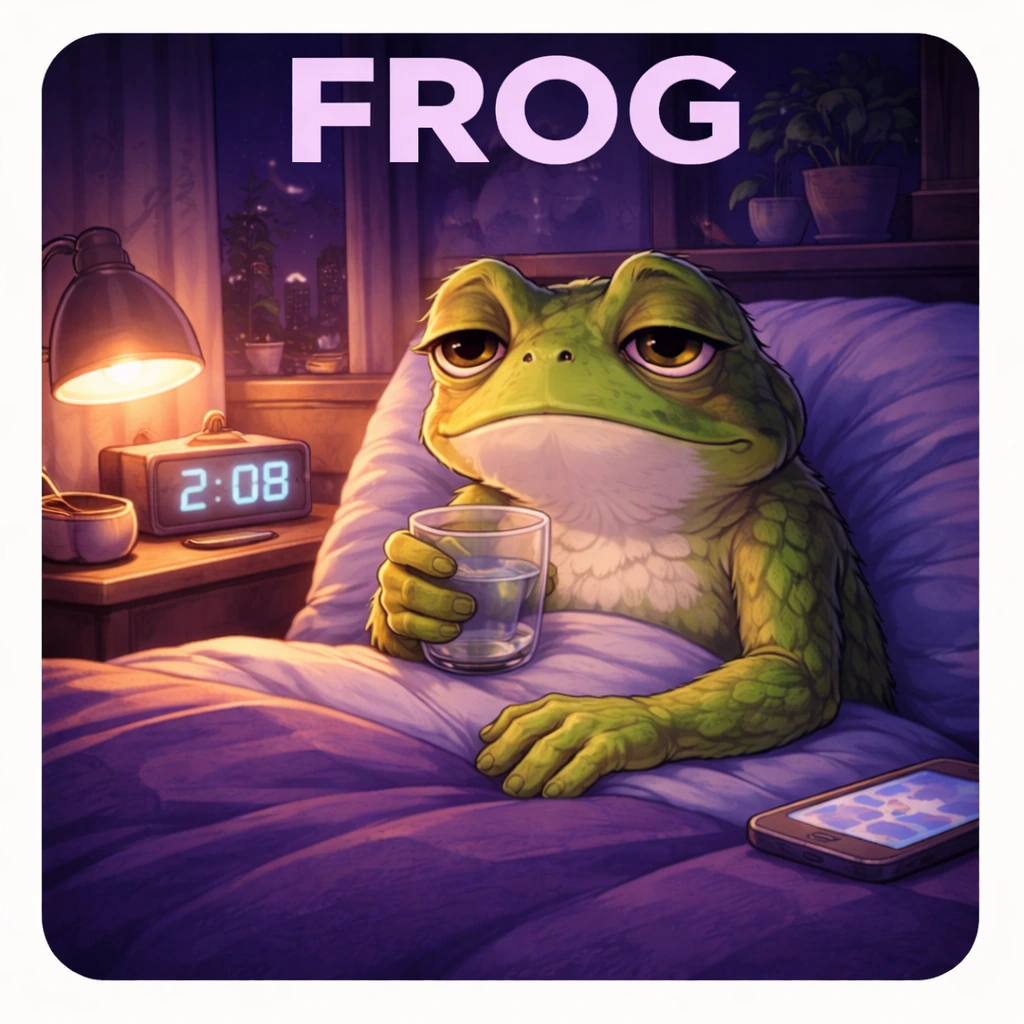
Insomnia and Fragmentation phenotype
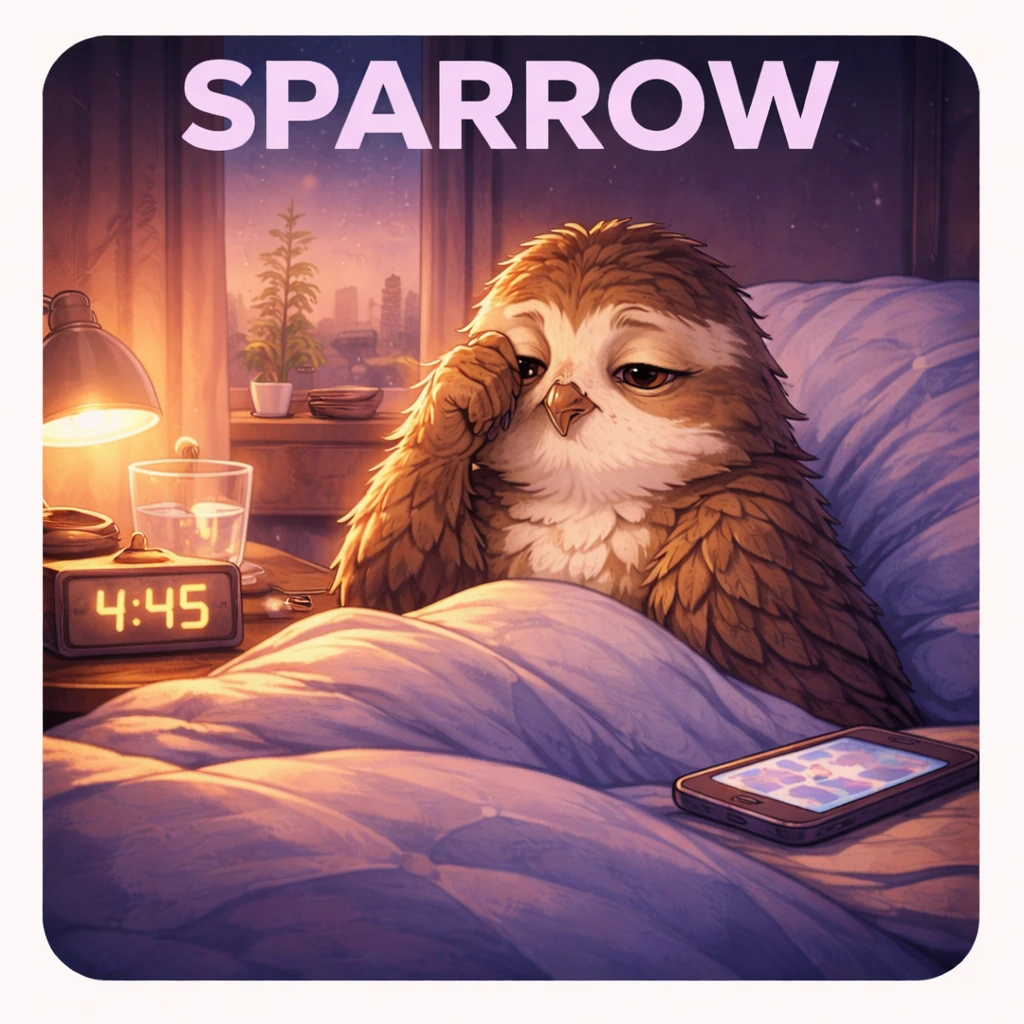
Sparrow: Too-Early Riser
Your body clock may be ending the night before you are done recovering.
The dominant signal is usually difficulty initiating or maintaining sleep, plus a nervous system that remains too activated too close to bedtime.

Interpretation
How to read this phenotype
Your body clock may be ending the night before you are done recovering. [1] [2]
Read this phenotype as a pattern of bedtime activation and fragile continuity. If your body is tired but your mind still behaves like the workday is not over, the goal is to reduce what keeps the night effortful. A useful next step is usually a steadier rise time, less bedtime problem-solving, and a clearer wind-down that helps the nervous system stop scanning for the next demand. Deep sleep is not just about logging enough hours; it is where the night often becomes truly restorative. [3] [4] [5]
The pattern here is less about not being tired and more about carrying too much activation too far into the night. Strategic naps can restore more than people expect when the alternative is trying to grind through a biologically low period. That is where SleepSpace becomes more useful than a static score alone: it can help you see the pattern more clearly and, when appropriate, respond in real time with sound and light changes while the night is still unfolding. [6]
What this often looks like
Common signals in real life
- Your body clock may be ending the night before you are done recovering.
- Bedtime feels effortful even when the body is tired.
- The night is often broken by cognitive arousal, anticipatory worry, or light sleep continuity.
- Next-day fatigue can coexist with a nervous system that still feels accelerated.
- A structured routine often works better than trying harder to sleep.
Why this page exists
What makes Sparrow distinct
This cluster works best when the page explains not only that sleep is difficult, but why generic advice often fails when the real problem is hyperarousal, stress reactivity, or a fragile transition into sleep.
Work on timing, light exposure, and consistency. SleepSpace can help you shape a schedule that supports a later final awakening without making nights feel effortful.
Scientific read
The strongest insomnia papers repeatedly point to a system that stays too activated too close to bedtime. That activation can be cognitive, emotional, physiologic, or all three at once. Behavioral conditioning becomes the next layer. Once the bed gets linked with trying, monitoring, frustration, or mental rehearsal, the night can start reinforcing itself in the wrong direction. The digital treatment literature matters here because structured routines, stimulus control, and cognitive unloading can improve a rough night without turning sleep into a performance test. The broader message is that the bottleneck is usually not weakness. It is a nervous system that still feels too on duty when the night needs it to let go. [7] [10] [13] [16] [19]
Stress-sensitive sleepers also tend to notice that one hard day can change the entire night. That is not random; it is one of the most repeatable patterns in this literature. The most useful insomnia papers do not frame the sleeper as weak or undisciplined. They frame the night as over-activated, over-monitored, and too easy to accidentally train in the wrong direction. That is why structured wind-downs, stimulus control, and calmer pre-sleep routines keep showing up as practical leverage points instead of generic lifestyle advice. The insomnia treatment literature is most interesting when it shows that the win often comes from retraining the night, not from trying harder to force sleep. [8] [11] [14] [17] [20]
A recurring finding in the sleep-loss literature is that people feel more adapted than their attention, mood, and reaction time really are. The room itself can become the bottleneck when sound or unpredictability keeps the nervous system slightly on guard. Strategic naps can restore more than people expect when the alternative is trying to grind through a biologically low period. The pattern here is less about not being tired and more about carrying too much activation too far into the night. [9] [12] [15] [18]
Tracking and wearables
What data often helps separate this pattern from nearby ones
For this cluster, a useful tracking set usually includes bedtime regularity, sleep latency, overnight wake duration, and whether the night gets worse when stress or cognitive load spikes. Wearables can add trend context, but the diary remains central because much of the phenotype depends on the subjective experience of effortful sleep.
SleepSpace's own tracking and wearables articles are especially relevant for these pages because they reinforce the difference between a one-night impression and an interpretable pattern. That is useful for every phenotype, but it becomes essential when the mechanism changes with context. [11] [12]
SleepSpace app features
Use these tools if you want to improve this pattern instead of just reading about it
Start with the assessment, download the app, and use the features below to turn this sleep animal into a practical plan.
SleepSpace feature
Sleep assessment
Start here if you want a clearer read on your sleep animal, your main bottlenecks, and what to work on first.
Learn how to use it
SleepSpace feature
Sleep diary
Use the diary to catch patterns in timing, awakenings, stress, recovery, and what actually changed from one night to the next.
Learn how to use it

SleepSpace feature
Weekly sleep stats
Use weekly trends to see whether you are actually improving instead of judging everything from one rough night.
Learn how to use it
SleepSpace resources
SleepSpace resources that fit this phenotype
These were selected by spidering SleepSpace topic pages and product resources that match the mechanism cluster behind this animal.
SleepSpace article
SleepSpace learning hub
A broad SleepSpace article library that can serve as the hub resource on every page.
SleepSpace article
SleepSpace science page
Useful when the page needs a product-adjacent evidence destination.
SleepSpace article
SleepSpace program based on CBT-I
Useful for insomnia-heavy pages where the intervention logic is behavioral.
SleepSpace article
Sound masking guide
Useful for noise, partner, and light-sleeper pages.
FAQ
Questions Dr. Dan would expect about this animal
Quick answers to the questions people usually ask when this sleep pattern feels familiar.
What does the Sparrow sleep animal mean?
You may wake up earlier than you want and struggle to get back to sleep. This can happen with stress, circadian timing, or a sleep window that is subtly misaligned with your biology. Over time, it can create the feeling that your nights are cut short even when you are trying hard to do everything right. The solution is often less about force and more about rhythm. When this phenotype improves, mornings stop feeling like an unwanted early ending and start feeling like a natural wake-up. This long-form page treats Sparrow as a sleep phenotype: a memorable wrapper around a recurring pattern that likely clusters across schedule, physiology, stress load, and next-day restoration. The goal is not to claim a formal diagnosis. The goal is to make the likely mechanism more understandable and the next step more obvious. This is educational guidance to help you recognize the pattern, not a medical diagnosis.
What should you track if this sparrow pattern sounds like you?
For this cluster, a useful tracking set usually includes bedtime regularity, sleep latency, overnight wake duration, and whether the night gets worse when stress or cognitive load spikes. Wearables can add trend context, but the diary remains central because much of the phenotype depends on the subjective experience of effortful sleep. Start with the SleepSpace sleep assessment and then use the app to watch what happens to timing, continuity, symptoms, and next-day recovery over time.
When should you get extra help for sparrow-style sleep problems?
If this pattern is getting more intense, affecting safety, or leaving you persistently exhausted, treat this page as educational and talk with a doctor or sleep specialist. SleepSpace can help you organize the pattern, but medical concerns still deserve medical care.
Important note
Stretch the night in the right direction
The phenotype language is educational and pattern-based. It becomes most useful when paired with trend data, practical experimentation, and medical follow-up when symptoms are severe, persistent, or safety-relevant.
Use SleepSpace to fine-tune your sleep timing and support more complete overnight recovery.
Research references
Selected citations for this page
Show citations (20)
- Wong et al. (2004). Sleep problems in early childhood and early onset of alcohol and other drug use in adolescence.
Deep sleep is not just about logging enough hours; it is where the night often becomes truly restorative.
Full article - Grandner et al. (2015). Social and Behavioral Determinants of Perceived Insufficient Sleep.
The pattern here is less about not being tired and more about carrying too much activation too far into the night.
Full article - Thompson et al. (2005). The association between television viewing and irregular sleep schedules among children less than 3 years of age.
Strategic naps can restore more than people expect when the alternative is trying to grind through a biologically low period.
Full article - Szymusiak et al. (2007). Hypothalamic control of sleep.
The night can become self-reinforcing when the bed turns into a place for monitoring, rehearsing, and trying too hard.
Full article - Kilkus et al. (2012). Sleep and eating behavior in adults at risk for type 2 diabetes.
Actigraphy papers keep showing how much you learn when timing, duration, and fragmentation are tracked over enough nights to reveal the real pattern.
Full article - Crocker et al. (2010). Genetic analysis of sleep.
The night can become self-reinforcing when the bed turns into a place for monitoring, rehearsing, and trying too hard.
Full article - Herbert et al. (2018). Does cognitive behavioural therapy for insomnia improve cognitive performance? A systematic review and narrative synthesis.
This trial is especially relevant because the insomnia treatment literature is most interesting when it shows that the win often comes from retraining the night, not from trying harder to force sleep.
Full article - Morin et al. (2020). Profile of Somryst Prescription Digital Therapeutic for Chronic Insomnia: Overview of Safety and Efficacy.
This review is useful because a recurring finding in the sleep-loss literature is that people feel more adapted than their attention, mood, and reaction time really are.
Full article - Bouwmans et al. (2016). Sleep quality predicts positive and negative affect but not vice versa. An electronic diary study in depressed and healthy individuals.
The room itself can become the bottleneck when sound or unpredictability keeps the nervous system slightly on guard.
Full article - Taylor et al. (2003). Insomnia as a health risk factor.
This review is useful because the insomnia treatment literature is most interesting when it shows that the win often comes from retraining the night, not from trying harder to force sleep.
Full article - Christensen et al. (2016). Direct Measurements of Smartphone Screen-Time: Relationships with Demographics and Sleep.
Strategic naps can restore more than people expect when the alternative is trying to grind through a biologically low period.
Full article - Bahreinian et al. (2013). Allostatic load biomarkers and asthma in adolescents.
The room itself can become the bottleneck when sound or unpredictability keeps the nervous system slightly on guard.
Full article - Burg et al. (2016). Insights from the OppNet initiatives on psychosocial stress and sleep: themes for multidisciplinary team science research.
The pattern here is less about not being tired and more about carrying too much activation too far into the night.
Full article - Carey et al. (2011). Sleep problems, depression, substance use, social bonding, and quality of life in professional firefighters.
A recurring finding in the sleep-loss literature is that people feel more adapted than their attention, mood, and reaction time really are.
Full article - Hartstein et al. (2024). The impact of screen use on sleep health across the lifespan: A National Sleep Foundation consensus statement.
This review is useful because evening light exposure can stretch sleep latency, delay circadian timing, and leave the next morning feeling flatter than the total sleep time alone would predict.
Full article - Lallukka et al. (2013). Work-family conflicts and subsequent sleep medication among women and men: a longitudinal registry linkage study.
The pattern here is less about not being tired and more about carrying too much activation too far into the night.
Full article - Genderson et al. (2013). Genetic and environmental influences on sleep quality in middle-aged men: a twin study.
The room itself can become the bottleneck when sound or unpredictability keeps the nervous system slightly on guard.
Full article - Rosen et al. (2008). The cost of alcohol in California.
Deep sleep is not just about logging enough hours; it is where the night often becomes truly restorative.
Full article - Meneton et al. (2018). Work environment mediates a large part of social inequalities in the incidence of several common cardiovascular risk factors: Findings from the Gazel cohort.
The room itself can become the bottleneck when sound or unpredictability keeps the nervous system slightly on guard.
Full article - Ohayon et al. (2000). Prevalence and patterns of problematic sleep among older adolescents.
The night can become self-reinforcing when the bed turns into a place for monitoring, rehearsing, and trying too hard.
Full article
Nearby profiles