
Breathing Overlap Profiles phenotype
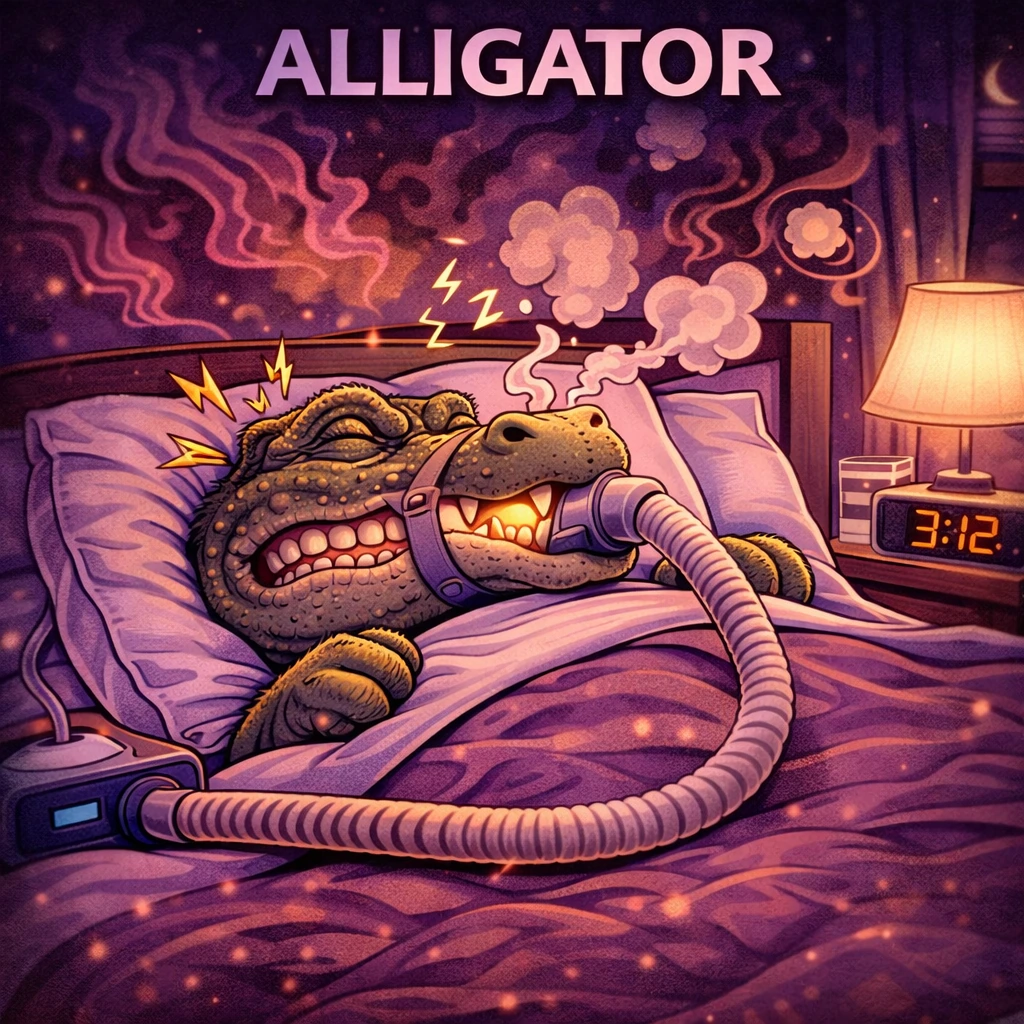
Alligator: Bruxing Breather
Teeth grinding and breathing strain may be showing up together at night.
These animals combine sleep-disordered breathing with position, insomnia, alcohol, jaw tension, self-wakening, or atypical respiratory patterns.

Interpretation
How to read this phenotype
Teeth grinding and breathing strain may be showing up together at night. [1] [2]
Read this phenotype as an overlap, not a single label. Airway problems often mix with position, insomnia, alcohol, jaw tension, or self-awakenings in ways that make the night look messier than one diagnosis alone. That overlap matters because the best next step depends on which part of the pattern is doing the most damage right now: breathing strain, position, repeated wake-ups, or something layered on top of the airway issue. One useful takeaway here is that wearables are most trustworthy for multi-night pattern detection, while quiet wakefulness and edge cases still benefit from richer context. [3] [4] [5]
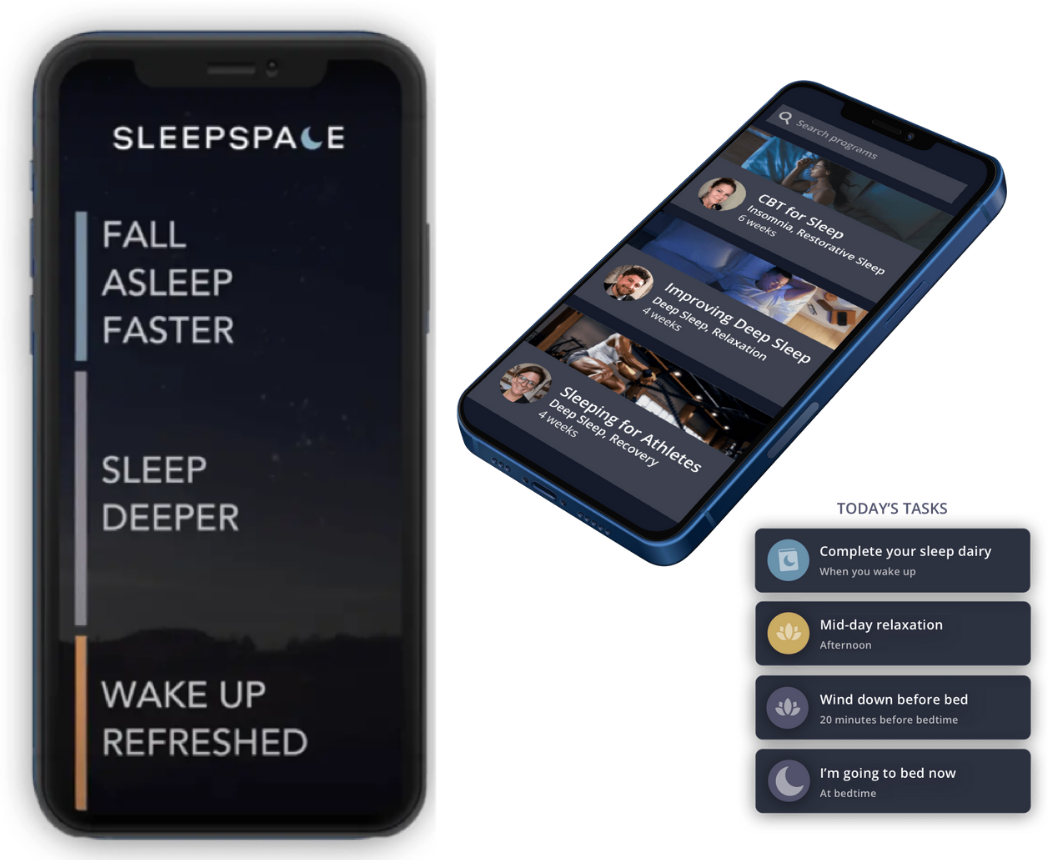
A rough morning can come from repeated breathing strain and micro-disruption even when the sleeper does not remember many awakenings. That is where SleepSpace becomes more useful than a static score alone: it can help you see the pattern more clearly and, when appropriate, respond in real time with sound and light changes while the night is still unfolding. [6]
What this often looks like
Common signals in real life
- Teeth grinding and breathing strain may be showing up together at night.
- Airway strain often overlaps with another modifier such as position, insomnia, alcohol, or jaw tension.
- The overlap matters because it changes how the night feels and how the next step should be framed.
- The page should teach the sleeper what to monitor without pretending a single pattern explains everything.
- Screening, adherence, and anatomy-sensitive interpretation often matter more here than generic sleep hygiene.
Why this page exists
What makes Alligator distinct
The pages should teach without sounding alarmist: enough specificity to prompt evaluation, but still readable.
Track both jaw-related and breathing-related symptoms and improve the overall sleep environment while you follow up.
Scientific read
Overlap breathing profiles matter because airway problems do not arrive in one neat format. The same sleeper can have breathing instability plus insomnia, position sensitivity, alcohol effects, or repeated self-awakenings. That is why the literature here spans more than one lane: anatomy, position, device response, treatment adherence, and cardiovascular consequences all help describe different parts of the same night. This also explains why one person may mainly notice snoring and another mostly notices fatigue, headaches, dry mouth, or a miserable morning even without dramatic awakenings. The practical lesson is that overlap pages need more than one clue before the next step is obvious. The payoff is that once the right overlap is named, the right intervention gets clearer fast. [7] [10] [13]
These are the pages where partner observations and multi-night trends can be especially helpful. Overlap papers matter because many breathing-related sleepers do not arrive with one neat textbook problem. They arrive with airway clues layered on top of another bottleneck. The payoff is that once the right overlap gets named, the next step stops feeling generic and starts feeling specific. Actigraphy papers keep showing how much you learn when timing, duration, and fragmentation are tracked over enough nights to reveal the real pattern. [8] [11] [14]
A recurring finding in the sleep-loss literature is that people feel more adapted than their attention, mood, and reaction time really are. A rough morning can come from repeated breathing strain and micro-disruption even when the sleeper does not remember many awakenings. Breathing-related sleep problems can change dramatically with position and airway mechanics, which is why the night can look very different on the back than on the side. Deep sleep is not just about logging enough hours; it is where the night often becomes truly restorative. [9] [12] [15]
Tracking and wearables
What data often helps separate this pattern from nearby ones
Because these patterns change with context, the best data are often multi-night and multi-setting: travel versus home, stressful versus calm weeks, winter versus summer, and high-demand versus lower-demand periods. [13]
SleepSpace's own tracking and wearables articles are especially relevant for these pages because they reinforce the difference between a one-night impression and an interpretable pattern. That is useful for every phenotype, but it becomes essential when the mechanism changes with context. [11] [13] [12]

SleepSpace app features
Use these tools if you want to improve this pattern instead of just reading about it
Start with the assessment, download the app, and use the features below to turn this sleep animal into a practical plan.

SleepSpace feature
Sleep assessment
Start here if you want a clearer read on your sleep animal, your main bottlenecks, and what to work on first.
Learn how to use it
SleepSpace feature
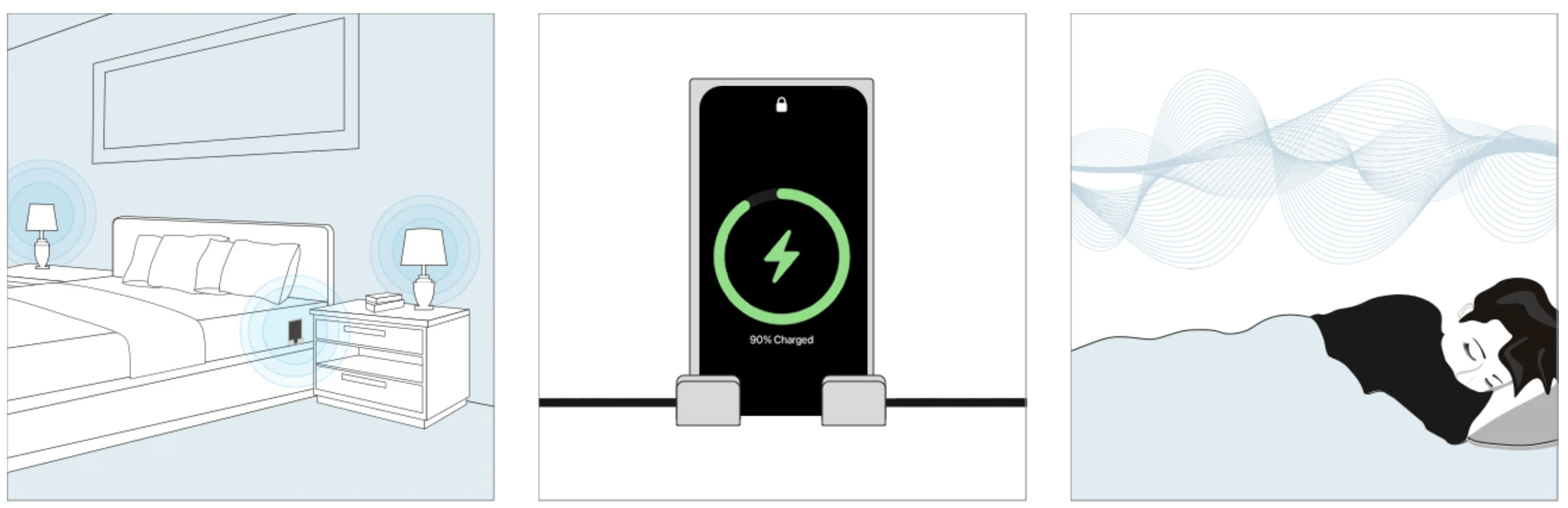
Snore masking sounds
Use sound tools when snoring, partner noise, or environmental disruption is part of why sleep feels broken up.
Learn how to use it
SleepSpace feature
Weekly sleep stats
Use weekly trends to see whether you are actually improving instead of judging everything from one rough night.
Learn how to use it
SleepSpace resources
SleepSpace resources that fit this phenotype
These were selected by spidering SleepSpace topic pages and product resources that match the mechanism cluster behind this animal.
SleepSpace article
SleepSpace learning hub
A broad SleepSpace article library that can serve as the hub resource on every page.
SleepSpace article
SleepSpace science page
Useful when the page needs a product-adjacent evidence destination.
SleepSpace article
Snoring and breathing tracking guide
Useful for airway, snoring, and breathing-disruption pages.
SleepSpace article
Tracking and wearables guide
Useful for pages that emphasize data quality, sleep diaries, and wearables.
FAQ
Questions Dr. Dan would expect about this animal
Quick answers to the questions people usually ask when this sleep pattern feels familiar.
What does the Alligator sleep animal mean?
This overlap profile fits people whose nights include both clenching or grinding and airway-like sleep disruption. The combination can leave mornings feeling tense, dry, or under-recovered. It is a useful pattern to name because it often hides in plain sight. Looking at jaw tension and breathing together often explains more than addressing either one in isolation. This long-form page treats Alligator as a sleep phenotype: a memorable wrapper around a recurring pattern that likely clusters across schedule, physiology, stress load, and next-day restoration. The goal is not to claim a formal diagnosis. The goal is to make the likely mechanism more understandable and the next step more obvious. This is educational guidance to help you recognize the pattern, not a medical diagnosis.
What should you track if this alligator pattern sounds like you?
Because these patterns change with context, the best data are often multi-night and multi-setting: travel versus home, stressful versus calm weeks, winter versus summer, and high-demand versus lower-demand periods. [13] Start with the SleepSpace sleep assessment and then use the app to watch what happens to timing, continuity, symptoms, and next-day recovery over time.
When should you get extra help for alligator-style sleep problems?
If this pattern is getting more intense, affecting safety, or leaving you persistently exhausted, treat this page as educational and talk with a doctor or sleep specialist. SleepSpace can help you organize the pattern, but medical concerns still deserve medical care.
Important note
Look at the jaw and airway together
If loud snoring, observed breathing pauses, gasping, severe daytime sleepiness, or blood-pressure concerns are part of the story, a formal sleep evaluation matters. These pages can orient the sleeper, but they do not replace diagnostic workup for sleep-disordered breathing. [10] [9]
SleepSpace can help support recovery when tension and breathing seem to be sharing the night.
Research references
Selected citations for this page
Show citations (15)
- Acebo et al. (2006). Actigraphy.
This review is useful because one useful takeaway here is that wearables are most trustworthy for multi-night pattern detection, while quiet wakefulness and edge cases still benefit from richer context.
Full article - Nsair et al. (2019). Factors Influencing Adherence to Auto-CPAP: An Observational Monocentric Study Comparing Patients With and Without Cardiovascular Diseases.
A rough morning can come from repeated breathing strain and micro-disruption even when the sleeper does not remember many awakenings.
Full article - Rapelli et al. (2021). Improving CPAP Adherence in Adults With Obstructive Sleep Apnea Syndrome: A Scoping Review of Motivational Interventions.
This trial is especially relevant because a rough morning can come from repeated breathing strain and micro-disruption even when the sleeper does not remember many awakenings.
Full article - Chong et al. (2006). Continuous positive airway pressure reduces subjective daytime sleepiness in patients with mild to moderate Alzheimer's disease with sleep disordered breathing.
This trial is especially relevant because deep sleep is not just about logging enough hours; it is where the night often becomes truly restorative.
Full article - Labarca et al. (2022). Mouth Closing to Improve the Efficacy of Mandibular Advancement Devices in Sleep Apnea.
Deep sleep is not just about logging enough hours; it is where the night often becomes truly restorative.
Full article - Rosenberg et al. (2007). A pilot study evaluating acute use of eszopiclone in patients with mild to moderate obstructive sleep apnea syndrome.
This trial is especially relevant because a rough morning can come from repeated breathing strain and micro-disruption even when the sleeper does not remember many awakenings.
Full article - Buxton et al. (2010). Short and long sleep are positively associated with obesity, diabetes, hypertension, and cardiovascular disease among adults in the United States.
This review is useful because actigraphy papers keep showing how much you learn when timing, duration, and fragmentation are tracked over enough nights to reveal the real pattern.
Full article - Calhoun et al. (2010). Sleep and hypertension.
This trial is especially relevant because a recurring finding in the sleep-loss literature is that people feel more adapted than their attention, mood, and reaction time really are.
Full article - Young et al. (2005). Excess weight and sleep-disordered breathing.
This trial is especially relevant because a rough morning can come from repeated breathing strain and micro-disruption even when the sleeper does not remember many awakenings.
Full article - White et al. (2006). Sleep apnea.
Breathing-related sleep problems can change dramatically with position and airway mechanics, which is why the night can look very different on the back than on the side.
Full article - Aloia et al. (2005). Treatment adherence and outcomes in flexible vs standard continuous positive airway pressure therapy.
This trial is especially relevant because a rough morning can come from repeated breathing strain and micro-disruption even when the sleeper does not remember many awakenings.
Full article - Garcia-Rio et al. (2013). CPAP effect on recurrent episodes in patients with sleep apnea and myocardial infarction.
A rough morning can come from repeated breathing strain and micro-disruption even when the sleeper does not remember many awakenings.
Full article - Bartels et al. (2016). Definition and Importance of Autonomic Arousal in Patients with Sleep Disordered Breathing.
Deep sleep is not just about logging enough hours; it is where the night often becomes truly restorative.
Full article - Chen et al. (2021). Does continuous positive airway pressure therapy benefit patients with coronary artery disease and obstructive sleep apnea? A systematic review and meta‐analysis.
This review is useful because deep sleep is not just about logging enough hours; it is where the night often becomes truly restorative.
Full article - Johns et al. (1991). A New Method for Measuring Daytime Sleepiness: The Epworth Sleepiness Scale.
The night can become self-reinforcing when the bed turns into a place for monitoring, rehearsing, and trying too hard.
Full article
Nearby profiles
Other animals in the same neighborhood
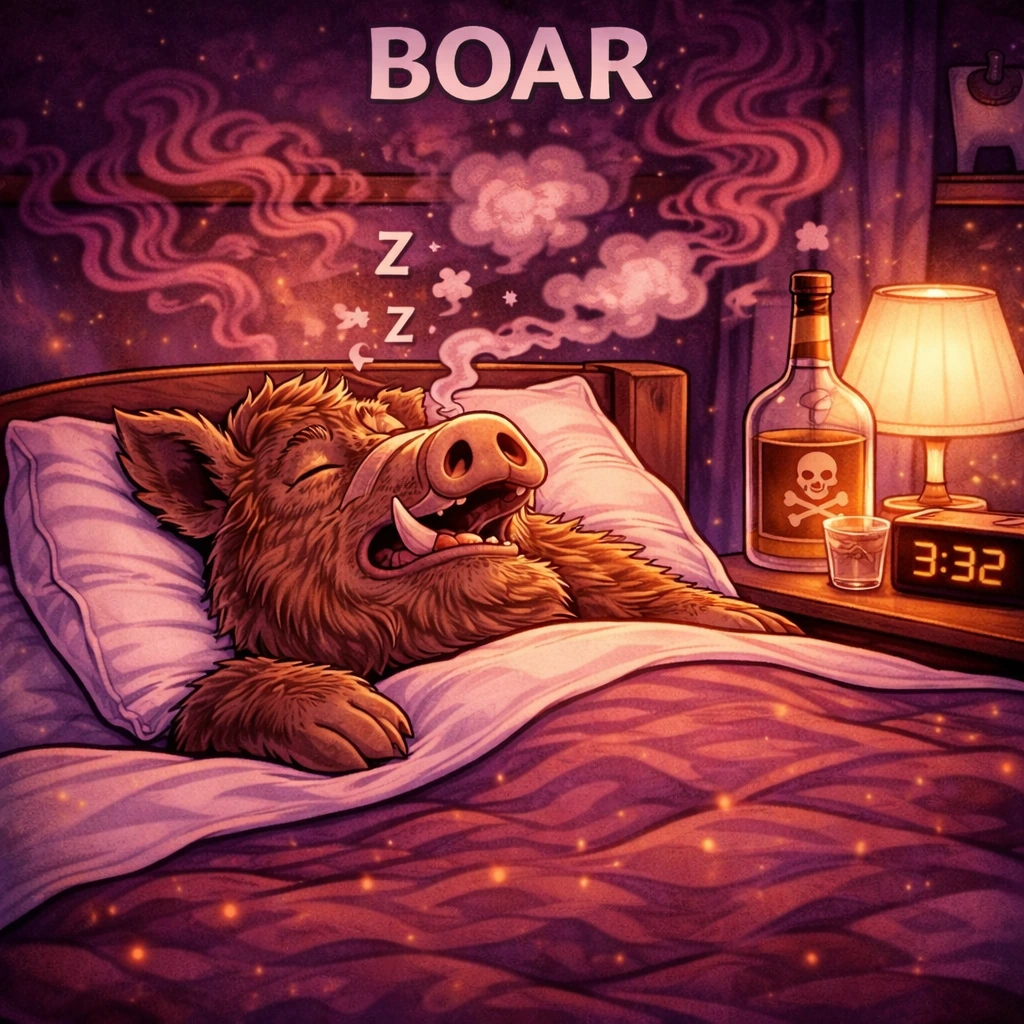
Related animal
Boar
Alcohol-Airway Sleeper
Your nights may be getting lighter or noisier when alcohol compounds airway load.
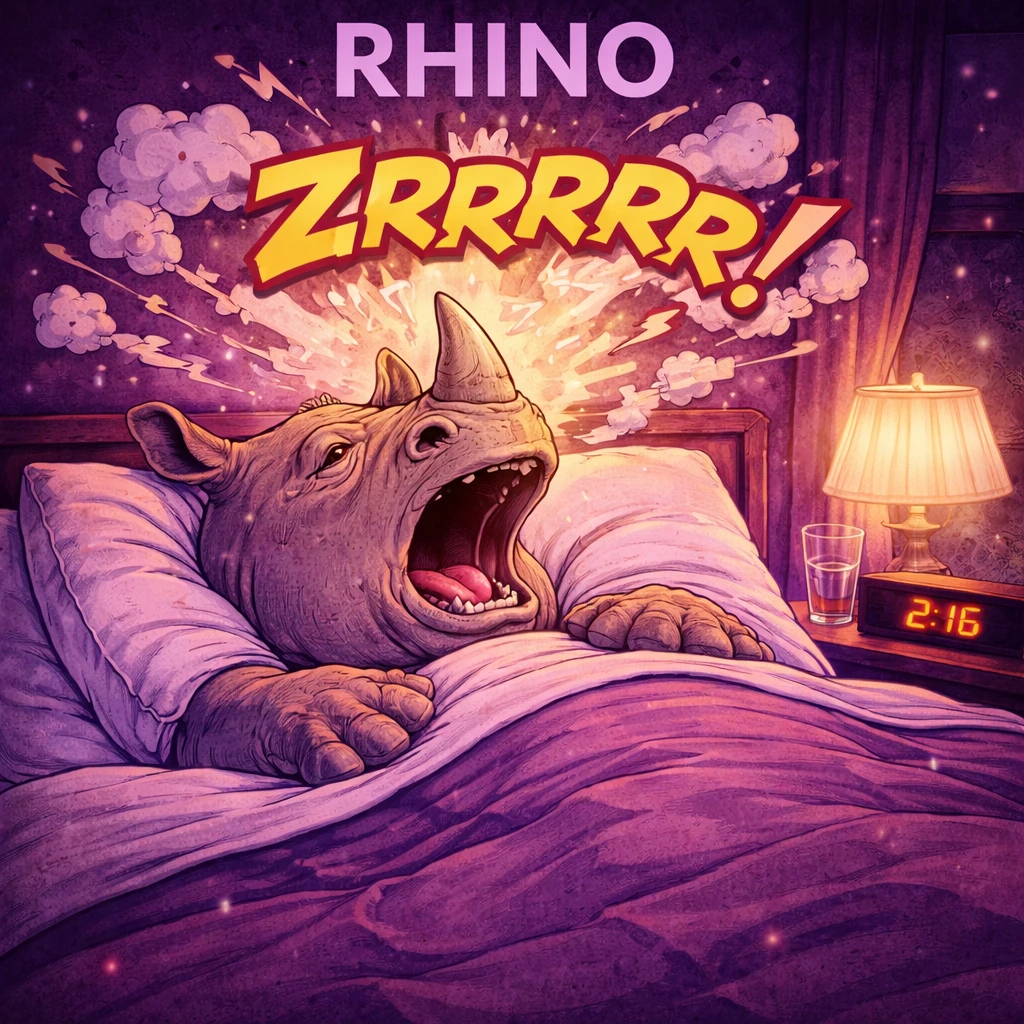
Related animal
Rhino
Explosive Snorer
The volume and force of your snoring may point to a bigger quality issue than it seems.
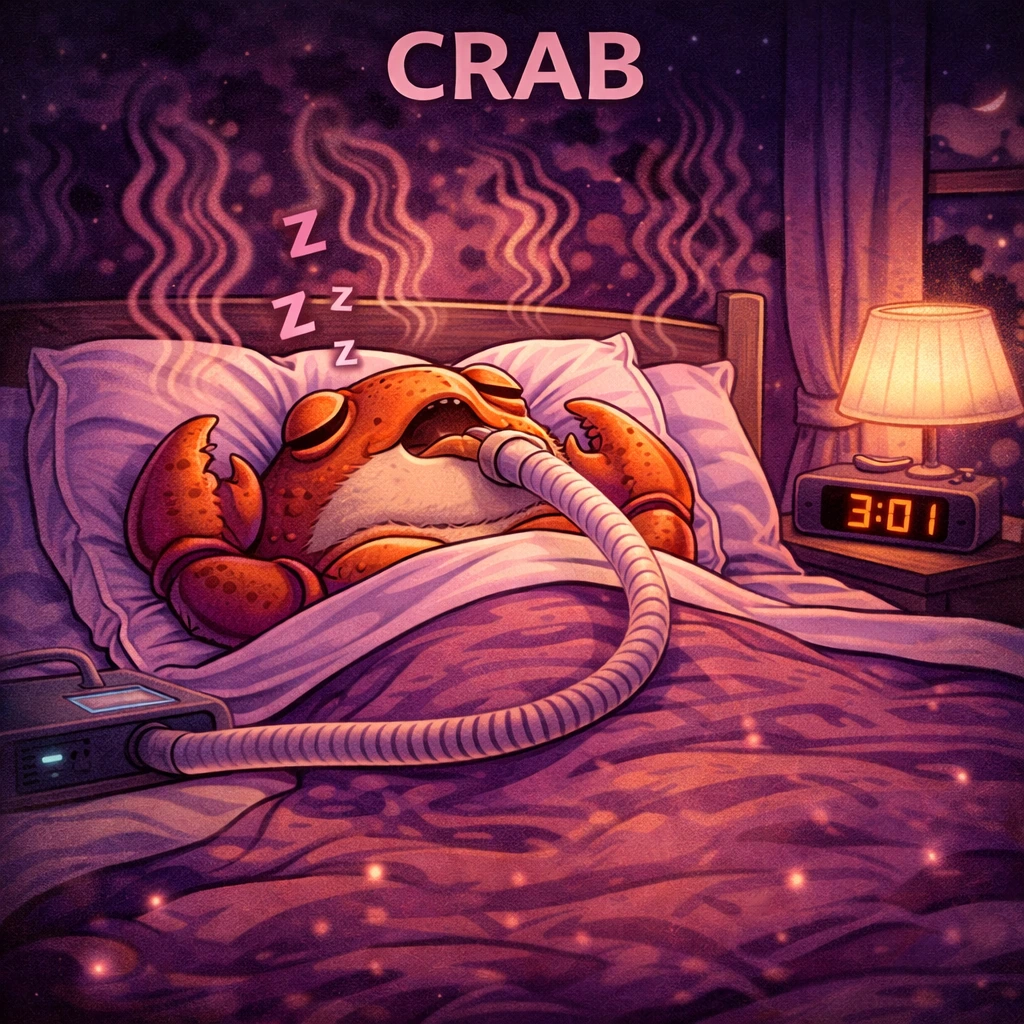
Related animal
Crab
Back-Sleeper Breather
Your sleep may worsen when position changes what your airway has to work against.