
Dental sleep medicine conversion pathway
Convert more snoring and sleep apnea interest into the right next step
SleepSpace gives dental sleep medicine teams a non-medical digital engagement layer for patients who snore, feel tired, suspect sleep apnea, or may be appropriate for an oral appliance therapy pathway after the proper medical diagnosis and dental evaluation.
Dental sleep medicine growth often stalls between the first sleep conversation and the next appointment. Patients may know they snore, wake unrefreshed, or have been told they might have obstructive sleep apnea, but they still need education, follow-up, and a clear route into appropriate testing and care.
SleepSpace helps your team turn those early conversations into a trackable patient pathway: intake, sleep diary completion, sleep education, snore tracking and room-sound review, referral support, testing-pathway reminders, oral appliance readiness, and follow-up after delivery.
This is not a medical diagnosis or treatment sale. SleepSpace does not diagnose sleep apnea, prescribe treatment, replace a physician, or make dental or medical decisions. It supports patient education, sleep tracking, care navigation, workflow visibility, and continuity with licensed medical and dental professionals.
Better starts
Capture intent while the patient is still motivatedUse QR codes, intake prompts, hygiene-room conversations, post-visit links, and snore-tracking education to turn snoring and fatigue concerns into a trackable SleepSpace pathway.
Better completion
Keep the diagnosis pathway movingSupport physician referral, home sleep apnea testing workflows, and your existing diagnostic process without claiming to diagnose obstructive sleep apnea. [1]
Better readiness
Prepare patients for the oral appliance conversationHelp patients understand why oral appliance therapy may be discussed after proper diagnosis, prescription, and dental evaluation. [2]
Better follow-up
Create continuity after deliveryKeep patients engaged with sleep diaries, reminders, sleep-quality check-ins, snoring playback, and follow-up prompts during appliance adjustment and ongoing care.
What SleepSpace provides
A digital front door for dental sleep medicine that stays inside the right scope
Conversion infrastructure
SleepSpace helps patients move from "I might have a sleep problem" to a clearer action plan, while your practice stays positioned as the guide for oral appliance education, dental evaluation, and follow-up.
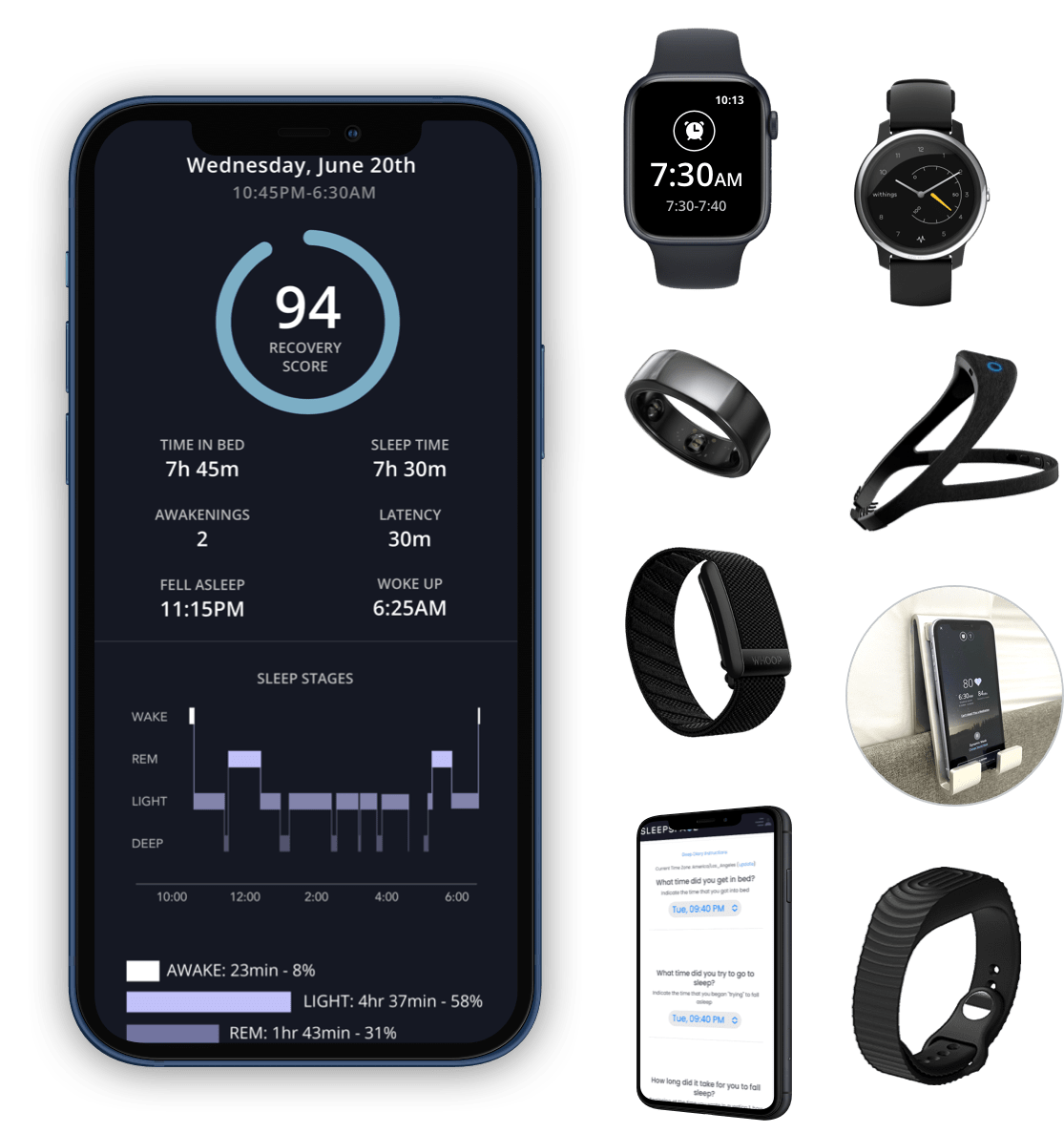
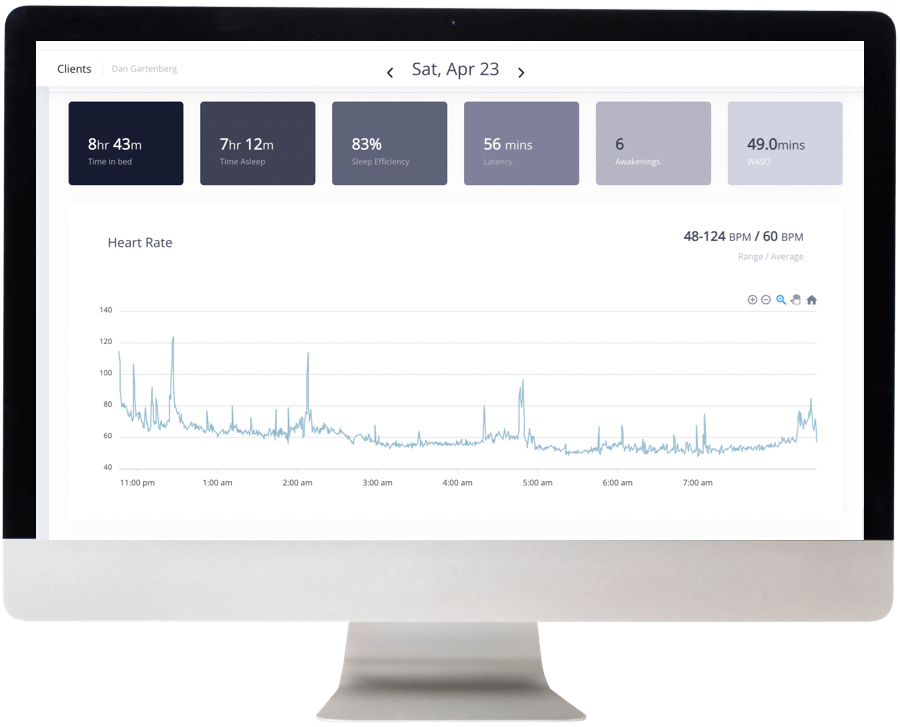
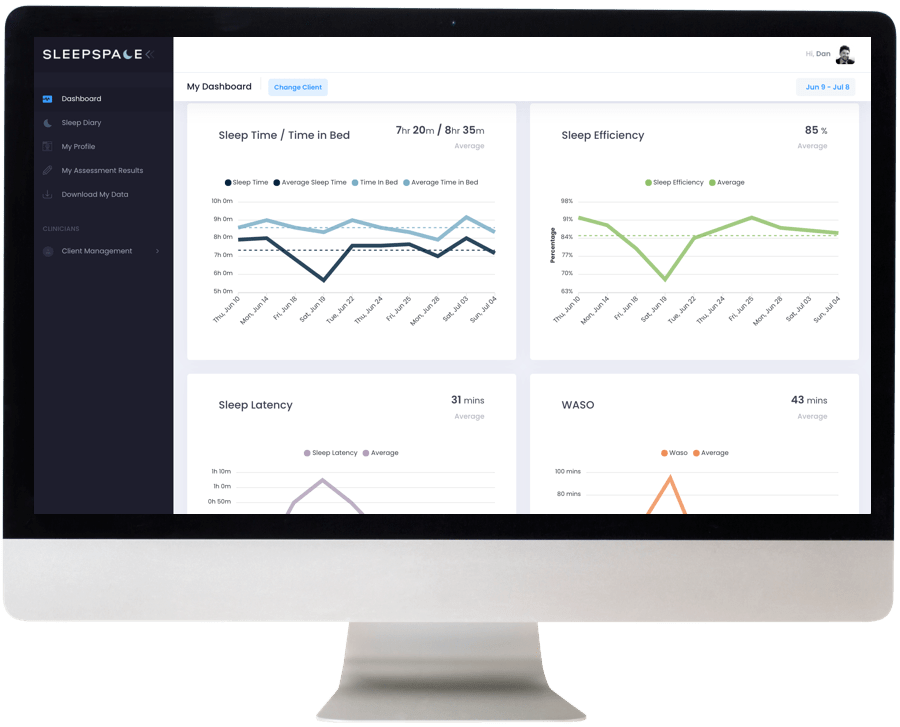
The platform can support intake questionnaires, sleep diaries, phone-based sleep tracking, snoring and room-sound review, sleep education, reminders, AI-guided coaching, and dashboard views for staff. Optional add-ons can include wearables, nearables, smart bulbs, and testing partners where appropriate.
Patient pathway
From snoring conversation to appropriate medical and dental next steps
Engage
Start with a QR code, front-desk prompt, hygiene-room conversation, or post-visit link that invites patients to explore snoring, tiredness, sleep quality, and possible sleep apnea risk.
Educate
Explain snoring, sleep disruption, obstructive sleep apnea, testing options, oral appliance therapy, and why diagnosis must happen through the correct medical pathway.
Route
Move appropriate patients toward physician referral, home sleep apnea testing, polysomnography, or your established diagnostic workflow. [1]
Convert
After diagnosis and dental evaluation, support the oral appliance conversation with patient-friendly tracking, education, adherence prompts, and follow-up. [2]
Snore tracking technology
Turn "I think I snore" into a more useful sleep conversation
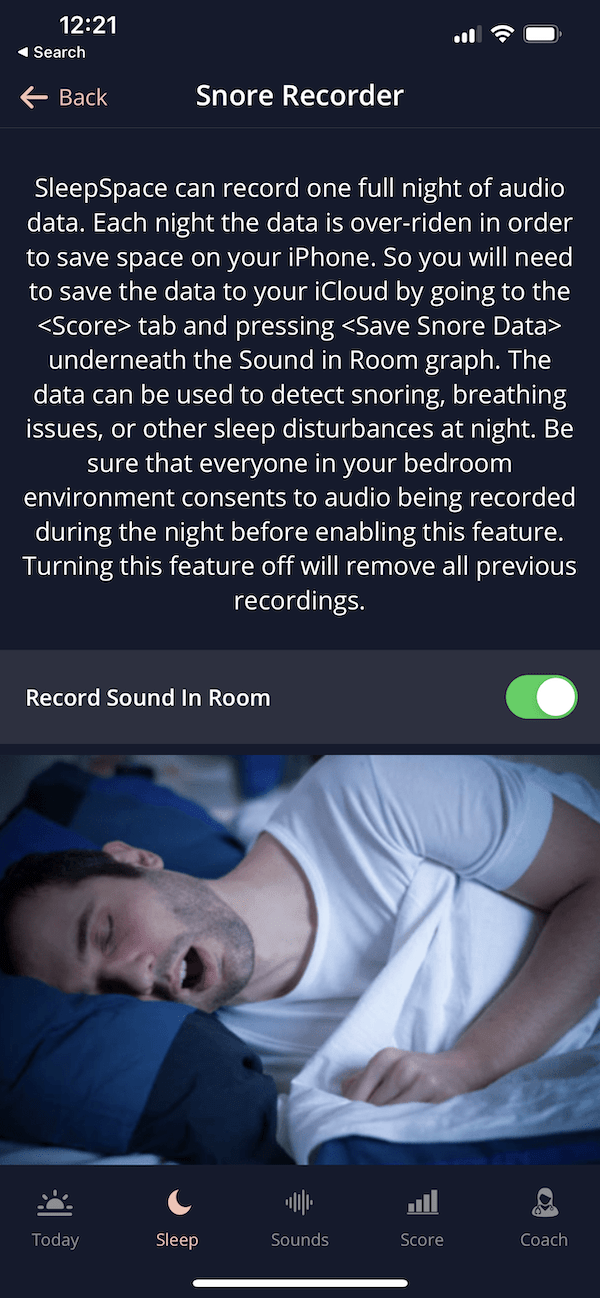
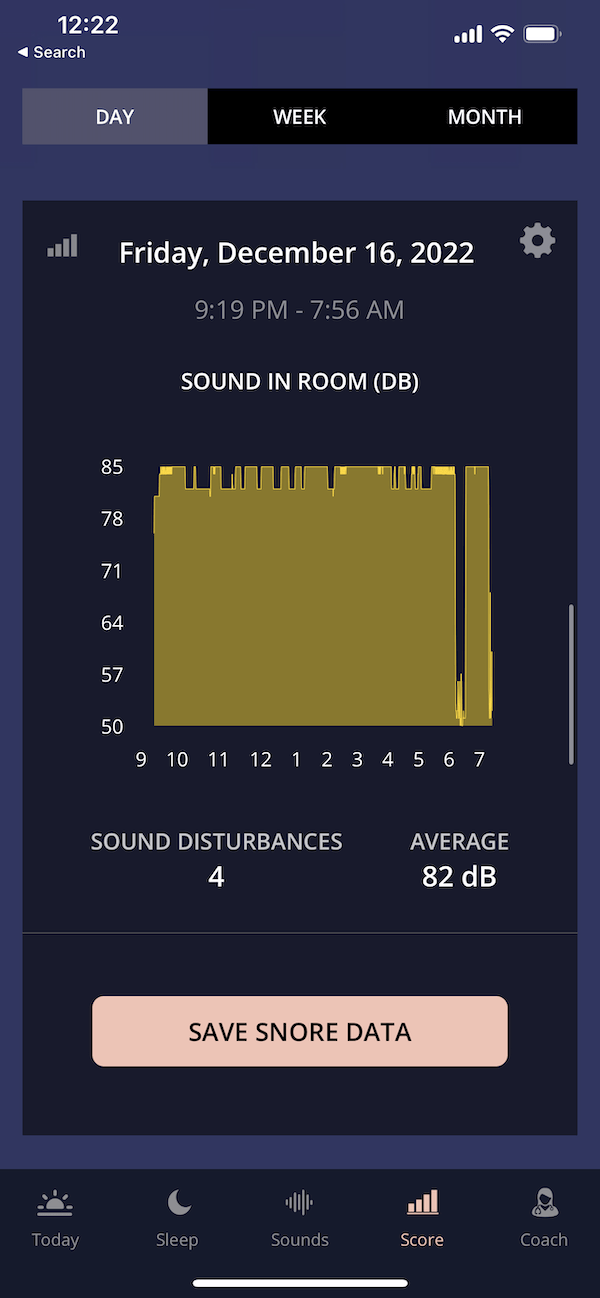
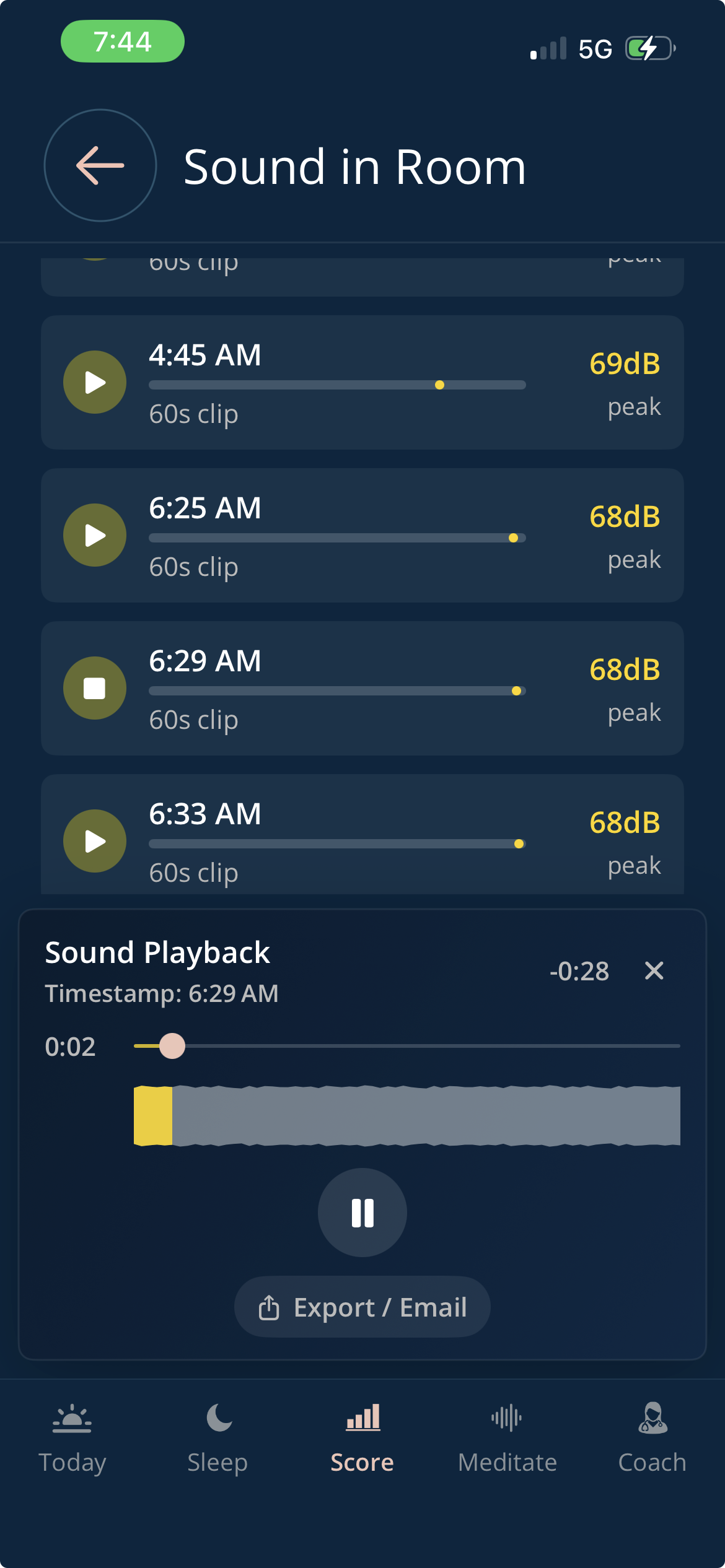
SleepSpace's snore tracking and Sound in Room technology can help patients record snoring, breathing sounds, partner snoring, and disruptive room noise so the concern becomes easier to discuss with context.
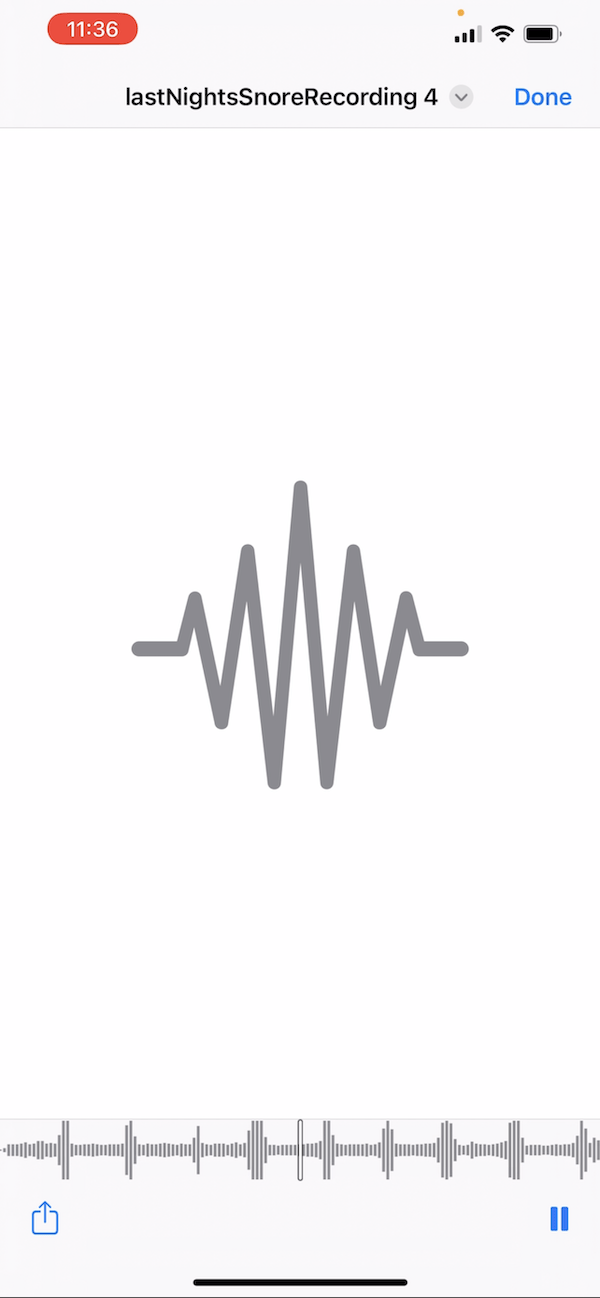
Instead of relying only on memory or a bed partner's comment, patients can review sound events alongside timing, diary notes, awakenings, sleep quality, and morning recovery. Newer SleepSpace workflows emphasize event timing, waveform playback, peak dB values, short audio clips, and saving or exporting recordings when a night is worth reviewing.
This is especially valuable for dental sleep medicine because snoring is often the first motivator. The recording does not diagnose sleep apnea, but it can make the next-step conversation more concrete when a patient has loud snoring, gasping, choking, witnessed pauses, morning headaches, dry mouth, or excessive daytime sleepiness.
Insomnia and CBT-I opportunity
Dental sleep conversations should not stop at snoring
A Dental Sleep Practice article by Daniel Gartenberg, PhD, argues that dentists are in a strong position to help identify poor sleep health because they routinely hear about snoring, bruxism, daytime fatigue, and trouble falling or staying asleep. [5]
The article highlights that insomnia is common, often overlaps with obstructive sleep apnea, and that cognitive behavioral therapy for insomnia is recommended as a first-line treatment by major medical organizations. For dental sleep teams, that matters because many patients who ask about snoring or oral appliances may also need insomnia education, sleep diary structure, hyperarousal support, or referral into appropriate behavioral sleep care. [1] [5]
SleepSpace fits this gap as a non-medical pathway: it can organize sleep diaries, snore and room-sound review, educational prompts, relaxation content, and CBT-I-based behavior support while routing medical diagnosis and treatment decisions to the proper licensed professionals.
Clear scope
This is a non-medical sale: SleepSpace provides the pathway, not the diagnosis
What SleepSpace does not do
- Does not diagnose obstructive sleep apnea.
- Does not prescribe oral appliance therapy, CPAP, medication, surgery, or any medical treatment.
- Does not replace a physician, sleep physician, qualified dentist, or licensed clinical judgment.
- Does not present screening tools, questionnaires, phone signals, or app data as a standalone diagnosis.
What the practice can offer
- A patient-friendly sleep education and engagement program.
- A clearer route from dental screening to appropriate medical diagnosis.
- Support for oral appliance therapy education after diagnosis and prescription.
- Follow-up workflows that help patients stay engaged through adjustments, adherence, and periodic care.
Dental sleep medicine use cases
Where SleepSpace can help the dental sleep sales process
New-patient sleep screening
Add a sleep pathway to intake so snoring, fatigue, morning headaches, and poor sleep quality do not stay buried in a medical-history form.
Hygiene-room education
Give hygienists and treatment coordinators a simple next step after a sleep-risk conversation: invite the patient into a guided SleepSpace pathway.
Snore tracking and room sound review
Give patients a way to record snoring while sleeping, listen back with timing context, and bring a clearer pattern into the next sleep conversation. Explore SleepSpace snore tracking.
Diagnosis pathway support
Help patients understand why questionnaires and screening are not the diagnosis, then guide them toward the physician or sleep-testing pathway your practice uses. [1] [4]
Oral appliance follow-up
Use reminders, diary data, sleep-quality check-ins, and education to make follow-up feel continuous after appliance delivery and titration. [2] [3]
Conversion offer
Launch a 30-day dental sleep conversion pathway
A practical pilot can focus on one conversion motion: patients who mention snoring, fatigue, witnessed apneas, CPAP intolerance, or interest in an oral appliance. SleepSpace gives them a digital pathway while your team measures starts, engagement, diagnosis-pathway completion, oral appliance consultation readiness, and follow-up continuity.
- Set up intake language, QR codes, and landing-page flow.
- Enroll interested patients into SleepSpace education, diary, snore tracking, and Sound in Room prompts.
- Route at-risk patients toward the appropriate medical diagnosis workflow.
- Support oral appliance education only after proper diagnosis, prescription, and dental evaluation.
- Review conversion metrics with your team after 30 days.
FAQ
Questions dental sleep teams ask about SleepSpace
Is SleepSpace selling medical treatment?
No. SleepSpace is a non-medical sleep engagement and workflow-support platform. It provides education, diary tools, tracking, reminders, and pathway support. Diagnosis and treatment decisions stay with licensed professionals.
Can dentists screen for sleep apnea risk?
Can app data diagnose obstructive sleep apnea?
No. AASM guidance says questionnaires, clinical tools, and prediction algorithms should not be used to diagnose OSA without polysomnography or home sleep apnea testing. [1]
Where does oral appliance therapy fit?
AASM and AADSM guidance supports oral appliances for certain adult patients when prescribed by a sleep physician, with qualified dentist oversight and follow-up. [2]
References and clinical scope notes
- Kapur VK, Auckley DH, Chowdhuri S, et al. Clinical practice guideline for diagnostic testing for adult obstructive sleep apnea: American Academy of Sleep Medicine. Journal of Clinical Sleep Medicine. 2017;13(3):479-504. https://pmc.ncbi.nlm.nih.gov/articles/PMC5337595/
- Ramar K, Dort LC, Katz SG, et al. Clinical practice guideline for the treatment of obstructive sleep apnea and snoring with oral appliance therapy: AASM and AADSM update. Journal of Clinical Sleep Medicine. 2015;11(7):773-827. https://pmc.ncbi.nlm.nih.gov/articles/PMC4481062/
- American Academy of Dental Sleep Medicine. Scope of Practice. Approved by the AADSM Board of Directors November 10, 2023. https://www.aadsm.org/scope_of_practice.php
- American Dental Association. Current Policies, including point-of-care testing to screen and referral to physicians for diagnosis and treatment. https://www.ada.org/about/governance/current-policies
- Gartenberg D. Insomnia and CBTi: Benefits for Patients and Opportunities for Dentists. Dental Sleep Practice. Published December 2, 2024. https://dentalsleeppractice.com/insomnia-and-cbti-benefits-for-patients-and-opportunities-for-dentists/