
Sleep and athletic performance platform
Make sleep a measurable part of recovery, readiness, and performance
SleepSpace helps athletic programs, performance teams, recovery specialists, and private training groups turn sleep into a practical performance system: sleep diary tracking, wearable-friendly recovery data, circadian scheduling, AI coaching, wind-down tools, and staff-ready adherence workflows.
Sleep is one of the few recovery levers that touches reaction time, skill execution, learning, mood, immune resilience, injury risk, travel adaptation, and the athlete's ability to tolerate training load. [1] [2]
SleepSpace gives coaches and performance staff a scalable digital layer for the work that happens between training sessions: consistent sleep diaries, sleep timing guidance, recovery scoring, smart alarms, behavioral education, AI-guided support, and trend views that help teams act before poor sleep becomes a performance problem.
SleepSpace supports performance and recovery workflows. It helps teams identify sleep patterns that deserve follow-up, while medical diagnosis and treatment decisions remain with licensed professionals.
Basketball sleep extension
+9%Stanford basketball players improved free throw accuracy by 9% and 3-point accuracy by 9.2% after a multi-week sleep extension protocol. [3]
Sleep-loss meta-analysis
-7.56%A 2022 meta-analysis found acute sleep loss negatively affected overall exercise performance across 77 studies and 227 outcomes. [4]
Sleep intervention evidence
25 studiesA 2023 systematic review found sleep extension and naps were the most represented and effective athlete sleep interventions. [5]
Athlete sleep consensus
2021Expert consensus recommendations emphasize athlete-specific sleep assessment, sleep education, timing, travel, naps, and individualized support. [6]
Performance system
Built for teams that need sleep support athletes will actually use
What SleepSpace provides
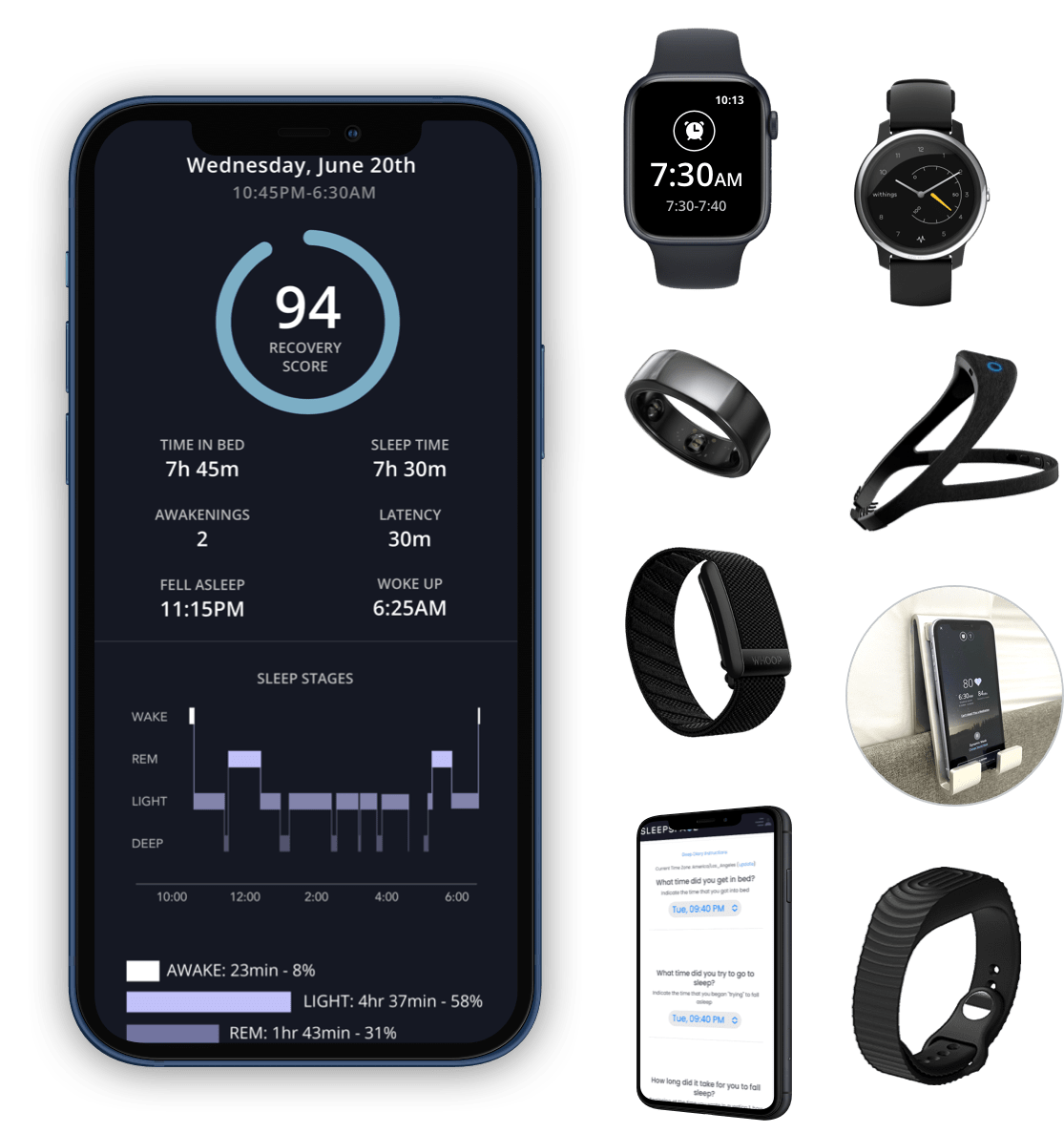
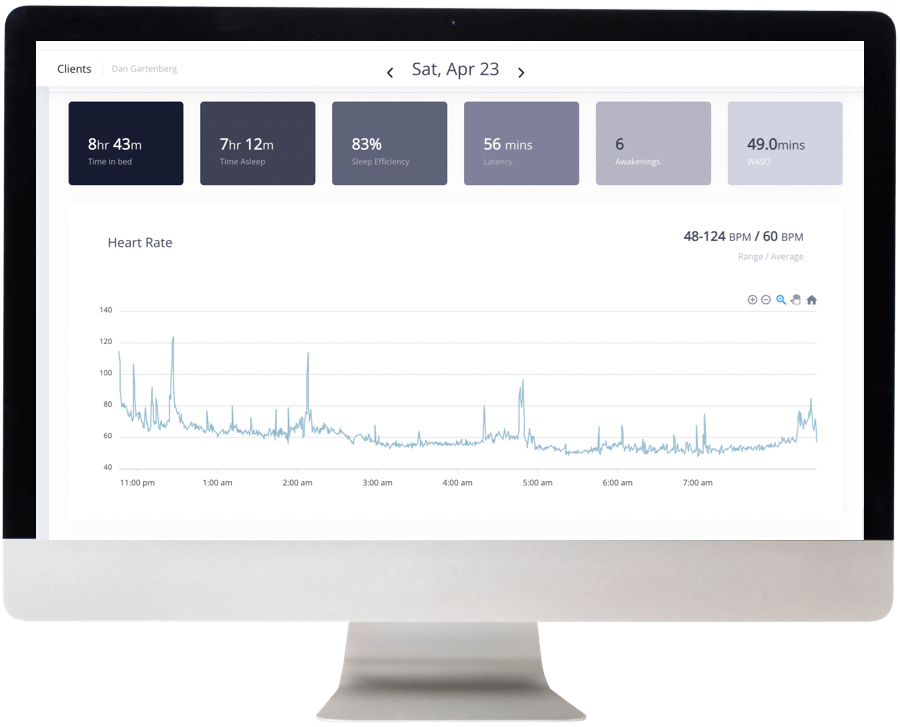
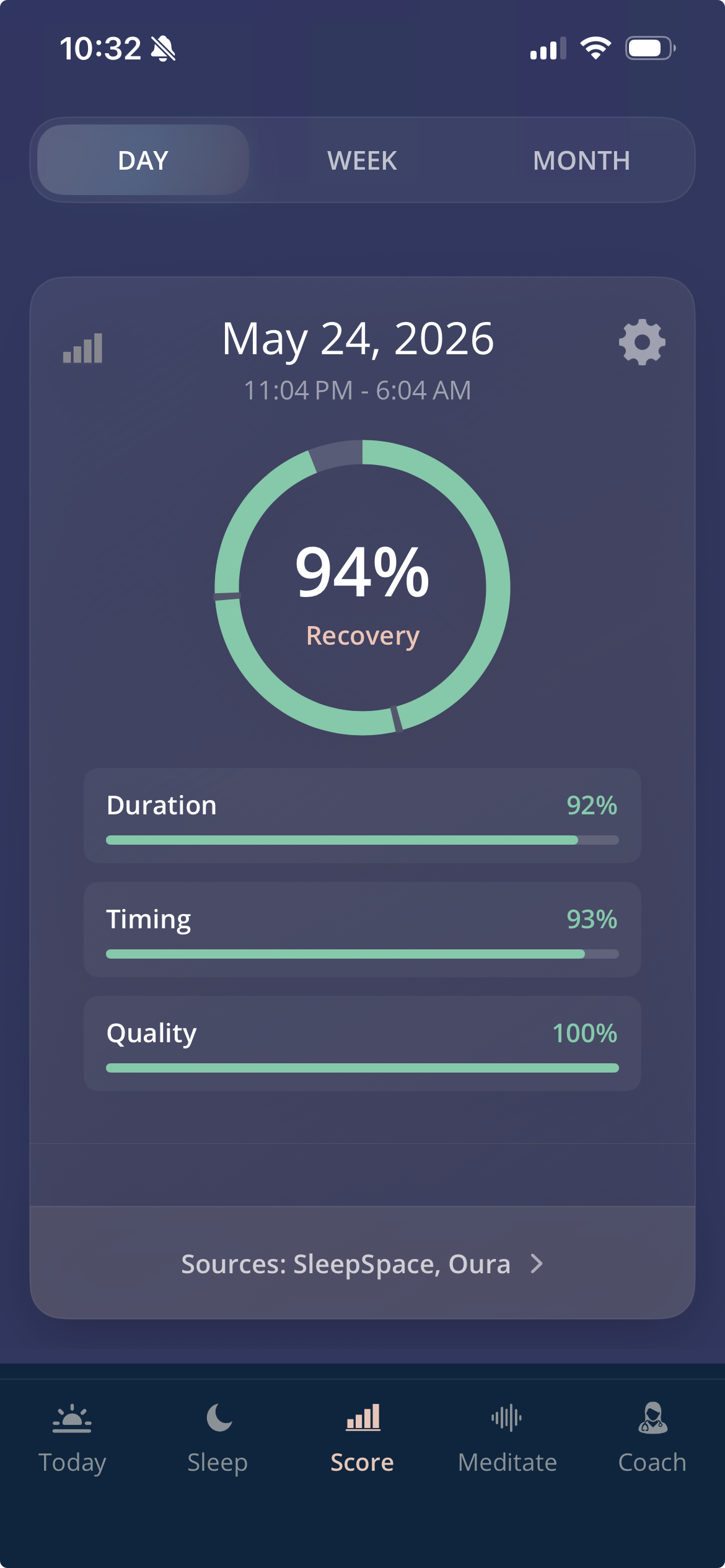
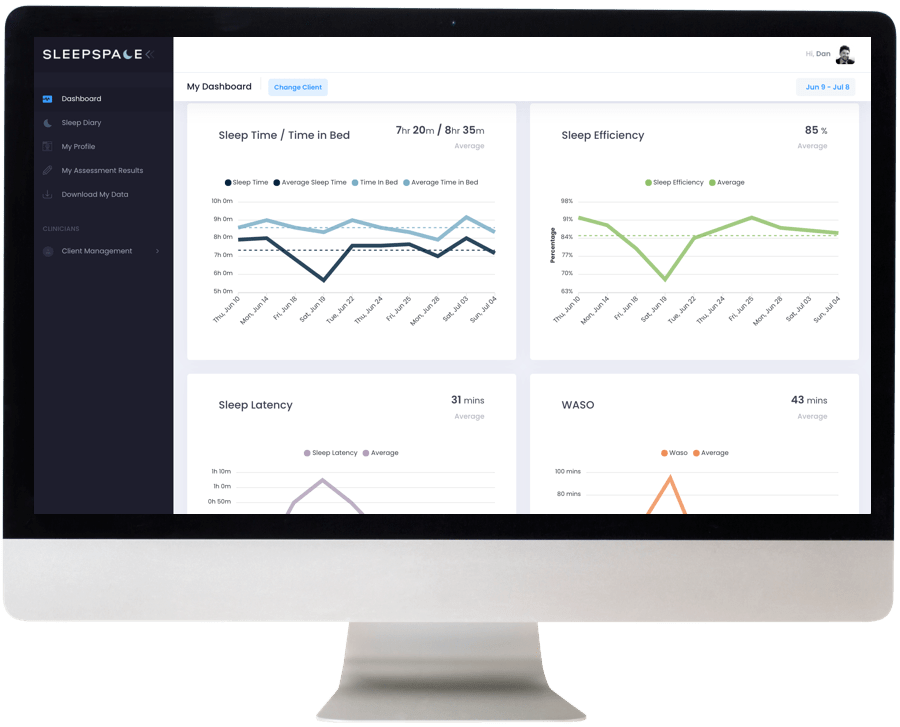
SleepSpace combines the Consensus sleep diary, smartphone sleep tracking, schedule guidance, smart alarms, wind-down content, AI-guided support, and dashboard visibility in a format built for team workflows.
The core program can run from the phone and diary, then layer in Apple Watch, Oura, Whoop, Garmin, SensorBio, smart bulbs, and SleepSpace nearable tracking when deeper performance support is useful.
Athlete pathway
From sleep awareness to better recovery behavior
Assess
Start with diary, timing, recovery, fatigue, stress, travel, and training-schedule context so the athlete's sleep pattern is easier to understand.
Plan
Build sleep windows, wake targets, wind-down routines, and circadian strategies around practice time, game time, travel, and academic or work demands.
Train
Use behavioral coaching, relaxation content, smart alarms, and education so sleep improvement becomes part of the athlete's training routine.
Monitor
Review adherence and patterns over time so staff can adjust scheduling, travel recovery, and support before performance drops.

Peer-reviewed performance evidence
Why sleep belongs inside the performance program
Sleep extension can improve sport-specific output
In the Stanford basketball study, athletes slept longer over several weeks and improved sprint time, shooting accuracy, reaction time, sleepiness, and mood. [3]
Sleep loss hurts next-day performance
A 2022 systematic review and meta-analysis found acute sleep loss negatively impacted exercise performance, with skill tasks especially sensitive. [4]
Interventions that fit athlete life
Reviews of athlete sleep interventions point to sleep extension, naps, scheduling, light, mindfulness, and athlete-specific support. [5] [6]
Circadian timing changes the playing field
Research in professional football found an advantage when teams played closer to their circadian performance peak, reinforcing the importance of timing, travel, and schedule design. [7]
Use cases
Where athletic programs use SleepSpace
Travel and time-zone adaptation
Use schedule guidance, light timing, sleep windows, and wind-down routines to reduce the recovery cost of road trips and tournaments.
Late-game recovery
Help athletes downshift after evening competition with realistic wake targets, smart alarm timing, and behavioral recovery plans for the next day.
Training-load resilience
Track sleep timing, fatigue, and recovery patterns so coaches can spot friction when athletes are adapting poorly to a new block.
Return-to-play and injury recovery
Give athletes a structured way to protect sleep during rehab, when pain, stress, schedule disruption, and mood can interfere with recovery.

Program offer
Launch a 30-day athlete sleep and recovery program
Start with athletes dealing with late games, early training, travel, heavy load, injury recovery, or inconsistent sleep. SleepSpace gives them a digital recovery program with sleep diaries, engagement data, sleep timing trends, recovery behaviors, and follow-up prompts.
- Set baseline sleep diaries, timing, recovery, fatigue, and schedule context.
- Enroll athletes into SleepSpace tracking, education, smart alarm, and wind-down workflows.
- Use team schedule demands to generate realistic sleep windows and recovery targets.
- Review engagement and sleep-pattern trends with staff after 30 days.
- Escalate persistent sleep problems to licensed medical or behavioral sleep care when needed.
FAQ
Questions athletic programs ask about SleepSpace
Is this a medical product for athletes?
No. SleepSpace is a sleep, recovery, and performance-support platform. It organizes sleep patterns and highlights concerns, while diagnosis and treatment decisions stay with licensed professionals.
What athletic performance outcomes does sleep affect?
Why not just tell athletes to get more sleep?
Athletes face constraints that generic sleep hygiene does not solve: early practice, late competition, travel, academic or work demands, stress, and overtraining. A program needs tracking, scheduling, coaching, and follow-up. [6]
What does the performance research mean for teams?
Strong evidence supports sleep as a recovery and readiness lever.
References and research notes
- Watson AM. Sleep and athletic performance. Current Sports Medicine Reports. 2017;16(6):413-418. https://pubmed.ncbi.nlm.nih.gov/29135639/
- Simpson NS, Gibbs EL, Matheson GO. Optimizing sleep to maximize performance: implications and recommendations for elite athletes. Scandinavian Journal of Medicine & Science in Sports. 2017;27(3):266-274. https://pubmed.ncbi.nlm.nih.gov/27367265/
- Mah CD, Mah KE, Kezirian EJ, Dement WC. The effects of sleep extension on the athletic performance of collegiate basketball players. Sleep. 2011;34(7):943-950. https://pmc.ncbi.nlm.nih.gov/articles/PMC3119836/
- Craven J, McCartney D, Desbrow B, et al. Effects of acute sleep loss on physical performance: a systematic and meta-analytical review. Sports Medicine. 2022;52:2669-2690. https://doi.org/10.1007/s40279-022-01706-y
- Cunha LA, Costa JA, Marques EA, Brito J, Lastella M, Figueiredo P. The impact of sleep interventions on athletic performance: a systematic review. Sports Medicine - Open. 2023;9:58. https://doi.org/10.1186/s40798-023-00599-z
- Walsh NP, Halson SL, Sargent C, et al. Sleep and the athlete: narrative review and 2021 expert consensus recommendations. British Journal of Sports Medicine. 2021;55(7):356-368. https://researchonline.ljmu.ac.uk/id/eprint/16297/
- Smith RS, Efron B, Mah CD, Malhotra A. The impact of circadian misalignment on athletic performance in professional football players. Sleep. 2013;36(12):1999-2001. https://pubmed.ncbi.nlm.nih.gov/24293776/